



By Henry Owino
Strathmore University has embarked on agricultural development initiative under Value of Food Kenya Project which is both timely and strategic especially given the ecological importance of the targeted water towers.
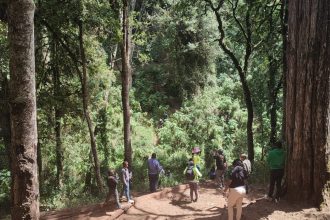
The True Value of Food project is intended to analyze food and agriculture systems in the Mau Forest Complex, Cherang’any Hills, and Loita Hills, which provide critical services like water regulation, soil conservation, and biodiversity support.
These landscapes are critical water towers in Kenya, supporting biodiversity, agriculture, hydropower generation, and downstream livelihoods.
According to Jacqueline McGlade, Project Lead of the Value of Food Programme, the central premise of the Value of Food Kenya Project currently being implemented in Kenya, builds on insights by helping stakeholders better understand the hidden costs and benefits embedded in food systems-supporting more informed, inclusive, and sustainable decision-making.
Prof McGlade said the project is guided by the Economic of Ecosystems and Biodiversity for Agriculture and Food (TEEBAgricFood) Kenya Framework. It is a comprehensive True Value Accounting (TVA) methodology designed specifically for assessing food systems in terms of food security, employment, income generation, social cohesion, and women’s access to finance.
It is aimed at equipping decision-makers with the tools and information to recognize the value that ecosystems provide to food systems.
“By applying this framework to evaluate land use policies and practices in these economically and ecologically important regions, we can generate economic evidence for nature-positive policies and practices that enhance resilience and sustainability in Kenya’s food systems,” Prof McGlade explained.
She added that through scenario-based modeling, it enables comparative evaluation of agricultural practices, production methods, climate and environmental impacts, changing consumption patterns, and the effectiveness of policy and investment strategies.
Current food systems fail to account for their true environmental, social, and economic costs due to: Food is often undervalued because market prices do not reflect ecosystem degradation, water use, soil loss, or public health impacts. Additionally, unsustainable agricultural practices create hidden costs that are borne by communities, governments, and future generations.
Consequently, sustainable food systems can be economically competitive when natural capital and ecosystem services are properly valued. Protecting critical ecosystems such as water towers, is not a cost burden, but a long-term economic investment.
This is why in Kenyan context, the aim is to make the economic case for sustainable food systems particularly in: Cherang’any Hills, Mau Forest Complex and Loita Hills. Though, the focus area of the project covers ten counties situated in Rift Valley namely: Baringo, Bomet, Elgeyo Marakwet,Nakuru, Kericho, Nandi, Narok, Trans Nzoia, Uasin Gishu and West Pokot.
She highlights that restoring these landscapes strengthens food security, supports rural livelihoods, stabilizes water systems, and enhances climate resilience.
Prof. McGlade advocates for; True Value Accounting (TVA) in agriculture rather than True Cost Accounting (TCA), Integration of natural capital accounting into national policy, data-driven decision-making and cross-sector collaboration between academia, government, and communities.
Her position reframes the discussion from “cost of sustainability” to “economic value of sustainability.”
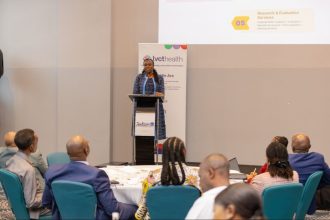
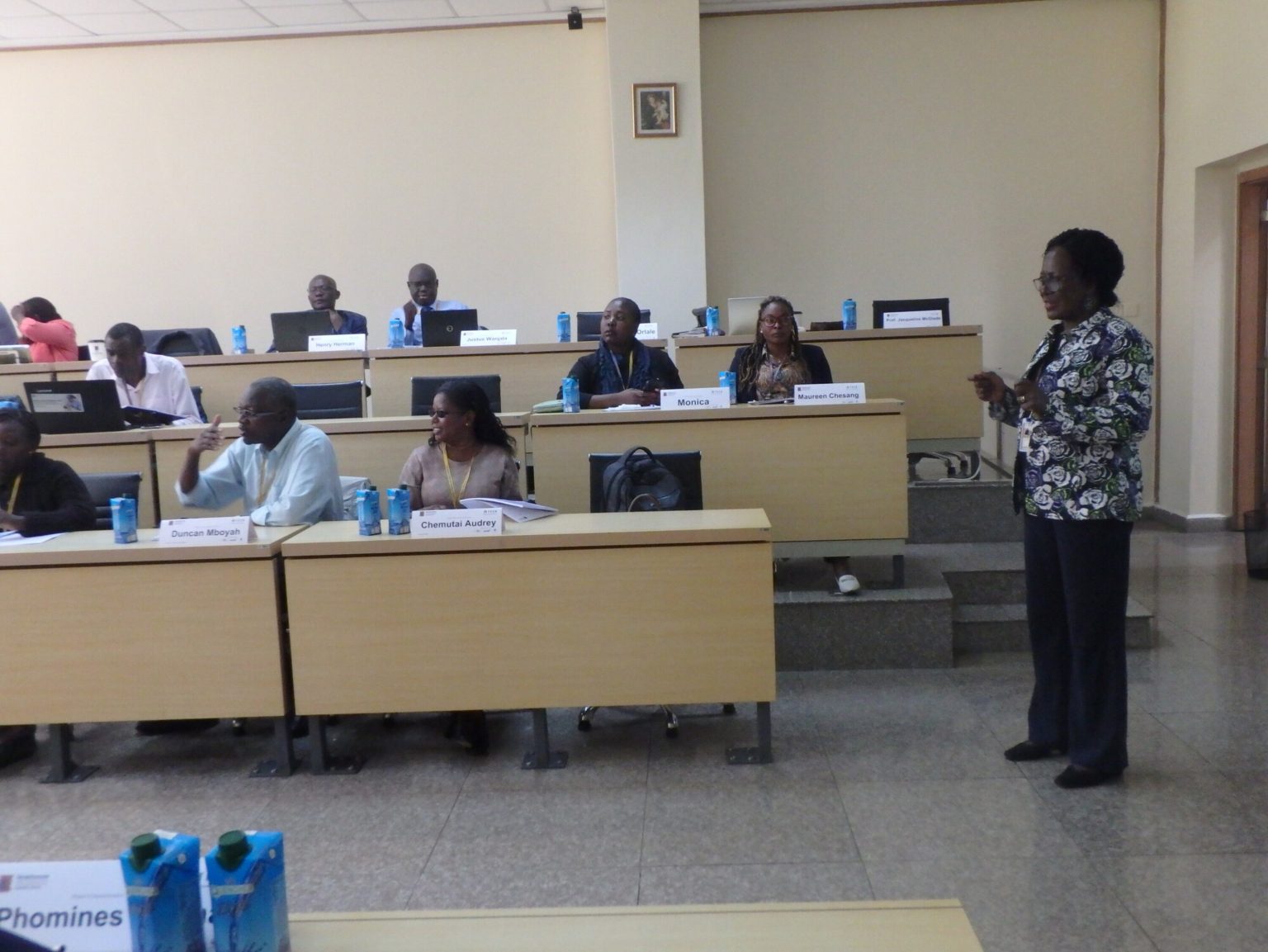
To cascade this project, the institution of higher learning, School of Business convened a-three days hands-on workshop for approximately 30 journalists from across the country to deepen their understanding of the farming practices that restore soil health, enhance biodiversity, and build climate resilience.
The agricultural development initiative aims at strengthening media coverage of regenerative agriculture and its role in promoting sustainable food systems.
During the three day’s workshop, the participants engaged with senior media experts, representatives from national and county governments in; agriculture, health and policy who highlighted the growing importance of regenerative agriculture in addressing food insecurity and environmental degradation.
Rosemary Okello-Orlale, one of the facilitators emphasized the media’s critical role in shaping public discourse, influencing policy conversations, and amplifying farmer-led innovations that are transforming rural livelihoods.
Mrs. Orlale noted that accurate, solutions-focused reporting can accelerate the adoption of regenerative practices by increasing public awareness and encouraging investment in sustainable agriculture.
“Journalists are uniquely positioned to raise awareness, as you reach thousands through your respective media platforms. When you share accurate information, audiences trust it because the media remains a credible source,” Mrs. Orlale affirmed.
Henry Neondo, the facilitator and Senior Science Journalist encouraged the trainees to report accurately by verifying facts with multiple-sources before filing stories. He equipped the journalists with media tools, database resources, and storytelling techniques to effectively cover the environmental, economic, and social dimensions of regenerative farming.
“For instance, journalists can report on simple and local initiatives in their counties, such as climate-smart practices, and to highlight farmer success stories that showcase the benefits of regenerative agriculture for communities and ecosystems,” Neondo encouraged.
The initiative underscores Strathmore University’s commitment to advancing climate action and supporting knowledge-driven approaches to sustainable development through strategic engagement with the media.
Through scenario-based modeling, the project enables comprehensive evaluation of agricultural practices, production methods, climate and environmental impacts, changing consumption patterns, and the effectiveness of policy and investment strategies.
Previously, the IKI-funded TEEBAgriFood Mau Forest Project (2017- 2002) revealed a stark decline in river networks, with total river length shrinking from 7000km in the 1960s to 4000km in 2019. However, restoration efforts since 2022 particularly indigenous tree planting in riparian zones have helped recover 930km of surface rivers.
Moreover, areas with higher soil carbon and less intensive farming were found to better withstand floods and droughts. These findings highlight nature’s ability to restore degraded ecosystems and reinforce the importance of investing in regenerative, nature-based solutions.
Generally, the IKI funds projects all over the world promotes low-emission agriculture and help agricultural production adapt to the consequences of climate change.