



By Dr. Francis Kusi
Across Africa, a quiet but profound shift is taking place. Increasingly, our nations are recognising that the future of our development will not be imported – it will be invented, tested and scaled by Africans themselves. Innovation is no longer a peripheral ambition; it is becoming the foundation upon which we build resilient economies, stronger food systems and greater self-reliance.
This moment has arrived not because the world has stopped partnering with Africa, but because the landscape of development finance is evolving. Official development assistance has become more constrained, encouraging governments, research institutions and the private sector to think differently about how we finance and drive progress. That reality presents not a crisis, but an opportunity: to invest more deliberately in African science, African talent and African solutions.
Ghana has taken an important step in that direction. President Mahama’s launch of the Ghana National Research Fund, backed by an initial seed capital of GHS 100 million (over $9 million USD), signals a powerful belief that research is a strategic national investment, not a luxury. It is an affirmation that knowledge generation and innovation are essential infrastructure for economic transformation, just as important as roads, energy or ports.
For those of us working in agricultural research, this is especially significant. Agriculture remains the livelihood of millions of African families and the backbone of many of our economies. Yet it is also the sector most exposed to climate variability, emerging pests and diseases, declining soil fertility and changing consumer demands. We cannot solve twenty-first century challenges with twentieth-century technologies.
At CSIR-SARI, we see every day how locally led research changes lives. Our scientists are developing improved varieties of cowpea, rice, maize, sorghum and other staple crops that are more productive, more resilient to drought and better suited to the diverse agroecological conditions of northern Ghana and beyond.
Cowpea is one of West Africa’s most important food security crops. Rich in protein, adaptable to challenging environments, and central to the diets and incomes of millions of households, it offers tremendous potential to strengthen nutrition while improving the livelihoods of smallholder farmers. Through research, we are developing varieties that mature earlier, withstand climate stress, and resist devastating pests and diseases – helping farmers produce more with greater confidence and less cost.
What makes these innovations powerful is that they begin with African realities. Our researchers understand the soils our farmers cultivate, the rainfall patterns they navigate and the markets they serve. When innovation is designed close to the communities it intends to benefit, adoption becomes faster and impact becomes deeper. This is the essence of research for Africans, by Africans.
That philosophy will be on full display at the upcoming Africa Food Systems Forum 2026 in Kigali, Rwanda. Under the theme of investing in Africa’s agri-food systems to nourish nations, grow jobs, and build resilience, the Forum is expected to convene more than 5,000 participants, including heads of state, ministers, scientists, entrepreneurs, farmers, investors, youth leaders and development partners from across the continent and beyond. It remains Africa’s premier platform for turning ideas into action through practical partnerships and investment commitments.
At the heart of this year’s gathering is the Innovation Hub – a recognition that breakthrough technologies and homegrown enterprises must sit at the centre of food systems transformation. The Hub will showcase cutting-edge agricultural research, climate-smart technologies, digital solutions, mechanisation, seed innovations and scalable business models capable of moving from pilot projects to continental impact. It is a marketplace of ideas where science meets policy, finance and entrepreneurship.
This is precisely the ecosystem Africa needs. Scientific discovery alone is not enough. Researchers require supportive policies, sustainable financing, strong extension systems and private sector partners willing to commercialise innovation. Equally, policymakers and investors need evidence generated by rigorous African research to make informed decisions. The Innovation Hub symbolises that convergence.
As we look ahead, our greatest resource is the ingenuity of our people. Across universities, research institutes, start-ups and farming communities, a new generation of African innovators is proving that the continent can lead in developing solutions for climate adaptation, food security, nutrition and agricultural productivity.
The task before us is to believe in that capacity and invest in it consistently. If we do, Africa will not simply feed itself. It will become a global leader in resilient, sustainable and inclusive food systems. The seeds of that future are already being planted: in our research labs, our field stations, and most importantly, in the fields of African farmers.
END
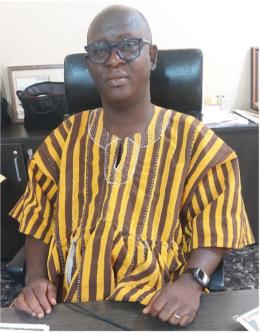
The writer is the Director, CSIR–Savanna Agricultural Research Institute (CSIR-SARI)