



The 25-year public-private partnership aims to expand electricity access from about 15% to more than 50%, with major investments in distribution infrastructure and job creation.
By Viator Ndaiyimize
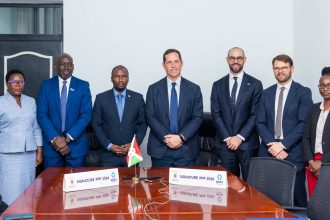
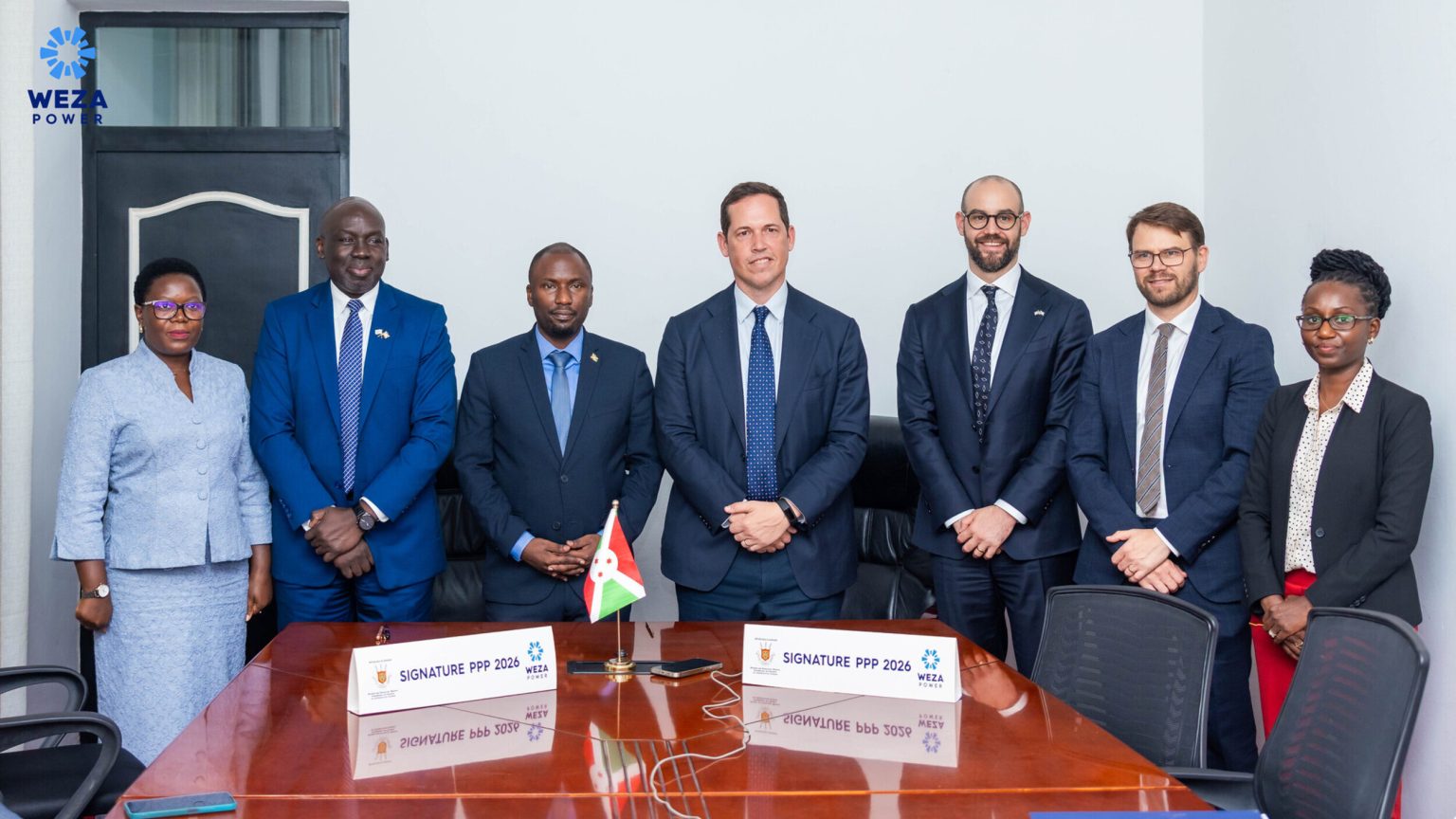
The Government of Burundi has signed a US$1.4 billion public-private partnership (PPP) with Weza Power, a company of Anzana Electric Group, to expand electricity access to millions of people and strengthen the country’s economic development.
The 25-year agreement, signed on 15 October, will support the expansion and modernisation of electricity distribution infrastructure across approximately half of Burundi. The initiative aims to increase national electricity access from about 15% currently to more than 50% by 2030, providing first-time or improved access to an estimated eight million people.
The agreement establishes what the partners describe as Africa’s first new national-scale electricity distribution concession operated by a private company in decades, potentially offering a model for attracting private investment into electricity infrastructure across the continent.
Under the arrangement, Weza Power will invest in, expand and operate the electricity distribution network in its designated area, while the state-owned electricity utility, REGIDESO, will continue supplying electricity through the national transmission network and retain distribution responsibilities in the other half of the country.
The project is expected to deliver 52,000 kilometres of new and upgraded distribution lines, connect more than 1.2 million new households and businesses, and create over 2,000 direct installation and operational jobs, alongside more than 30,000 indirect employment opportunities for Burundians.
Blended finance to mobilise investment
The US$1.4 billion investment will be mobilised through a blended financing structure combining private commercial capital with concessional funding and development finance.
Partners supporting the initiative include the World Bank’s ASCENT programme, the International Finance Corporation (IFC), the Multilateral Investment Guarantee Agency (MIGA), the African Development Bank, and the US International Development Finance Corporation (DFC).
Other partners include Gridworks, part of British International Investment, the US Trade and Development Agency, the Norwegian Agency for Development Cooperation (Norad), and additional development finance, bilateral, blended finance and climate finance partners.
According to the project announcement, the financing model is designed to attract investment without increasing public debt, while providing a commercially sustainable framework for expanding electricity distribution.
The partnership also seeks to balance investor confidence with consumer affordability through clear tariff and performance obligations.
Electricity access remains a major development challenge in Burundi, particularly in rural communities where limited distribution infrastructure has constrained access to reliable power.
Expanding access requires investment not only in electricity generation but also in the transmission and distribution networks needed to deliver power to homes, farms, businesses and industries.
Government targets industrial growth
Burundi’s President, Évariste Ndayishimiye, said the partnership would support the country’s long-term economic transformation and development ambitions under Vision 2040–2060.
“Electricity is the foundation of Burundi’s economic transformation and a key pillar of our Vision 2040-2060 ambitions,” Ndayishimiye said.
He added that expanding electricity access would create opportunities for citizens, strengthen industries and improve conditions for investment, employment and long-term prosperity.
The country’s installed electricity generation capacity stands at approximately 183 megawatts, according to the statement accompanying the agreement.
Minister of Mineral Resources, Energy, Industry, Trade and Tourism Hassan Kibeya said the priority was to ensure that existing and future electricity generation could reach more consumers and productive sectors of the economy.
“With Burundi’s installed generation capacity at approximately 183 MW, our focus must now be on ensuring that existing and future generation can be delivered to more homes, businesses and productive sectors across the country,” Kibeya said.
He noted that reliable electricity would support industrial development, local processing of critical minerals and broader economic growth.
For rural communities, improved electricity access could support agricultural processing, refrigeration, small-scale manufacturing, digital connectivity and other productive activities. However, the scale of these benefits will depend on the affordability and reliability of supply, as well as the ability of households and enterprises to connect to the network.
Partnership supports Mission 300
The agreement contributes to Burundi’s National Energy Compact under Mission 300, a joint initiative of the World Bank Group and the African Development Bank that seeks to connect 300 million people in Africa to electricity by 2030.
The initiative reflects growing efforts by African governments and development partners to address the continent’s electricity access gap through a combination of public investment, private capital and institutional partnerships.
World Bank Group Country Manager for Burundi Babacar Sedikh Faye said the agreement demonstrated how governments, development institutions and private-sector investors could work together to expand infrastructure and create economic opportunities.
“Mobilizing private capital is essential to creating jobs and expanding opportunities for Burundian families and communities to improve their livelihoods,” Faye said.
The partnership’s success will depend on implementation, including the timely construction of distribution infrastructure, the financial sustainability of the concession and the ability to connect underserved communities at affordable prices.
Its performance will also be important in assessing whether privately operated electricity distribution can help accelerate electrification in other African countries without placing additional pressure on public finances.
Anzana builds on existing investments
Anzana Electric Group has operated in Burundi’s energy sector since 2018 through Songa Energy, which has one operational hydropower plant and a second under construction.
The company says its experience working with the government, local communities and other partners has helped build the local knowledge needed to implement the new distribution initiative.
Brian Kelly, chief executive officer of Anzana Electric Group and Weza Power, said the agreement followed years of collaboration and reflected a shared commitment to Burundi’s development.
He said reliable electricity could help businesses invest with greater confidence, support the growth of critical industries and enable the country to retain more economic value from its natural resources.
The agreement also comes amid efforts to strengthen economic ties between Burundi and the United States, including cooperation around critical minerals and infrastructure investment.
Anzana is pursuing similar integrated electricity development approaches in other African markets, including Zambia and the Democratic Republic of the Congo.
For Burundi, the immediate challenge will be translating the US$1.4 billion commitment into functioning infrastructure, affordable connections and dependable electricity for households and businesses.
If implemented successfully, the partnership could help expand access to essential energy services while supporting industrialisation, employment and progress towards the country’s 2030 electrification target.
Africa Science News perspective: Burundi’s electricity distribution agreement highlights the importance of infrastructure investment in Africa’s development. Beyond expanding connections, the project’s impact will ultimately be measured by whether reliable and affordable electricity reaches underserved communities and enables businesses, farms and industries to become more productive.