


By Andrew Sande in Antalya, Türkiye – The 31st United Nations Climate Change Conference (COP31) has opened with a renewed call for governments, financial institutions, businesses and communities to accelerate the implementation of climate commitments, as mounting global warming impacts expose the widening gap between international pledges and action on the ground.
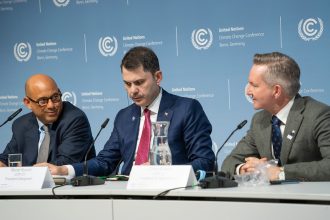
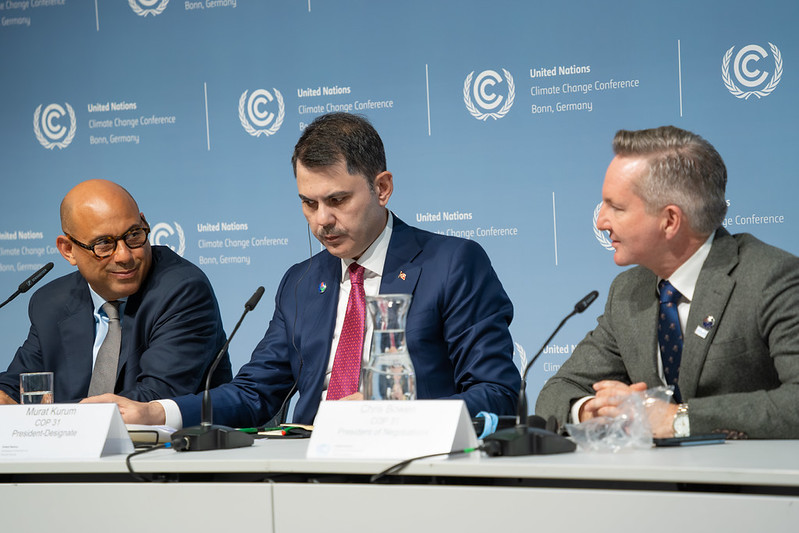
UN Climate Change Executive Secretary Simon Stiell and COP31 President-Designate Murat Kurum, in their opening statements in Antalya, emphasised the need to move beyond setting climate targets towards delivering practical solutions that accelerate the energy transition, strengthen resilience and mobilise resources for vulnerable countries.
Stiell described COP31 as an important moment in what he termed a new era of implementation, arguing that while previous climate conferences had established global targets and political direction, the priority must now be to translate those commitments into measurable outcomes.
“COP31 must supercharge solutions,” he said, calling for practical steps to accelerate adaptation finance, expand renewable energy capacity, improve electricity transmission infrastructure and reduce methane emissions.
He noted that renewable energy is increasingly becoming economically competitive, with 90 per cent of large renewable energy projects now reportedly cheaper than fossil fuel alternatives. However, he warned that the pace and distribution of progress remain inadequate, particularly for countries and communities facing the greatest climate risks.
Among the priorities highlighted was the commitment to triple global renewable energy capacity by 2030, alongside efforts to expand electricity grids across national borders and support the growing demand for clean energy.
Stiell also underscored the importance of reducing methane emissions, particularly from the oil and gas and waste sectors. He described methane reduction and electrification as powerful interventions capable of cutting projected global warming by approximately half a degree.
On climate finance, the UN Climate Change Executive Secretary called for practical solutions to address difficulties developing countries face in accessing funding that has already been committed. He stressed that the implementation of existing financial commitments, including adaptation finance, must become a central focus of international cooperation.
He also called for progress towards the climate finance commitments of at least US$300 billion annually by 2035 and the broader ambition of mobilising US$1.3 trillion annually, emphasising the need for the entire financial system to contribute.
Kurum, who is presiding over the COP31 process, similarly positioned the conference as an implementation-focused gathering, arguing that climate change can no longer be treated as an isolated environmental concern.
He observed that climate impacts are increasingly interconnected with food security, migration, energy systems, economic stability, public health and national security.
“Climate policy today is also development policy. It is food policy. Energy policy. Urban policy. Health policy,” Kurum said, highlighting the far-reaching implications of climate change for societies and economies.
He pointed to extreme heat, droughts, flooding and other climate-related disasters as evidence of the growing vulnerability of communities across different regions. According to Kurum, these interconnected challenges require coordinated responses that bring together scientific knowledge, technology, finance and institutional capacity.
The COP31 presidency has identified dialogue, consensus and action as its guiding principles, with an emphasis on ensuring that international decisions translate into practical improvements in people’s lives.
Kurum highlighted the need to bridge inequalities in access to climate finance, technology and expertise, particularly between developed and developing countries. He argued that the success of climate diplomacy should ultimately be measured by whether decisions made at international conferences lead to tangible improvements in communities.
He cited the need for investments that strengthen urban infrastructure, protect agricultural livelihoods, improve access to affordable energy and create employment opportunities.
A key initiative highlighted in his address was the proposed Climate Implementation Bridge, designed to connect investors with projects requiring financing, countries seeking technology with potential providers, and local development needs with international resources and expertise.
The initiative reflects a broader ambition to improve the alignment between available financial resources and the countries and communities that urgently need them.
Kurum also drew attention to Türkiye’s 35-by-35 Global Electrification Pledge, which seeks to increase electricity’s share of final energy consumption to 35 per cent by 2035. The transition, he said, would require integrated investments in renewable energy, electricity grids, energy storage, efficiency, clean transport and green industries.
Both leaders stressed that climate action must be equitable and responsive to the circumstances of vulnerable countries, particularly those with limited financial and technological capacity.
Stiell warned that the consequences of global heating are already imposing significant economic and humanitarian costs, while rising fossil fuel price volatility continues to affect households and economies.
He cited estimates that renewable energy saved approximately US$500 billion globally last year, with an additional US$265 billion saved during the first half of 2026. He also emphasised the economic benefits of adaptation investments, arguing that practical climate solutions can deliver substantial returns while reducing future disaster-related costs.
The conference is taking place amid growing concern over the widening gap between climate science and the pace of global action. Both leaders acknowledged that no single climate conference can resolve the crisis but maintained that COP31 must deliver meaningful progress through stronger implementation and international cooperation.
The COP31 presidency is being jointly supported by Türkiye and Australia, with an emphasis on strengthening collaboration across climate negotiations and the broader Action Agenda.
Negotiations will remain central to the conference, with key areas including the Just Transition Mechanism, adaptation, mitigation and climate finance. These discussions are expected to shape how countries translate existing commitments into national policies and practical interventions.
For Africa and other developing regions, the emphasis on implementation carries particular significance. Limited access to affordable finance, inadequate energy infrastructure, climate-sensitive livelihoods and growing exposure to extreme weather continue to constrain development prospects.
The ability of COP31 to unlock accessible adaptation funding, accelerate renewable energy deployment, strengthen climate resilience and facilitate technology transfer will therefore be important in determining whether its commitments deliver meaningful benefits beyond the conference halls.
As Kurum observed, the ultimate measure of success will not simply be the decisions adopted in Antalya, but the investments initiated, technologies transferred, resilient communities supported and livelihoods protected.
The conference’s central challenge is therefore to narrow the gap between climate promises and people’s everyday realities, turning international consensus into action that can be felt across economies and communities.