





By Henry Neondo
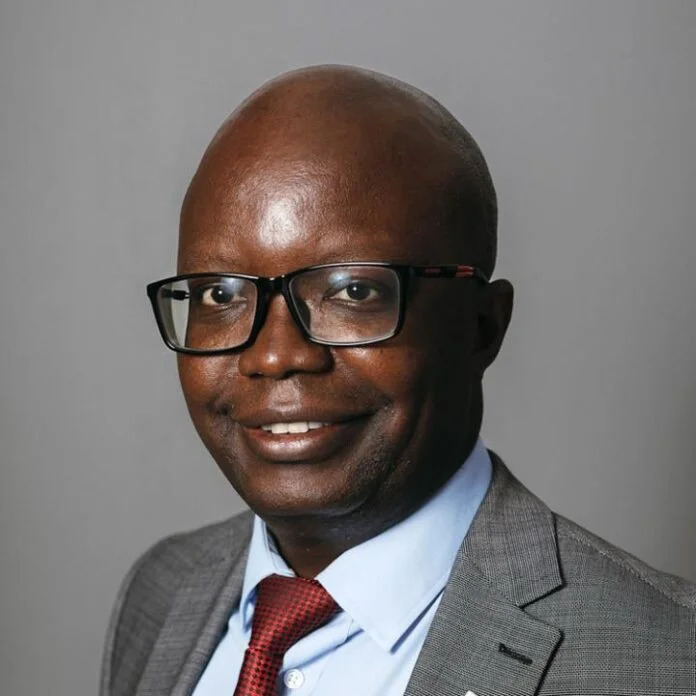
Rio de Janeiro, Brazil – Kenya has secured a major milestone in global health leadership following the election of renowned HIV prevention scientist Professor Kenneth Ngure as President of the International AIDS Society (IAS) during the Society’s meeting in Brazil.
Professor Ngure becomes one of the few Africans to lead the world’s largest association of HIV professionals, assuming leadership at a critical moment in the global response to HIV/AIDS amid evolving prevention technologies, financing challenges, and efforts to end AIDS as a public health threat by 2030.
An Associate Professor of Global Health and immediate former Dean of the School of Public Health at Jomo Kenyatta University of Agriculture and Technology (JKUAT), Prof. Ngure has spent more than 25 years advancing HIV prevention research, public health leadership and policy across Africa. His election is widely viewed as recognition of Kenya’s growing influence in global health research and innovation.
Speaking after his election, Prof. Ngure pledged to strengthen collaboration among scientists, policymakers, communities and governments to accelerate equitable access to HIV prevention, treatment and care.
Prof. Ngure currently serves as an Affiliate Associate Professor in the Department of Global Health at the University of Washington, a Visiting Scientist at Kenyatta National Hospital, and recently served as a Visiting Professor at the Heidelberg Institute of Global Health. He is also a member of Kenya’s Pharmacy and Poisons Board Expert Committee on Clinical Trials.
Internationally, he has played a central role in some of the world’s most influential HIV prevention research networks, including the Microbicides Trials Network (MTN), the International Maternal Pediatric Adolescent AIDS Clinical Trials Network (IMPAACT), the HIV Prevention Trials Network (HPTN), and the Office of HIV/AIDS Network Coordination (HANC). He also co-leads the MATRIX initiative, which is developing next-generation HIV prevention technologies.
A globally respected HIV prevention expert, Prof. Ngure was a principal investigator in the landmark Partners PrEP Trial, one of the studies that transformed HIV prevention by demonstrating the effectiveness of pre-exposure prophylaxis (PrEP). He has since led and contributed to several groundbreaking multinational studies aimed at expanding access to PrEP, HIV self-testing and innovative prevention technologies, particularly for young women and other populations disproportionately affected by HIV.
His research has directly informed HIV prevention policies in Kenya and internationally. He is a member of Kenya’s Ministry of Health PrEP Technical Working Group and has co-led major clinical trials evaluating new HIV prevention products, including the dapivirine vaginal ring for adolescent girls and young women.
Before his election as IAS President, Prof. Ngure served as Africa’s representative on the IAS Governing Council and as a member of the Society’s Executive Board. His re-election to these leadership positions reflected the confidence placed in his vision for strengthening Africa’s voice in shaping the global HIV response.
Beyond academia, Prof. Ngure has held senior public health leadership roles across Eastern, Central, Southern and Western Africa, including serving as Programme Director for the Kenyan chapter of the Organization of African First Ladies Against HIV/AIDS (OAFLA). He has also consulted for the World Health Organization and other international agencies on HIV prevention and public health.
An accomplished researcher, Prof. Ngure has authored or co-authored more than 160 peer-reviewed scientific papers and over 200 conference abstracts, making him one of Africa’s leading contributors to HIV prevention science.
His election comes at a pivotal time when the global HIV community is working to sustain progress, reduce inequalities in access to prevention and treatment, and harness scientific innovation to end the epidemic. His leadership is expected to strengthen the representation of African researchers and communities in shaping the future of the global HIV response.