



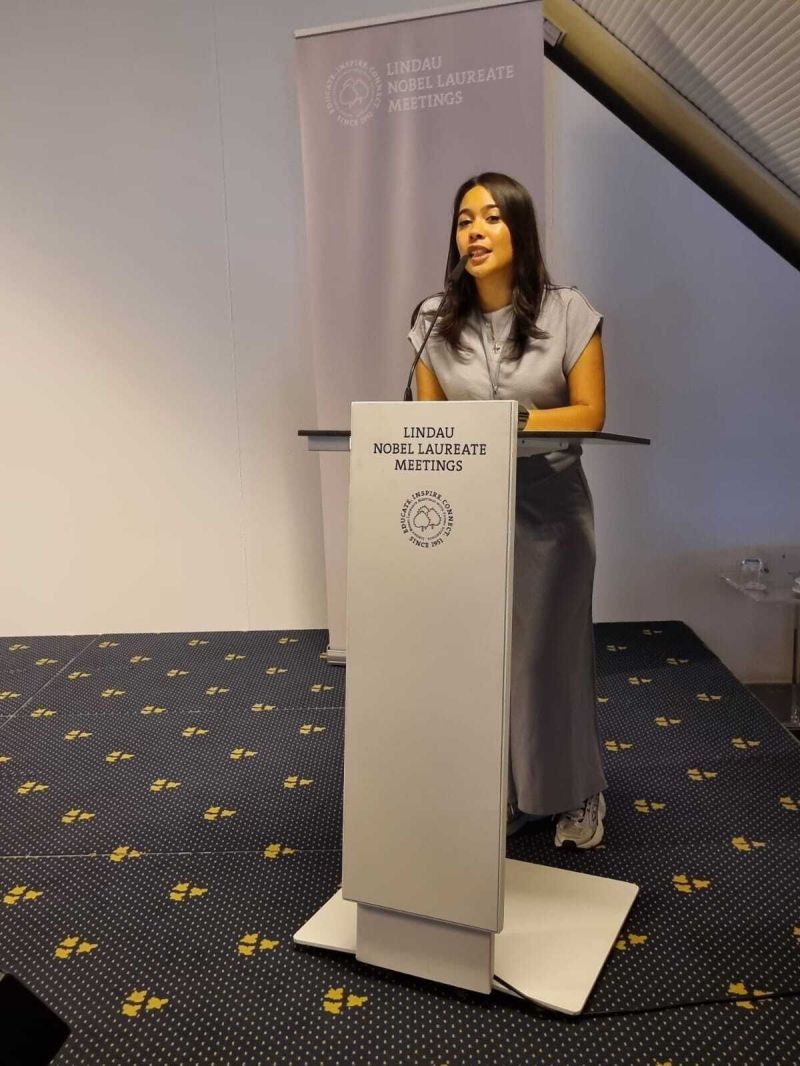
South Africa’s next generation of scientists is making its mark on the global stage at the 75th Lindau Nobel Laureate Meeting in Lindau, Germany, where some of the world’s brightest early-career researchers are engaging directly with Nobel Prize winners and leading scientific thinkers.
The prestigious week-long gathering has brought together approximately 600 young scientists from around 85 countries alongside 70 Nobel Laureates, creating a unique platform for scientific exchange under this year’s theme, “Science Transcending Borders.”
Opening the meeting, Frank-Walter Steinmeier emphasized the importance of safeguarding academic freedom, warning that science and democracy are deeply interconnected. “Science needs freedom because democracy needs free science,” he told participants, highlighting the role of international collaboration in addressing global challenges.
Echoing the same spirit, Countess Bettina Bernadotte said the gathering reflects 75 years of demonstrating that “curiosity travels farther than borders can draw lines,” underscoring science as a shared human endeavour.
This year’s discussions have explored some of humanity’s most pressing issues, including climate change, global health, food security, artificial intelligence, nuclear security, scientific integrity, and the future of biomedical research.
Among the Nobel Laureates inspiring participants is South African-born Michael Levitt, now at Stanford University. Levitt, who received the 2013 Nobel Prize in Chemistry for pioneering computer models of complex chemical systems, encouraged young researchers to pursue work they genuinely love while maintaining confidence in their own abilities.
South Africa’s scientific legacy includes four other Nobel laureates in the sciences—Max Theiler, Sydney Brenner, Aaron Klug, and Allan Cormack—whose achievements continue to inspire a new generation of researchers.
This year, several South African early-career scientists have been selected to showcase their research and engage in discussions with Nobel Laureates.
a postdoctoral fellow at University of the Western Cape, is developing highly sensitive nanobody-based electrochemical biosensors that could significantly improve the early detection of diseases such as cancer.
“This is an opportunity to learn from generations of scientists who shared the same curiosity, determination, and desire to make a difference that continues to motivate my own work today,” she said.
At Stellenbosch University, astrophysicist Chevarra Hansraj is presenting research on the geometry of Kerr black holes. She has also been selected to serve on the meeting’s closing panel discussing how to strengthen public trust in science, alongside Nobel Prize-winning physicists.
Meanwhile, Xoliswa Dyosiba of the University of Pretoria shared her work on developing advanced porous materials with potential applications across multiple scientific fields. One of the highlights of the meeting for her has been interacting with Omar Yaghi, whose groundbreaking work on metal-organic frameworks closely aligns with her own research interests.
The South African delegation also includes freshwater biologist Fannie Masina from the University of Mpumalanga, who is using the opportunity to engage with scientists working in biodiversity conservation, environmental science, chemistry and physiology.
For Patrick Mwanza of the Nelson Mandela University, the meeting has reinforced the importance of perseverance in scientific research through candid discussions with Nobel Laureates about both successes and setbacks.
Similarly, Itumeleng Baloyi of the Agricultural Research Council, whose work focuses on medicinal plants used in women’s health and infectious disease management, described the experience as a reminder of the enduring value of scientific curiosity, collaboration and mentorship.
The participation of the South African researchers is supported by the Academy of Science of South Africa and the Department of Science, Technology and Innovation, reflecting South Africa’s longstanding commitment to nurturing scientific excellence and strengthening international research partnerships.
As the Lindau Nobel Laureate Meeting celebrates its 75th anniversary, South Africa’s emerging scientists are not only showcasing cutting-edge research but also reinforcing the country’s growing contribution to addressing global scientific challenges through innovation, collaboration and excellence.