


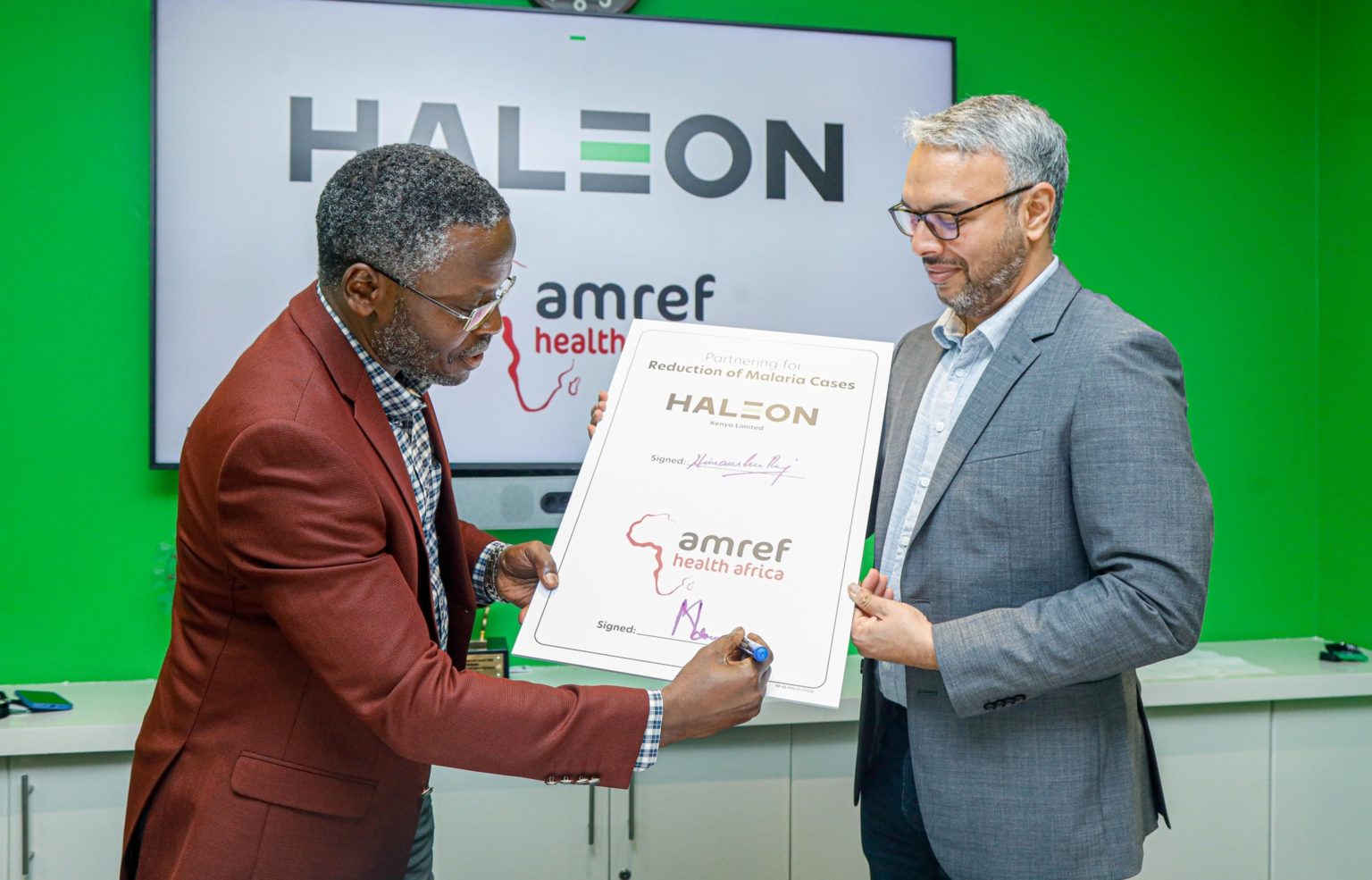
Community-led health initiatives to reduce the impact of malaria through prevention, awareness, and treatment interventions received a boost when Haleon Kenya Ltd and Amref Health Kenya entered into a partnership to strengthen efforts against the disease.
The initiative aims to reach approximately 75,000 people, including 200 community health promoters (CHPs), 30 Community Health Assistants (CHAs), 190 teachers, and 45,600 schoolchildren, while strengthening local health systems by training health workers and integrating fever management and malaria prevention messaging in schools and health facilities across Siaya.
Malaria remains one of Kenya’s leading public health challenges, with 75 per cent of the population at risk and western counties such as Siaya among the most affected.
Selected for this initiative, Siaya County experiences high malaria prevalence due to its tropical climate, proximity to Lake Victoria, and limited access to healthcare services. Each year, Kenya records approximately 3.4 million new malaria cases and over 11,000 related deaths, according to the Ministry of Health (2024 Malaria Report).
Through this collaboration, Haleon and Amref Health Kenya will work together to reduce malaria incidence and related deaths by focusing on community education, on Fever Management associated with Malaria, the distribution of insecticide-treated mosquito nets (ITNs), and the training of healthcare workers and community health promoters.
Speaking during the signing ceremony, Himanshu Raj, General Manager, Haleon Sub-Saharan Africa, said, “This partnership with Amref reflects our purpose to deliver better everyday health with humanity by empowering communities to manage malaria and fever more effectively. Through this initiative, we are putting health in more hands”
Amref Health Kenya’s Country Director, Dr. Meshack Ndirangu, emphasized the critical role of partnerships in achieving health equity. ”Public–private partnerships like this are vital for achieving lasting health impact.
By combining Amref’s community health expertise with Haleon’s leadership in consumer health, we are building a strong platform to reduce the malaria burden and strengthen local health systems. This collaboration directly supports our Malaria and Climate Big Bet, which aims to cut malaria cases by 90% by 2030 by giving communities the tools, knowledge, and climate-resilient strategies needed to stay ahead of changing transmission patterns.”
This partnership reinforces Haleon’s commitment to advancing the WHO’s aligned fever management protocol in malaria-endemic regions. In line with the World Health Organisation’s recommendation of paracetamol as a first-line treatment for malaria-related fever (WHO Treatment Guidelines for Malaria, 2015), the initiative promotes responsible fever management at the community level, highlighting Panadol (paracetamol) as an accessible, evidence-based solution for fever relief without a commercial focus.
Aligned with Haleon’s global purpose of delivering better everyday health to humanity, the partnership also draws on insights from the Health Inclusivity Index, an international study supported by Haleon and conducted by Economist Impact.
In Kenya, the Index shows that improving health literacy could generate economic gains of up to USD 186 million annually by reducing the prevalence of low health literacy by 25%. Through the Panadol–Amref collaboration, Haleon aims to translate these insights into action, empowering vulnerable populations to access quality, affordable healthcare solutions.