



By Lenah Bosibori
Kenyan lawmakers are calling for stronger local funding for immunization programs as the country prepares to transition from support by Gavi, the Vaccine Alliance, by 2029.
Speaking in Nairobi at a breakfast meeting on maternal, newborn, and child health, Kuria Kimani, MP for Molo constituency and Chair of the National Assembly’s Finance and Planning Committee, warned that declining government allocations could put vaccine access for millions of children at risk.
“We cannot keep thinking of immunization as something that depends on foreign support,” Kimani said. “We say we want our children immunized, yet we have money to build roads, billions to send to counties, funds for equalization programs, and even money for new airports but we claim we cannot immunize our children.”
He added that the country must take responsibility and stop relying on foreign countries to collect taxes and send funds to protect our children. “That simply does not make sense,” he said.
Kimani noted that Parliament is currently discussing the Budget Policy Statement, which sets spending priorities for the next three years. “This blueprint shows how we plan to raise revenue and where we spend it. We must make sure children’s voices are heard where it matters most where budgets and policies are decided,” he said.
To strengthen advocacy, MPs proposed forming a Parliamentary Maternal, Newborn, and Child Health (MNCH) Caucus to champion increased immunization funding and ensure children’s health remains a national priority.
Kenya’s Immunization Funding Gap
Economist Dr. Francis Omondi said Kenya still relies heavily on external support, particularly from Gavi. Between 2021 and 2025, Gavi financed 74–89 percent of Kenya’s immunization budget, while the government contributed only 11–25 percent.
“With Gavi support ending in 2029, the government must gradually increase funding,” Dr. Omondi warned. “If allocations continue to decline, Kenya risks vaccine shortages and lower coverage.”
The immunization budget rose during the COVID-19 pandemic due to vaccine procurement but has since fallen, despite population growth and rising health costs.
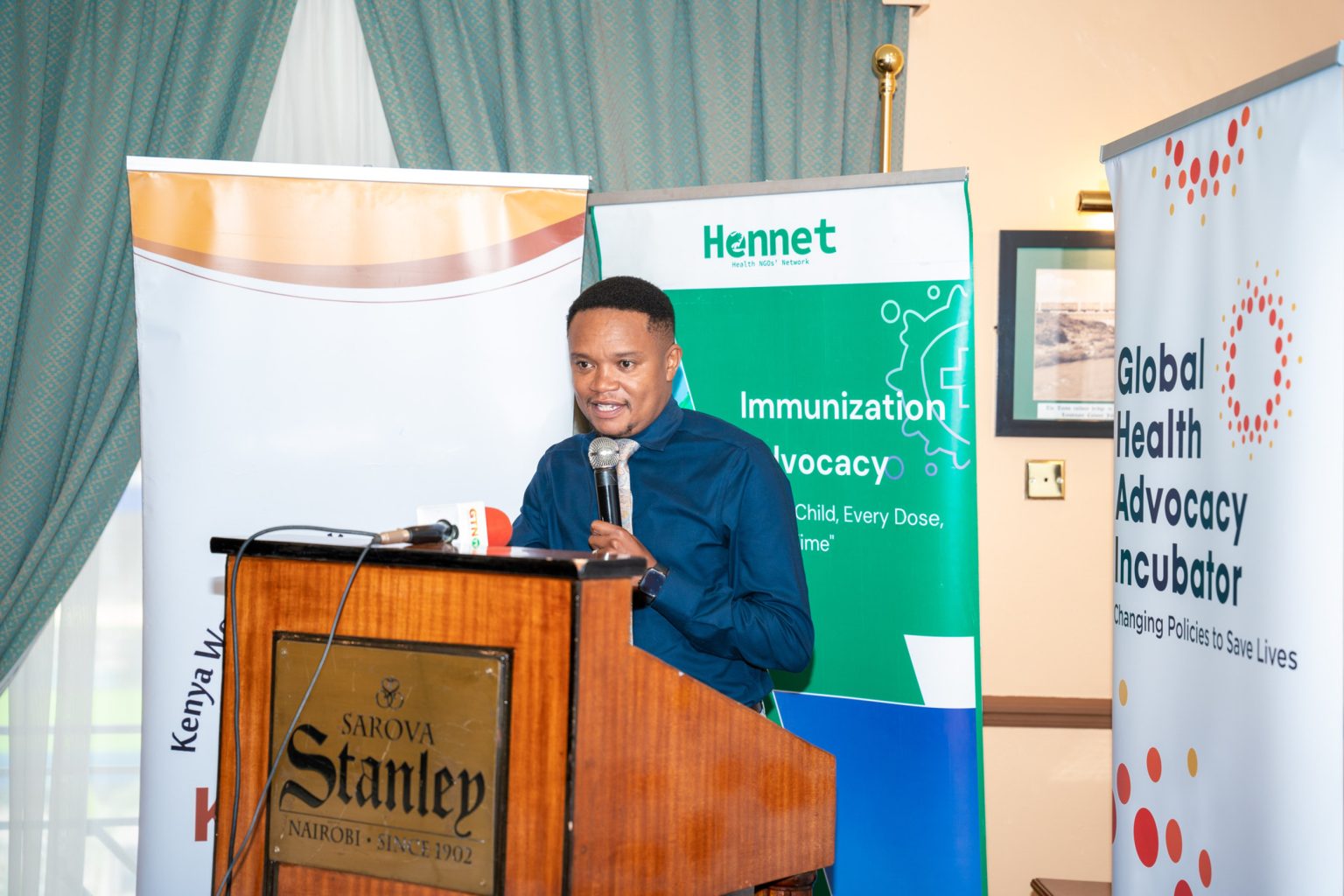
Margaret Lubaale, Executive Director of Health NGOs Network (HENNET), emphasized that maternal health must also remain a priority.
“The health of mothers and children shows how well our primary healthcare system is performing,” Lubaale said. “We are pushing for financing not just for children, but also for mothers.”
The meeting also discussed the Istanbul Call to Action on Immunization Financing, where Kenya signed an agreement to strengthen vaccine funding.
Signs of Progress
HENNET highlighted progress in recent years. Last year, the network met with Health Cabinet Secretary Aden Duale to discuss timely payment of Kenya’s co-financing contributions to Gavi. Delayed payments can slow vaccine procurement by up to nine months, leading to stock-outs.
“In December, the National Treasury, in partnership with the Ministry of Health, released 62 percent of Kenya’s co-financing about KSh 2.5 billion,” Dr. Lubaale said.
Risper Chebet, Africa Regional Coordinator at the Global Health Advocacy Incubator (GHAI), added that immunization shows a strong return on investment. It saves lives, prevents disease, and benefits the health system and the economy. “Strengthening domestic financing is a gradual journey, but as a country, we are bold and committed to taking it. Immunization is not just a health issue it’s a legacy. If we fail to invest now, we risk reversing decades of progress,” she said.
Participants urged the government to allocate at least 3 percent of domestic health spending to immunization and explore local vaccine manufacturing to reduce reliance on imports.
With support from organizations like the Kenya Women Parliamentary Association and the Kenya Young Parliamentarians Association, advocates say Parliament will play a crucial role in keeping vaccines accessible to all children.
As Kenya approaches the 2029 transition, stronger partnerships between government, Parliament, counties, and civil society will be critical to safeguarding the health of future generations.