




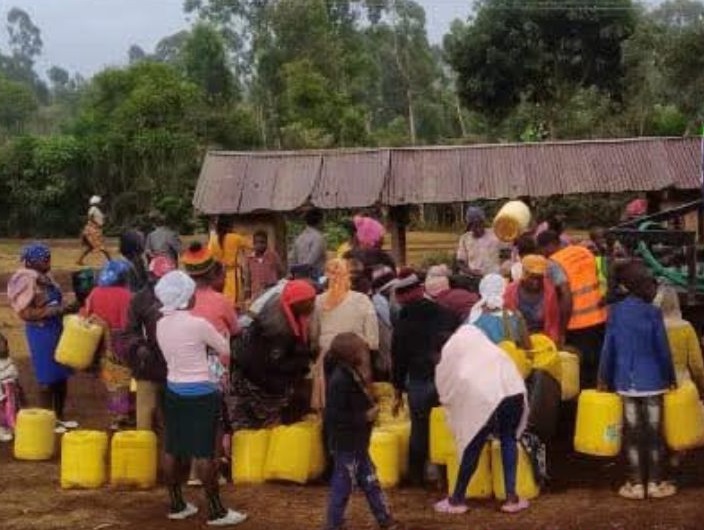
The African Coalition of Communities Responsive to Climate Change (ACCRCC) today in Lare, Meru County joined the global community in marking World Water Day 2026, calling for a decisive shift toward community-led water governance and locally driven climate solutions across Africa.
Under this year’s theme, “Water and Gender: Where Water Flows, Equality Grows,” ACCRCC highlights the disproportionate burden borne by women, girls, and marginalized groups in accessing safe and reliable water. Across the continent, millions still walk long distances daily to fetch water—limiting opportunities for education, livelihoods, and well-being.
However, ACCRCC emphasizes that communities are not passive victims of water insecurity—they are already leading solutions.
“From restoring degraded watersheds to managing local water systems, communities across Africa are demonstrating that sustainable water solutions are most effective when they are locally led, inclusive, and rooted in indigenous knowledge,” said Dr Rosalid Nkirote, the Executive Director, ACCRCC.
Community Solutions Already Driving Impact
Across Africa, community-based organizations and local networks are:
- Restoring rivers, wetlands, and catchment areas through nature-based solutions
- Establishing and managing community water systems and boreholes
- Advancing rainwater harvesting and conservation practices
- Strengthening inclusive water governance, including women-led water committees
These initiatives are delivering tangible results in improving water access, climate resilience, public health, and livelihoods.
Women as Catalysts for Water Justice
Dr Nkirote underscored that women are central to water systems at household and community levels. Investing in women’s leadership not only improves water access but also strengthens food security, health outcomes, and local economies.
“Water justice cannot be achieved without gender equality. When women lead, entire communities thrive,” the coalition noted.
A Call for Systemic Shift in Financing and Governance
As climate change intensifies droughts, floods, and water stress across Africa, ACCRCC calls for urgent action from key stakeholders including the governments which is supposed to strengthen devolved water governance and allocate funding directly to community-led initiatives
In addition, Dr Nkirote said the development partners and donors need to prioritize grassroots organizations as primary partners in implementation while the private sector actors should invest in equitable, climate-resilient water solutions.
Henry Neondo, Policy Advocacy and Stakeholder Engagement Advisor, ACCRCC stressed that achieving sustainable water access and climate resilience requires trusting, resourcing, and scaling what already works at the community level.
Towards SDG 6 and Climate Resilience
With the global commitment to achieving Sustainable Development Goal 6 (clean water and sanitation for all), Neondo warned that progress will remain limited without meaningful inclusion of community actors in decision-making and financing structures.