




By Edwin Austin
From establishing a comprehensive National AI Strategy and fostering strategic partnerships with global technology firms, to building a robust innovation ecosystem and investing in talent development, Kenya is positioning itself as Africa’s premier hub for artificial intelligence investment, innovation, and talent development.
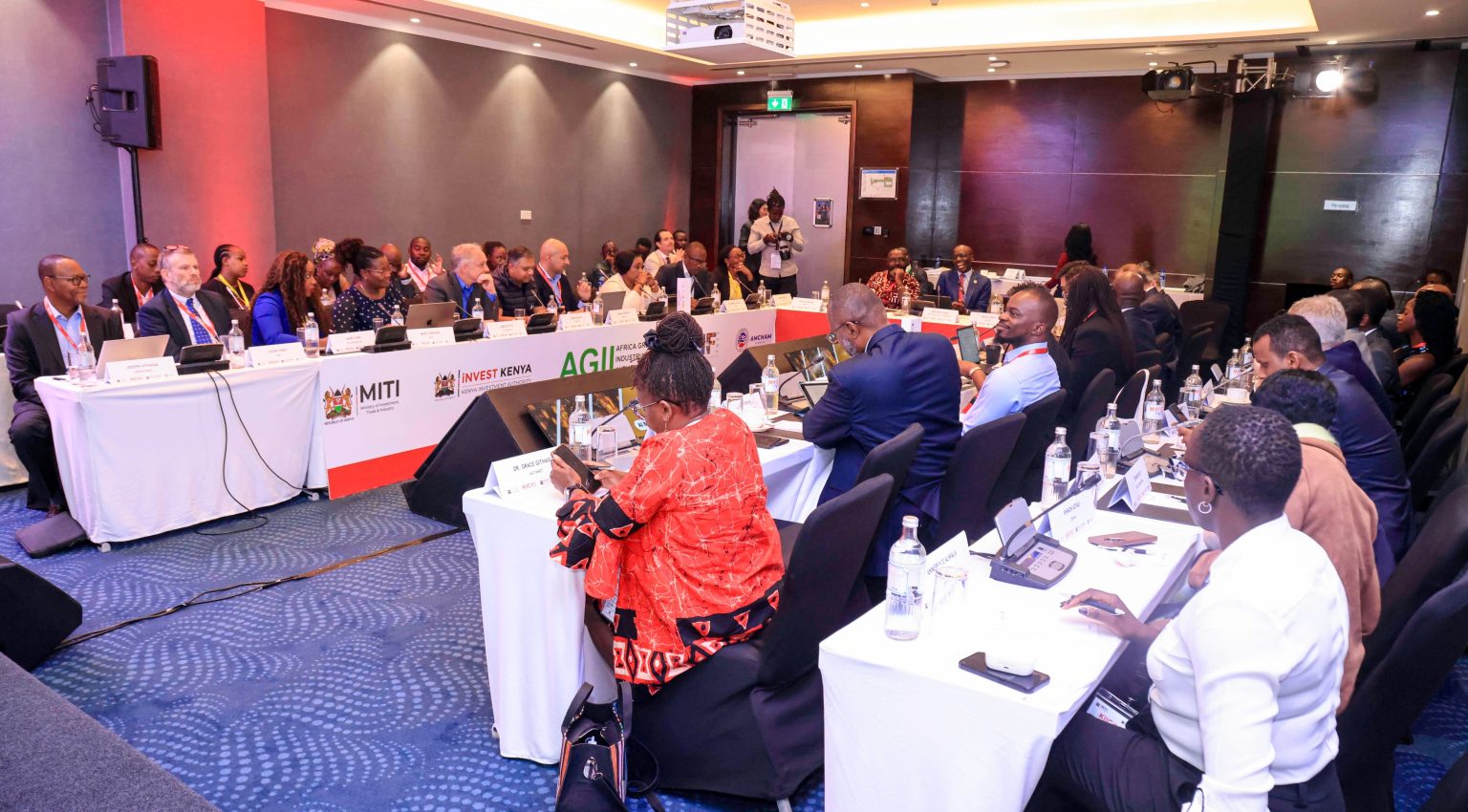
This vision came into sharp focus during a dynamic high-level roundtable convened at the Kenya International Investment Conference (KIICO 2026), where leaders charted the path forward for Kenya’s AI future.
Convened under the Chatham House rules and organised by the Office of the Special Envoy on Technology, KenInvest, and the American Chamber of Commerce, the event united 50 senior leaders from government, private sector, and investment communities to outline a comprehensive and pragmatic vision for building Kenya’s AI ecosystem.
The roundtable, themed “AI & Emerging Technologies: Investing Across the Full Stack,” was not a theoretical discourse but a targeted effort to send clear investment signals, identify regulatory priorities, and chart immediate next steps for Kenya’s emerging AI economy.
Strategists articulated five critical layers of investment: renewable energy-powered compute infrastructure, robust data systems, AI models and research tailored to local needs, scalable applications and services, and governance frameworks balancing innovation with trust and sovereignty.
Central to the discussions was the urgency of the coming 36 months, which will be a decisive window during which Kenya’s choices will determine how AI resources and economic benefits are distributed nationally and in the East African region.
Harnessing Kenya’s Renewable Energy Advantage
One of Kenya’s most compelling strategic assets is its overwhelmingly renewable energy grid. While many global AI markets grapple with energy shortages amid rising computational demands, Kenya’s clean power base offers a competitive edge to host energy-intensive AI workloads sustainably.
Participants stressed that this advantage transforms Kenya’s energy policy into a form of digital and economic policy, enabling green AI infrastructure that is both bankable and aligned with climate commitments.
The roundtable underscored growing market confidence, noting Kenya’s hosting of the region’s first hyperscaler deployment backed by $50 million in upfront risk capital. Further, investors signaled intentions to commit between $250 million and $300 million towards AI “factories” and that is to mean specialized compute hubs.
Discussions also advocated situating future data centers within Special Economic Zones, integrated with energy strategies, to capitalize on Kenya’s renewable advantage and optimize infrastructure synergies.
Toward Agile, Innovation-Friendly Regulation
Rather than imposing heavy-handed pre-emptive regulation that could stifle a nascent sector, the forum consensus favored an agile regulatory model. This includes implementing a 90-day regulatory sandbox framework that allows innovators to test AI solutions securely while enabling regulators to adapt and learn in real-time.
Strengthening existing institutions instead of creating new bureaucracies was recommended to ensure oversight capabilities evolve alongside technological advancements. Mark you, the emphasis was on smart regulation supporting innovation, interoperability, data sovereignty, and public trust.
Recognizing that infrastructure alone cannot secure Kenya’s AI leadership, participants stressed aggressive investment in developing local talent to reduce dependence on foreign expertise. Proposals ranged from aligning university curricula with industry needs and fostering AI literacy in the public sector, to creating pathways for diaspora engagement through fellowships and flexible residency options.
Further, democratizing access was a key theme, advocating partnerships between telecom operators and AI firms (inspired by Indian models) to lower barriers for young people and wider communities, preventing AI from becoming an elite privilege.
While individual remarks remain confidential under the Chatham House Rule, the meeting generated several concrete outcomes. These include the creation of an investment signals register to guide future capital flows, a regulatory requests document for government consideration, and a collective KIICO 2026 statement outlining AI investment priorities.
In addition, participants agreed on a set of forward-looking initiatives: mapping Kenya’s compute workload needs for the coming decades, publishing a Kenya-specific future of jobs report, formalizing frameworks to engage diaspora talent, and producing an investor’s guide to assess the country’s readiness for AI ecosystem development.
The overarching consensus from Nairobi was clear and that was that Kenya aspires not merely to consume external AI technologies but to become a builder of its own AI infrastructure, a cradle for localized AI models, and a jurisdiction that harmonizes innovation with sovereignty and resilience.
Kenya’s AI roundtable at KIICO 2026 sent a powerful message to investors, policymakers, and industry players. Simply put, Kenya is moving early and purposefully to claim its place as Africa’s AI investment hub.