



By Lenah Bosibori
As global health leaders convened in Nairobi for the World Health Summit Regional Meeting, another urgent conversation was unfolding quietly in clinics across the city on how to fix a cancer care system already showing signs of strain.
In consultation rooms, the reality is clear. Doctors and clinicians report more patients arriving late, with advanced tumors, limited treatment options, and shrinking chances of survival.
According to Tisha Boatman, Executive Vice President of External Affairs and Healthcare Access at Siemens Healthineers, awareness, acceptability, and affordability remain the biggest barriers.
“Kenya’s cancer burden is shaped less by a lack of innovation than by systemic bottlenecks, gaps between policy and practice, detection and diagnosis, and access and uptake,” she said
Cervical and breast cancers remain the leading causes of cancer deaths among Kenyan women, despite being largely preventable or treatable when detected early. The contradiction is clear. The tools exist, but too many patients arrive too late.
A system under pressure
The numbers tell a troubling story. Only 48 percent of eligible women in Kenya have ever been screened for cervical cancer. This gap translates into missed opportunities for early intervention.
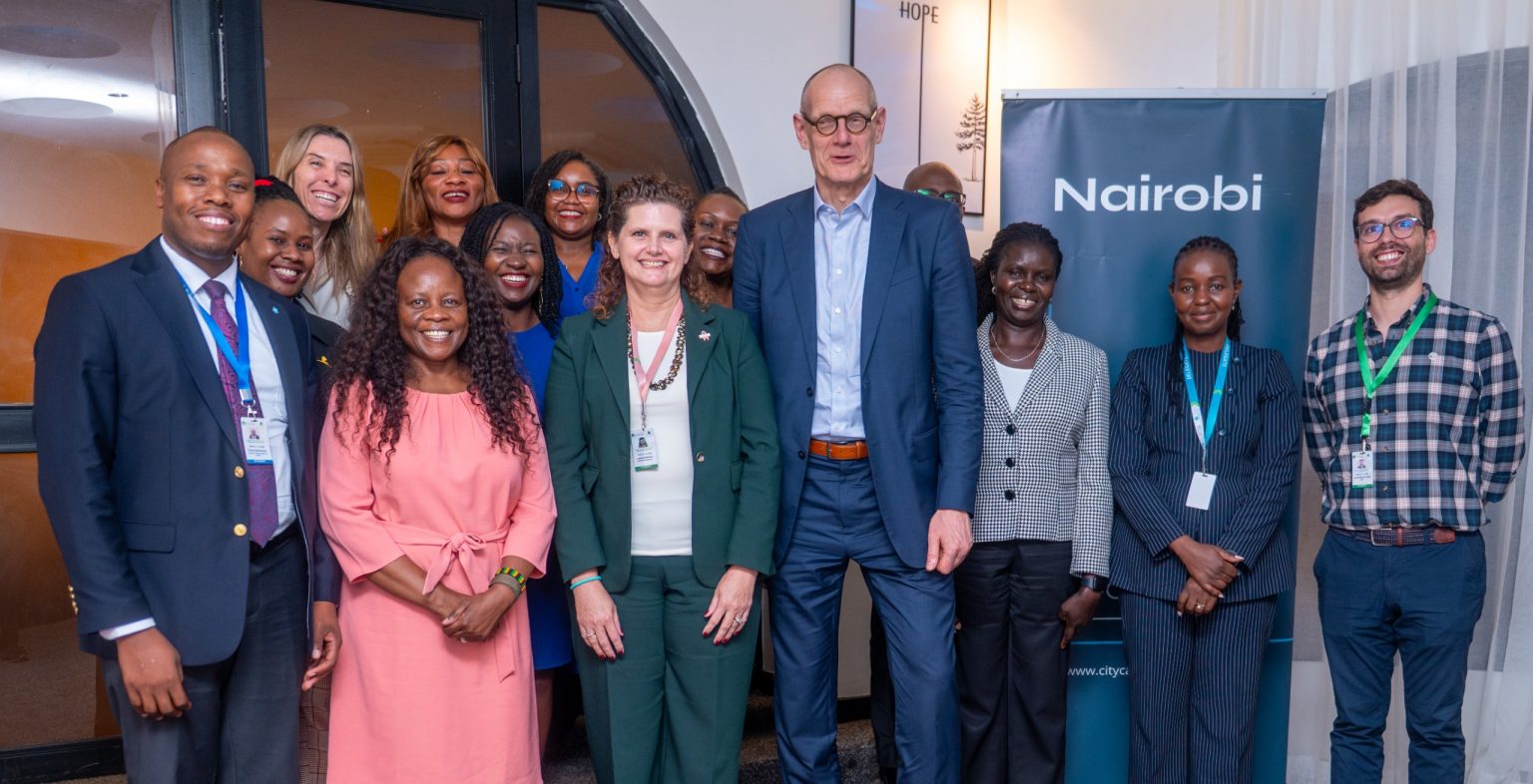
The result is predictable. More patients enter the system at advanced stages where treatment is more complex, more costly, and less effective. At the centre, efforts to address this is the City Cancer Challenge, which has been working with Nairobi since 2022 to map and strengthen cancer care.
Its approach begins with understanding the system. More than 100 health professionals, alongside civil society groups and patients, have contributed insights, resulting in 11 locally driven project. With plans aimed at improving early detection, treatment pathways, and coordination.
“What has changed is alignment,” Boatman said. “Stakeholders are now working from a shared understanding of the gaps and the direction forward.”
Cancer care in Kenya has long been fragmented across public and private sectors, levels of care, and geography. Patients often move through the system step by step, losing critical time.
Rather than importing solutions, the process is led by the city itself. Institutions commit to reform, bringing both ownership and accountability.
“C/Can doesn’t choose cities; cities apply,” Boatman explained. “It is about the willingness and capacity to drive meaningful change.”
That principle matters. In global health, pilot projects are common, but sustained system reform is not. Nairobi’s effort is an attempt to close that gap. The most critical failure point remains at the beginning of the clinical pathway.
“Early diagnosis is still a major challenge,” Boatman said. “Primary care, where symptoms are first recognized or missed, remains under resourced, screening is inconsistent and referral pathways are often slow or unclear. By the time patients reach specialist care, the disease has progressed.”
Further Boatman says that, in many households, decisions about seeking care are shaped by social dynamics. “Women may not decide alone when to seek treatment, complicating public health messaging.”
“It is not just about targeting women,” Boatman noted. “Awareness has to extend to the entire family.”
Technology promise and limits
Digital health is increasingly seen as a solution to connect fragmented services, track patients, and improve decision-making, but its impact depends on integration.
“Digital tools cannot sit in isolation,” Boatman said. “They must run across the continuum of care, from screening to diagnosis to treatment.” Kenya has signalled ambition in this space, but implementation remains uneven. Without system-wide adoption, technology risks becoming an added layer rather than a unifying solution.
Kenya’s National Cancer Control Strategy is aligning with global frameworks, while partnerships are expanding workforce training and research capacity. Training programs are increasing the number of skilled professionals, addressing a major gap in oncology care.
“The environment is evolving,” Boatman said. “There is increasing space for collaboration, including private sector engagement. That is essential for sustainability.”
Programs such as Afya Dada are working to bridge the gap between community awareness and clinical care, linking education, screening, and treatment. Through initiatives linked to the World Economic Forum, integrated models combining awareness, training, screening, and monitoring are being tested in counties such as Uasin Gishu and Machakos.
If current gaps persist, the outcome is clear. More late-stage diagnoses, rising treatment costs, and preventable deaths. With stronger early detection, better primary care, and coordinated systems, Nairobi could begin to shift the trajectory, not through breakthroughs, but through better use of existing tools.
For now, progress is incremental. Plans are in place. Systems are being tested. Outcomes are still emerging. The question is whether this moment of alignment will translate into measurable change. For many patients in Nairobi, it may determine not just how they are treated, but whether they arrive in time to be treated at all.