


Marsabit County pastoralists are set to benefit from new research as scientists from Denmark and Kenya work with local communities to develop climate-adaptive practices to boost milk production, safety and support livelihoods.
The researchers are working closely with pastoralists, dairy cooperatives and local authorities to address the challenges affecting the dairy value chain and generate applicable data to guide practical interventions in the County.
Working under the DANIDA-funded ADAPTiVE project, the research team is led by the University of Copenhagen in partnership with Jomo Kenyatta University of Agriculture and Technology (JKUAT), University of Nairobi (UoN), Kenya Agricultural and Livestock Research Organization (KALRO) and Karare Women Dairy Cooperative.
The ADAPTiVE project aims to examine how climate change and socio-cultural practices influence food safety behaviour and livelihoods along the pastoral milk value chain. It seeks to develop and test climate – adaptive strategies that promote sustainable milk production and improv
ed milk safety, while identifying practical and scalable approaches suited to pastoralist milk producing communities.
A stakeholders’ forum held in Marsabit County from September 15–18, 2026 brought together project partners and community members to exchange ideas on the research, gather feedback, refine data collection tools, and mobilize community support for the project.
The Principal Investigator of the project, Prof. Jørgen Dejgård Jensen of the University of Copenhagen, said the research will be instrumental in empowering communities, particularly women in the pastoral communities, to make informed decisions and adapt to the changing climate.
He noted that the impact of climate change on the dairy sector is not determined by climate conditions alone, but also by the decisions made at different stages of the value chain, from livestock management and milk production to handling, marketing and consumption.
The Co-Principal Investigator, Dr. John Kinyuru from JKUAT’s Food Science and Technology Department, said the project seeks to move beyond generating academic knowledge by producing evidence that can help shape practical solutions for farmers and other actors along the dairy value chain.
He said working directly with communities was essential to understanding the realities behind the data and ensuring that the adaptation strategies developed are relevant to local needs, particularly in improving milk safety, production and livelihoods.
Dr. Monicah Maichomo, a Veterinary Epidemiologist at KALRO, urged the County Government to support the community in implementing the project through strengthened public–private partnerships, with the ultimate goal of translating the research outcomes into commercially viable, scalable solutions that enhance pastoral milk production, milk safety, and livelihoods.
Despite noticing positive progress in the cultural shift, she decried the slow progress at which the community is adapting and implementing the resources that have been availed to them to boost the milk production and commercialization.
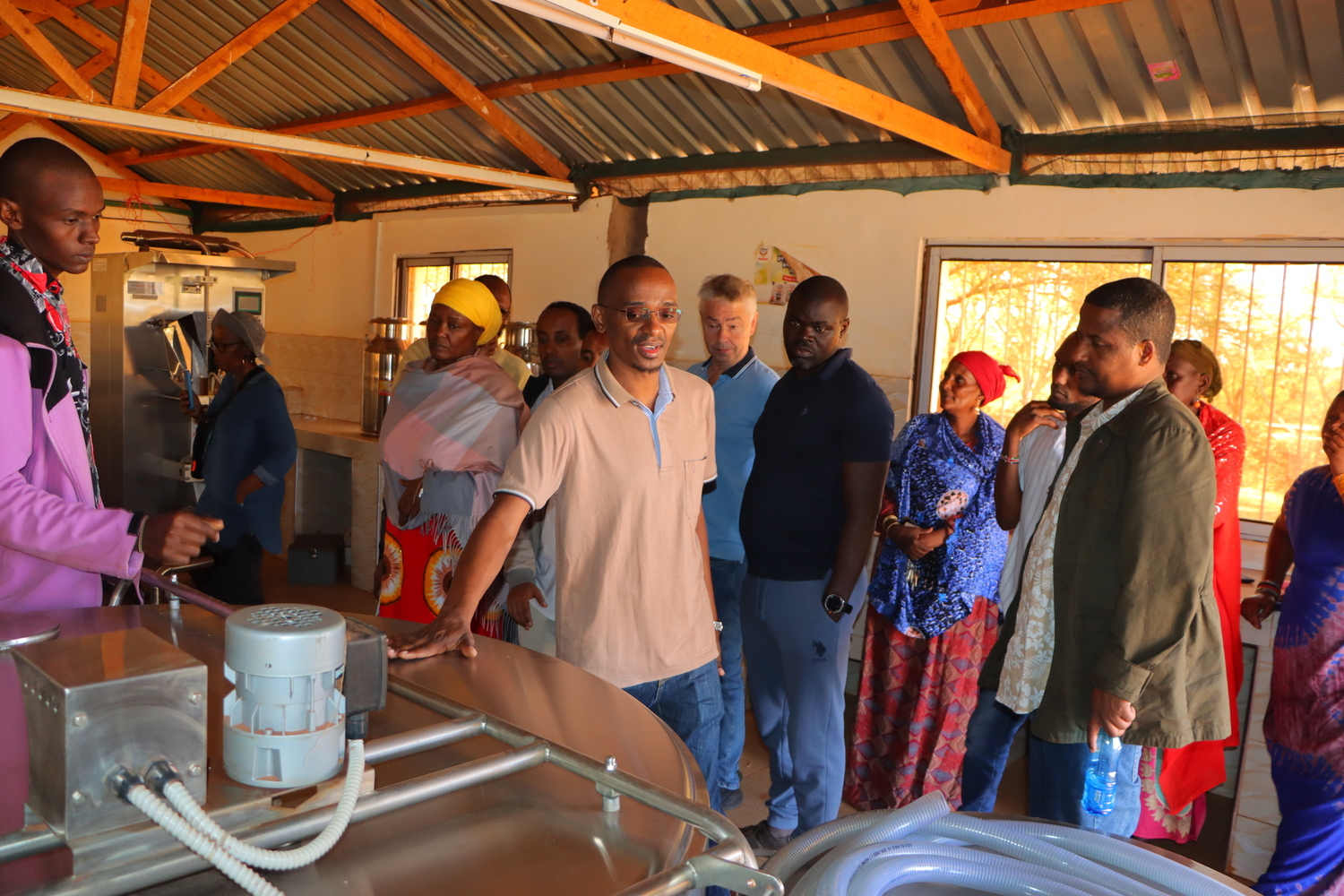
The field visit provided an opportunity for the research team to gain first-hand insight into dairy production and milk handling practices in the arid and semi-arid region.
A major focus of the project is the Karare Women Dairy Cooperative, a women-led organization that provides market access for female milk producers in Marsabit. The partnership is intended to strengthen the role of women in the dairy value chain while exploring ways of making milk a more reliable source of income for pastoralist households.
The project also incorporates capacity building through PhD training, scientific publications, stakeholder engagement and knowledge sharing.
Four PhD students from JKUAT and UoN have been incorporated into the research to undertake studies aligned with the project’s objectives. They are Jacob Koome, Erkie Asmare and Wilfred Omondi from JKUAT, and Jacquelyne Nnassuna from UoN.
Their participation is expected to strengthen local research capacity while generating evidence that can contribute to climate adaptation within Kenya’s dairy value chain.
Other project members include; Dr. Mohammed Hussen Alemu and Dr. Dagim Belay from the University of Copenhagen, as well as Dr. Samuel Imathiu and Dr. Eucabeth Majiwa both from JKUAT.