



By Lenah Bosibori
Kenya is intensifying efforts to position Africa as a global leader in science, research, and innovation, amid renewed calls for increased domestic investment in research and stronger collaboration between governments, academia, and communities.
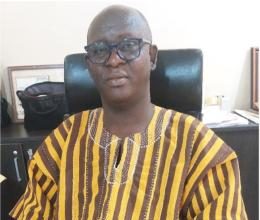
Speaking during the launch of the African Population and Health Research Center (APHRC) ultra-modern Knowledge Hub in Nairobi, Principal Secretary for the State Department for Science, Research and Innovation, Prof. Shaukat Abdulrazak, stressed the urgent need for Africa to generate its own data and develop homegrown solutions to address the continent’s growing social and economic challenges.
“This new facility is a strategic investment in Africa’s future. The continent’s transformation will increasingly depend on our ability to generate, interpret, and apply evidence to solve complex development challenges,” said Abdulrazak.
The event also marked 25 years of APHRC’s work in advancing research, policy engagement, and sustainable development across Africa.
Prof Abdulrazak represented the Prime Cabinet Secretary and Cabinet Secretary for Foreign and Diaspora Affairs Musalia Mudavadi, also noted that Africa’s transformation would increasingly depend on its ability to generate and apply evidence-based solutions.
“This knowledge hub is more than a building. It is a bold statement about the continent’s readiness to shape its development trajectory through research, innovation, and collaboration,” he said.
He further noted that Kenya recently launched the Science, Research and Innovation Strategy Blueprint, a KSh500 billion framework designed to strengthen the country’s research ecosystem, eliminate duplication among institutions, and improve access to research infrastructure.
Prof Abdulrazak added that the government was committed to increasing funding for science and innovation, with plans to move from the current 0.78 percent of GDP allocated to research towards the African Union target of at least one percent and eventually two percent as provided under Kenya’s Science, Technology and Innovation Act.
“Africa must invest in itself. We cannot continue depending on external systems for knowledge and solutions,” he said.
The government also announced plans to establish a Science, Research and Innovation Observatory and a national data repository to improve data generation and evidence-based policymaking.
Officials said lack of locally generated data continues to undermine Africa’s ability to make informed decisions, especially in areas such as pharmaceutical manufacturing, precision medicine, vaccination, food security, and climate resilience.
“Africa does not create adequate data. Sometimes we formulate policies or even develop medicines using data that was not generated here,” the official said.
APHRC Executive Director Dr. Catherine Kyobutungi said the institution has spent the last 25 years ensuring that science goes beyond academic journals and translates into real solutions for communities.
“We do not want science for the sake of science. We want research that solves societal problems and improves lives,” she said.
Kyobutungi noted that APHRC, which started with only seven staff members, now has more than 350 employees and a footprint in over 40 African countries.
She said the center has contributed to policy reforms in areas including non-communicable diseases, reproductive health, urban health, and food systems.
According to her, the institution is now focusing on strengthening Africa’s research and development ecosystem by connecting researchers, governments, communities, and industries to ensure science directly informs policy and development.
“We want to build a truly African knowledge system that serves African interests first,” she said.
The launch comes amid growing calls across the continent for African governments to invest more in research, innovation, and homegrown technologies to address persistent development challenges.
Experts at the event said stronger collaboration between governments, universities, private sector players, and communities would be critical in ensuring research leads to tangible economic and social impact.
The new knowledge hub is expected to serve as a center for collaboration among researchers, policymakers, innovators, and young scientists across Africa.