




By Correspondent
Somalia is seeking to capitalise on its long coastline along the Indian Ocean to expand maritime logistics and livestock trade, positioning itself as a strategic gateway for the Horn of Africa as the African Continental Free Trade Area (AfCFTA) reshapes regional commerce.
With key ports including Mogadishu, Berbera and Kismayo, the country aims to link landlocked neighbours such as Ethiopia to global markets, leveraging AfCFTA to boost livestock exports and strengthen trade corridors across the Horn of Africa.
Livestock remains the backbone of Somalia’s economy, contributing about 45 per cent of gross domestic product and generating more than 70 per cent of export earnings, underscoring the sector’s central role in regional trade integration efforts.
“Somalia’s coastline and port infrastructure provide a natural advantage for regional trade. Under AfCFTA, we are positioning our ports and logistics systems to serve as a gateway connecting livestock producers in the Horn of Africa to continental markets,” said Osman Ibrahim, Director of Foreign Trade and Market Access.
Somalia’s broader export profile also includes sesame, lemons, frankincense, myrrh and fisheries products, while the country continues to import manufactured goods and food items as it works to diversify production and strengthen domestic industries.
Economic projections show Somalia’s gross domestic product rising from about $11.97 billion to $13.9 billion between 2024 and 2026, reflecting a projected real growth rate of around 3.3 per cent as trade reforms and regional integration advance.
The country has made significant progress toward implementing the AfCFTA, signing the agreement in Kigali in 2018 before securing cabinet approval in 2020 and validating its national AfCFTA implementation strategy in 2023.
Somalia strengthened its regional integration credentials after gaining full membership in the East African Community in March 2024 and aligning its tariff structures with the bloc’s Common External Tariff, a move expected to facilitate cross-border trade flows.
In October 2025, Somalia’s parliament ratified the AfCFTA agreement with 145 votes in favour, while the government continues final steps toward full implementation, including presidential assent and submission of ratification instruments to the African Union Commission.
Authorities are also establishing a national AfCFTA implementation committee and developing detailed export procedures for ports and border points to guide businesses seeking to access continental markets under the new trade framework.
“Beyond exporting live animals, Somalia’s strategy is to build value chains in processed meat and leather so that our livestock sector captures greater value from continental markets created under AfCFTA,” Ibrahim said.
The government is also promoting new economic sectors, including fisheries under the blue economy strategy, agriculture expansion in sesame and bananas, and exploration of energy and mineral resources following discoveries of lithium, copper and gold deposits.
Initial surveys indicate Somalia could hold oil and gas reserves of roughly 30 billion barrels, with the country planning its first onshore and offshore drilling operations in 2026 as part of efforts to diversify its economic base.
However, officials acknowledge that infrastructure gaps, regulatory reforms and security challenges remain significant hurdles, alongside the country’s heavy reliance on imports and the need to strengthen quality and sanitary standards for exports.
To address these challenges, Somalia plans to strengthen cross-border infrastructure corridors linking Somalia, Kenya, Djibouti and Ethiopia while improving digital trade systems, harmonizing sanitary standards and integrating pastoralist communities into formal regional livestock trade.
In the longer term, authorities envision Somali ports emerging as major export hubs serving the Horn of Africa, with livestock exports meeting continental sanitary standards and small-scale producers participating more fully in Africa’s expanding single market.
Across the Intergovernmental Authority on Development (IGAD) region, livestock resources remain vast, with about 155 million cattle, 133 million sheep, 160 million goats and 24 million camels across Djibouti, Eritrea, Ethiopia, Kenya, Somalia, South Sudan, Sudan and Uganda.
Despite this strong production base, policymakers say fragmented regulations, weak coordination and inconsistent sanitary and phytosanitary requirements continue to constrain the region’s ability to fully participate in continental and global livestock trade.
Officials say stronger trade coordination in Somalia could also, ultimately, enable IGAD member states to better position their livestock sectors to supply rapidly expanding markets in the Middle East, North Africa and parts of Asia, highlighting its strategic importance in global livestock trade.
The Middle East market is projected to reach about 870 million consumers by 2025, while Saudi Arabia’s meat sector is expected to grow 5.4 per cent annually to 2032, as the IGAD region supplies 58 per cent of live animals and 10 per cent of meat demand.
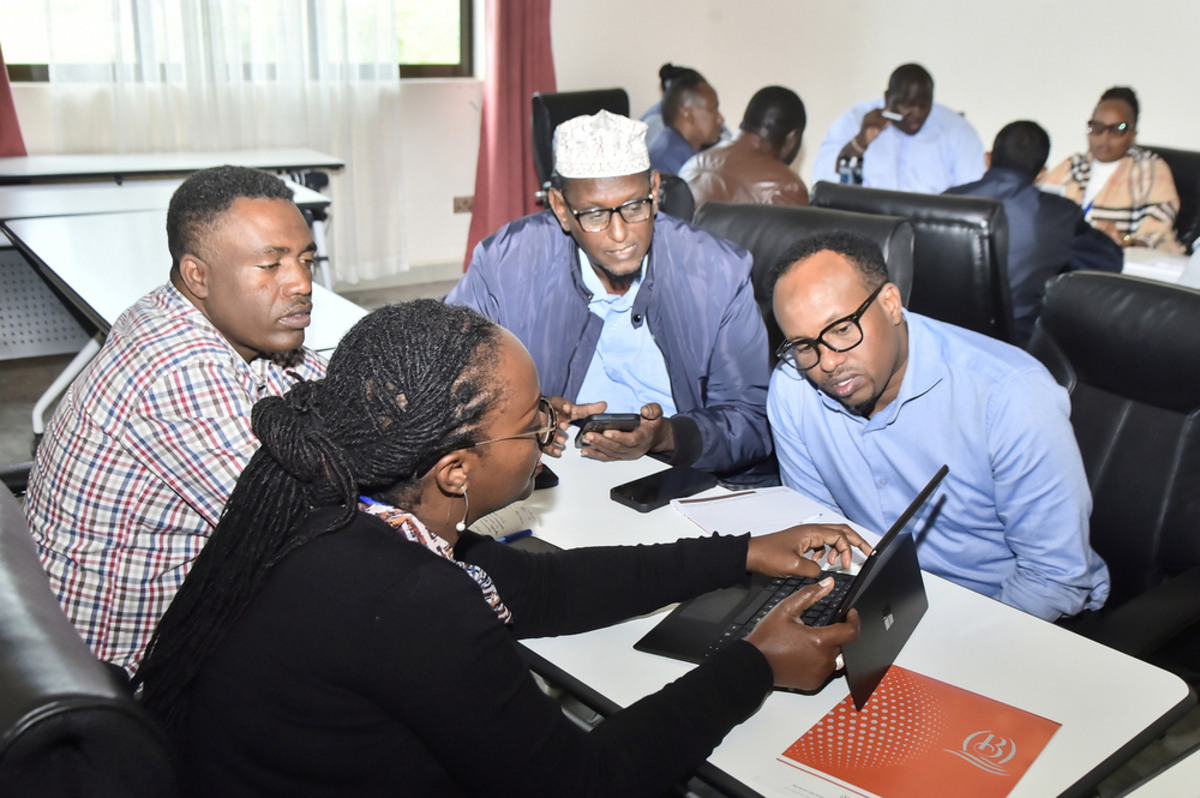
These concerns were highlighted at a regional consultations’ forum aimed at harmonising livestock movement permits, sanitary certification, vaccination records and halal certification to enable smoother trade under AfCFTA frameworks.
The consultations convened by the Inter African Bureau for Animal Resources (AU-IBAR) in Naivasha, Nakuru County, also focus on establishing mutual recognition agreements and standard operating procedures along key livestock trade corridors, including cross-border routes linking Kenya, Ethiopia and Somalia.
The convener, the African Union’s Inter-African Bureau for Animal Resources (AU-IBAR), says many cross-border livestock movements across the Horn of Africa remain governed by informal arrangements and unharmonised national policies.
“This consultation, therefore, represents an important step forward. It aims to move beyond policy dialogue and focus on developing practical instruments that can support the operationalisation of AfCFTA-compliant livestock trade,” said AU-IBAR Director Dr Huyam Ahmed.