


By Lenah Bosibori
Across Kenya, challenges such as drought, long distances to health facilities, and limited access to clean water continue to burden rural communities. However, a youth-led volunteer programme by CorpsAfrica is helping to shift this narrative by empowering communities to take charge of their own development by designing, funding, and implementing locally driven solutions.
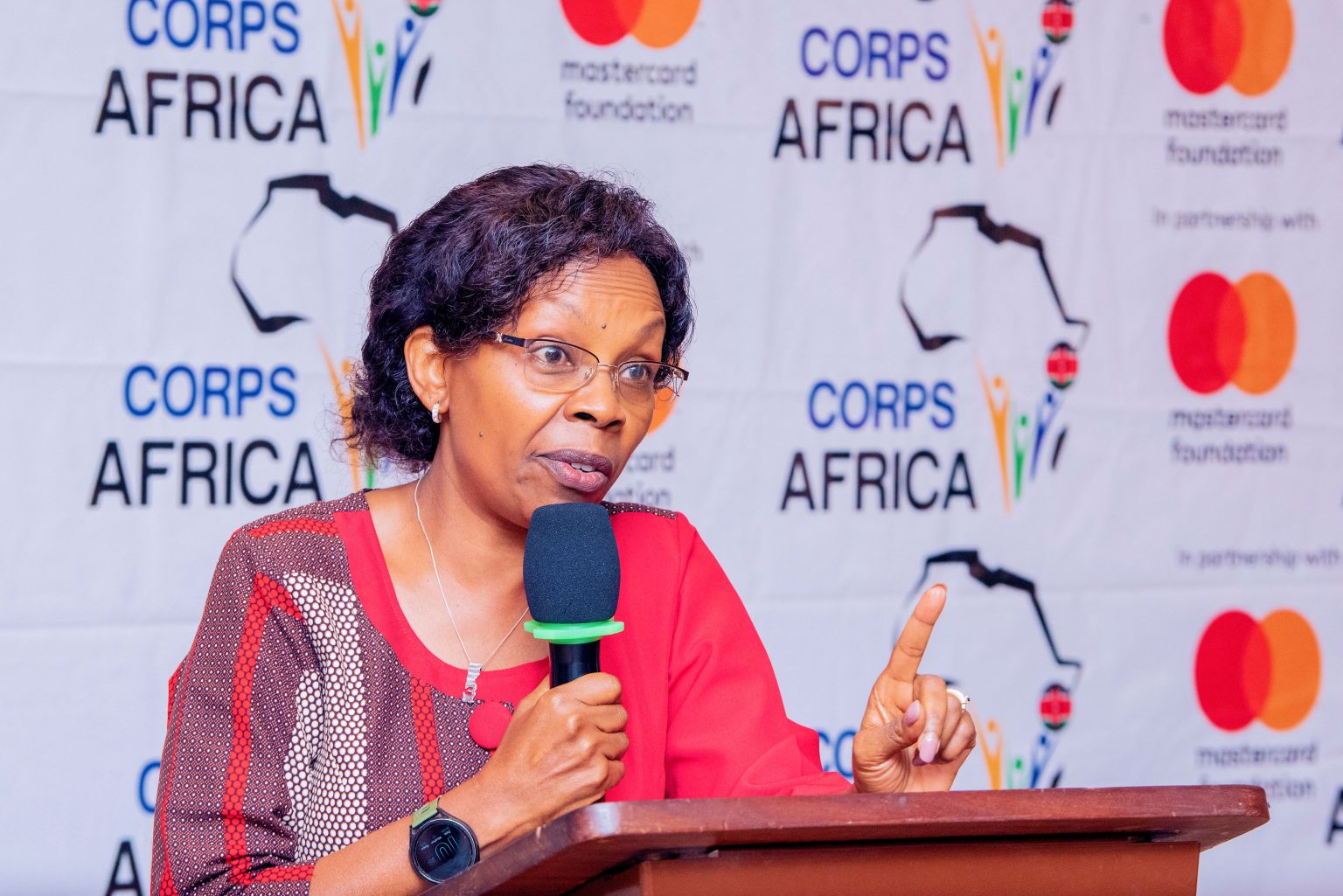
Speaking in Nairobi during a pitch day programme to support some of the youth led projects in different counties across the country, Dr. Patricia Kingori, Country Director of CorpsAfrica Kenya, says the organization recruit’s university graduates into a one-year volunteer programme that places them in rural communities to drive grassroots change.
“We are not giving handouts, we are giving a hand up,” she said during an interview with journalists.
Through the programme, young graduates are trained and deployed to live and work in underserved areas, where they help communities identify key challenges and develop practical solutions using locally available resources. The focus ranges from financial literacy and entrepreneurship to hygiene, nutrition, and small-scale income-generating activities.
At the heart of the model is community ownership. Residents contribute up to 25% of project costs through cash, labour, and materials an approach that fosters sustainability and reduces reliance on donor funding.
Dr. Kingori notes that the initiative responds to a pressing demographic reality: nearly 70% of Africa’s population is youth, many of whom struggle to find employment after graduation due to lack of experience.
“This one year gives them skills they will never learn in a lecture room resilience, leadership, and project management,” she said, adding that some participants go on to start their own businesses after identifying opportunities in the communities they serve.
The programme uses Human-Centered Design (HCD), a problem-solving approach that puts communities at the center of decision-making. Rather than large, donor-driven projects, communities start small testing ideas and scaling them over time.
Success Project
According to Dr. Kingori, one of their successful projects is in Kitui County, where the model supported the construction of a maternal and child health unit, significantly improving access to care. “It has reduced the distance women travel to access delivery services from up to 12 kilometers,” she said. “Previously, some mothers gave birth on the way due to lack of access.”
Other projects have focused on water purification in Tharaka Nithi and Machakos, as well as hygiene and nutrition training at the household level efforts that collectively improve health outcomes.
“Volunteers are selected through a competitive process that prioritizes a genuine commitment to service. They are often deployed outside their home regions to promote cultural exchange and national cohesion,” added Dr Kingori
The organization also targets areas with high poverty levels and large populations of unemployed youth, particularly those not in education, employment, or training (NEET), aiming to give them purpose and practical skills.
With communities mobilizing their own resources and young people driving implementation, the model is emerging as a sustainable alternative to traditional aid.
“Development takes all of us,” Dr. Kingori said. “When communities own the process, they are able to sustain it and grow it long after we are gone.”