





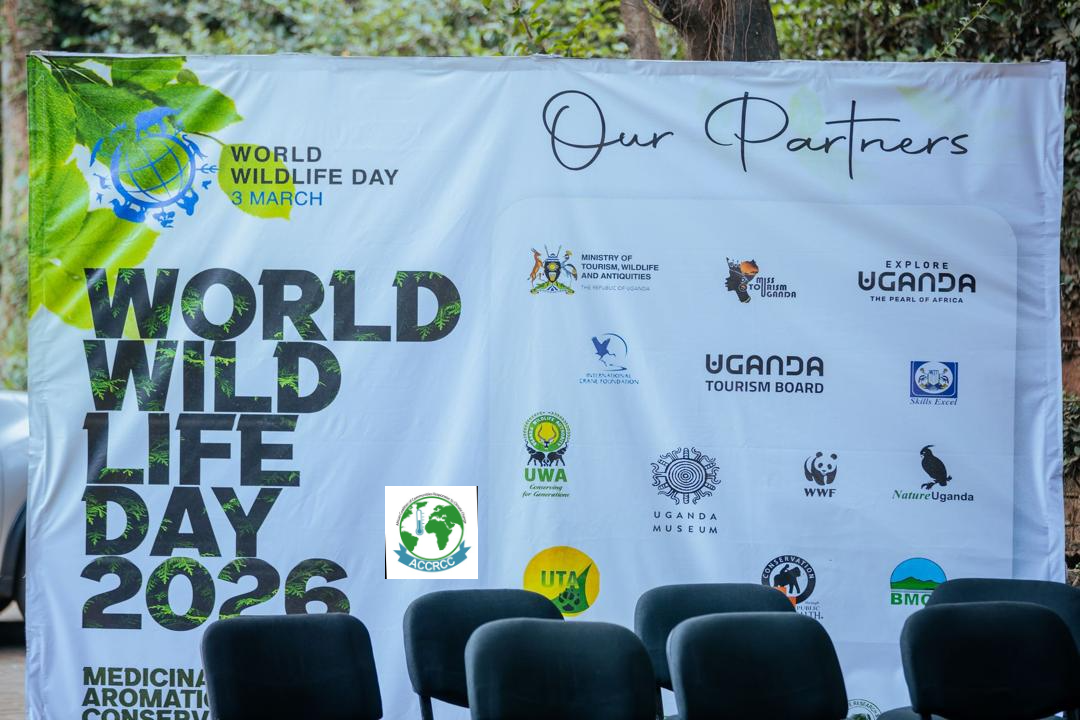
On this year’s World Wildlife Day, the African Coalition of Communities Responsive to Climate Change (ACCRCC) joins the global community in recognizing the incalculable value of wildlife to humanity and to the survival of our planet.
Across Africa, communities depend directly on wildlife and biodiversity-based resources for food, fuel, medicine, shelter, clothing, and income. From pastoralists in the drylands of northern Kenya, to reach farmlands of central Uganda and forest communities in the Congo Basin, wild fauna and flora are not abstract environmental assets—they are the foundation of daily life, cultural identity, and local economies.
World Wildlife Day, observed annually under the auspices of the United Nations, offers an important moment to celebrate the richness and diversity of the world’s wildlife while confronting the escalating threats it faces. Wildlife crime, habitat destruction, climate change, pollution, and unsustainable land-use practices continue to erode ecosystems at alarming rates. The consequences are far-reaching—undermining food security, public health, climate resilience, and economic stability, particularly for vulnerable communities across Africa.
According to Henry Neondo, Policy Advocacy Influencing and Engagement, the 2026 global theme, “Medicinal and Aromatic Plants: Conserving Health, Heritage and Livelihoods,” resonates deeply with African realities. Medicinal and aromatic plants are central to traditional health systems, cultural heritage, and community-based enterprises.
“For millions of Africans, these plants provide affordable primary healthcare and income opportunities, especially for women and Indigenous knowledge holders,” said Andrew Sande, country director, ACCRCC Uganda.
However, these critical resources are under growing pressure. Overharvesting, land degradation, deforestation, biodiversity loss, and the intensifying impacts of climate change are threatening their survival. Without urgent conservation and sustainable management strategies, communities risk losing both vital health resources and irreplaceable cultural knowledge passed down through generations.
To that end, Dr Rosalid Nkirote, the Executive Director, ACCRCC calls for stronger community-led conservation frameworks that recognize and secure local land and resource rights. She said investment in sustainable harvesting and value chains for medicinal and aromatic plants are key to enhance livelihoods without degrading ecosystems.
She noted that integration of Indigenous and local knowledge into national biodiversity and climate policies will enhance enforcement against wildlife crime, and reduce economic vulnerability.
Protecting wildlife is not merely about conserving species—it is about safeguarding health systems, cultural heritage, climate resilience, and economic dignity. As Africa confronts intersecting crises of biodiversity loss and climate change, community-driven solutions must be at the center of policy and practice.
On this World Wildlife Day 2026, ACCRCC reaffirms its commitment to working with governments, civil society, and international partners to ensure that Africa’s wildlife and medicinal plants continue to sustain present and future generations.