



Efforts to contain the spread of foot-and-mouth disease (FMD) along the South Africa-Botswana border are gaining momentum as authorities intensify vaccination campaigns and strengthen regional cooperation to protect livestock and rural livelihoods.
The disease, which remains one of the biggest threats to livestock production in Southern Africa, continues to disrupt farming communities, trade and food systems, particularly in border regions where the movement of animals between neighbouring countries is common.
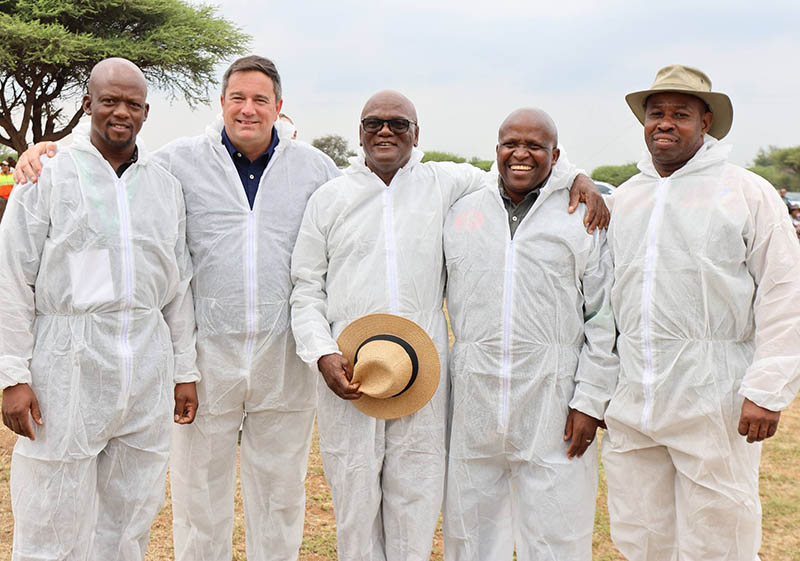
In high-risk areas such as Zeerust in South Africa’s North West Province, veterinary officials, farmers and governments are working together to curb transmission through expanded vaccination programmes, surveillance and stricter biosecurity measures.
According to Hannes Lombard, Manager, Molelwane Farm at North-West University’s Mahikeng Campus.vaccination remains one of the most effective tools in reducing the spread and severity of outbreaks despite limitations in vaccine effectiveness.
“While FMD vaccines are not 100 percent effective, they remain one of the most important tools for reducing infection rates and limiting the severity of outbreaks,” said Lombard.
He noted that border communities such as Zeerust face heightened risks because of frequent livestock movement between South Africa and Botswana, creating conditions that allow the disease to spread rapidly across territories.
“In high-risk corridors such as Zeerust, widespread vaccination significantly reduces the probability of transmission, especially when combined with awareness campaigns that encourage farmer compliance,” Lombard explained.
According to livestock experts, FMD outbreaks can have devastating economic consequences for farmers and national economies due to livestock deaths, reduced productivity and restrictions on trade in animals and animal products.
Authorities in South Africa have therefore adopted a broader strategy that combines vaccination with surveillance, rapid response systems and movement controls aimed at containing outbreaks before they escalate.
Lombard stressed that vaccination alone would not be sufficient without stronger farm-level biosecurity measures and community participation.
“Strict movement control measures, regular surveillance and rapid reporting systems should complement vaccination,” he said. “Effective biosecurity practices are essential, such as quarantining newly introduced animals, disinfecting transport vehicles and monitoring communal grazing areas.”
Rural farming communities, particularly those relying on communal grazing systems and informal livestock trade, remain central to the success of disease control measures.
“Long-term success depends on compliance at farm and community level,” Lombard said. “The way farmers manage animal movement and respond to outbreaks plays a major role in determining whether the disease spreads or is contained.”
He also underscored the importance of regional collaboration between Southern African countries, noting that animal diseases such as FMD cannot be effectively managed through isolated national responses.
“FMD does not respect borders, so harmonised vaccination schedules, shared surveillance data and joint response protocols are crucial,” Lombard said.
He added that stronger collaboration between governments, veterinary authorities and farming communities helps build regional resilience while ensuring long-term sustainability of interventions.
As Southern African countries continue to battle recurring FMD outbreaks, experts say the Zeerust intervention highlights the growing need for coordinated regional action to safeguard animal health, food security and agricultural economies across the region.