


By Lena Bosibori
When the rains arrive, farmers are often in a race against time. They need seeds to plant, but for many small-scale farmers, getting the money to buy them can be a struggle. By the time they find the money, the planting season may already be underway, leaving them behind.
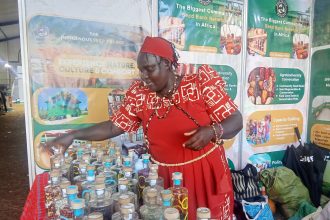
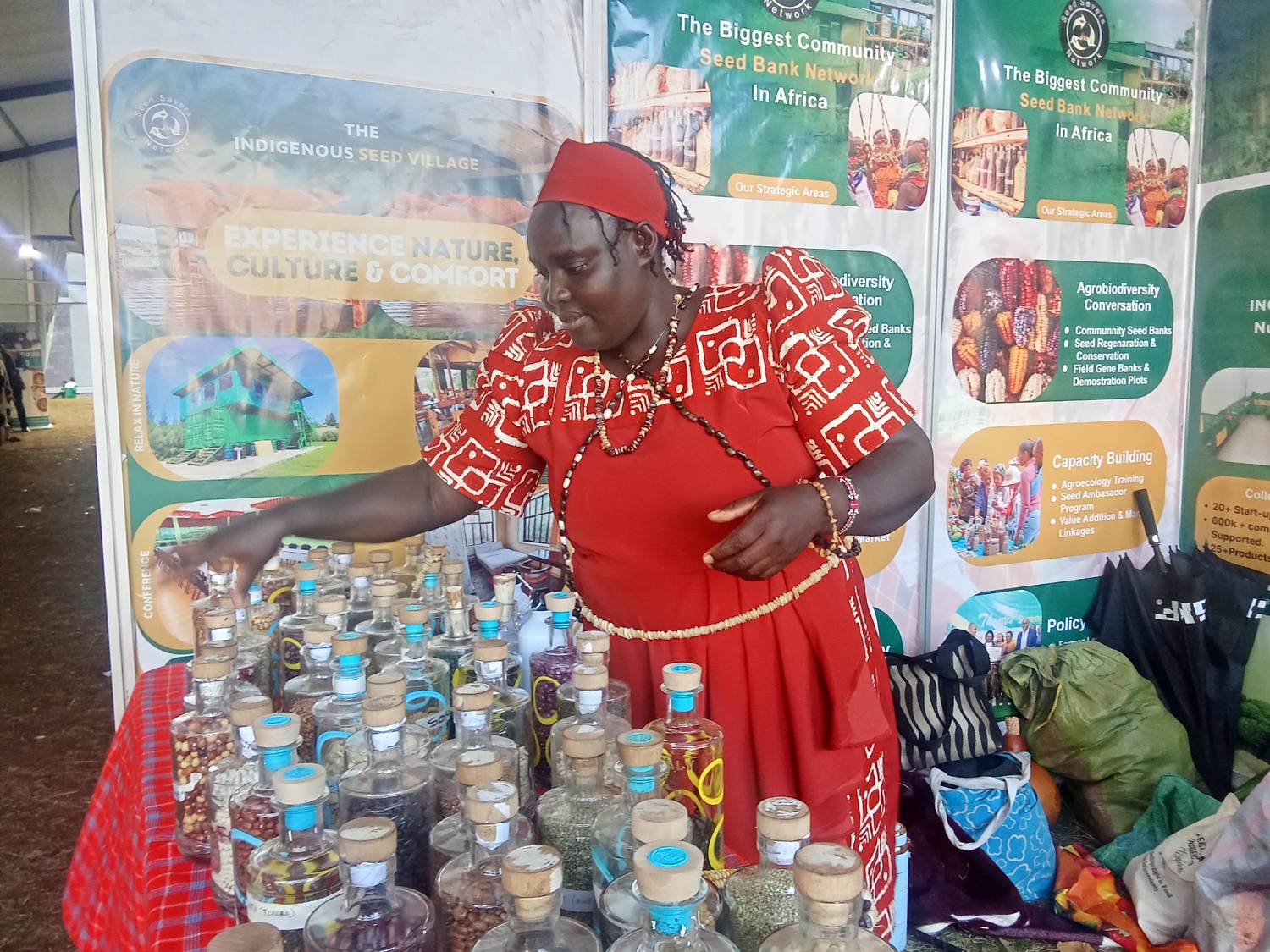
For Martha Njenga, an agroecology farmer from Gilgil in Nakuru County, this is a challenge she has watched many farmers face. It is also what inspired her to start saving indigenous seeds.
“I saw that our people were struggling to get seeds. Even when they managed to get them, some of the seeds were not good,” says Njenga, who is also a media influencer and a member of Seed Savers Network Kenya.
She recalls how farmers without money at the beginning of the rainy season would have to look for alternative ways to raise money to buy seeds, while those who had access to stored seeds could plant immediately.
Rather than watch fellow farmers struggle every planting season, Njenga became part of a community seed saving initiative that allows farmers to preserve, share and exchange indigenous seeds.
Through their community seed bank, members can borrow seeds when they run short and return them after harvesting, with an additional quantity to keep the bank stocked for other farmers.
“If we give you 10 kilogrammes, you return 13 kilogrammes. We save the extra seeds so that tomorrow, another farmer can come and get some,” she explains.
The arrangement helps farmers access seeds when they need them without having to depend entirely on buying new ones. It also creates a shared resource that members can rely on when they lose their own seeds or face a poor harvest.
For Njenga, however, seed saving goes beyond helping farmers prepare for the planting season. It is also about preserving a heritage passed down through generations. “I love indigenous seeds because they are the only seeds you can plant continuously. We got them from our grandparents. I got mine from my grandmother,” she says.
Today, she has preserved 15 varieties of maize and more than 60 varieties of beans.
She is determined to keep these seeds alive because she believes the food farmers grow eventually finds its way to their kitchens and onto their plates. “What goes into the kitchen is what goes into our mouths. If we continue keeping our seed bank, we will have healthy food,” she says.
Njenga’s commitment to indigenous seeds is also reflected in what she wears. Around her neck is a necklace made from different varieties of indigenous maize, a reminder that local seeds have value beyond the farm and the kitchen.
She believes indigenous crops can inspire creativity and be used to make beautiful products, challenging the perception that traditional seeds have little value in modern society. “Our seeds are smart,” she says.
Her farming practices are equally rooted in agroecology. Njenga and other members of her group avoid synthetic chemicals, relying instead on organic manure and locally available materials to manage soil fertility and pests.
She says farmers use manure from livestock such as cows and goats, as well as plants such as tithonia, onions and garlic to support crop production and keep pests away.
The group has about 150 members who also visit one another’s farms, sometimes without prior notice, to check on farming practices and encourage one another to maintain organic production.
Njenga says they also test seed germination to ensure that the seeds stored and shared through the community bank can grow successfully when planted.
Although maintaining the seed bank requires commitment, she believes the benefits outweigh the challenges. Farmers have access to planting materials, preserve crop diversity and learn from one another.
Her message to consumers is that food choices matter just as much as how food is produced. “Anyone who eats is a farmer. Eat organic so that we can avoid diseases. Organic is the way to go,” she says.
For Njenga, every seed saved is an investment in the next planting season and in the generations that will come after her. By keeping alive the varieties she inherited from her grandmother, she hopes other farmers will also recognize the value of indigenous seeds and continue passing them on.