




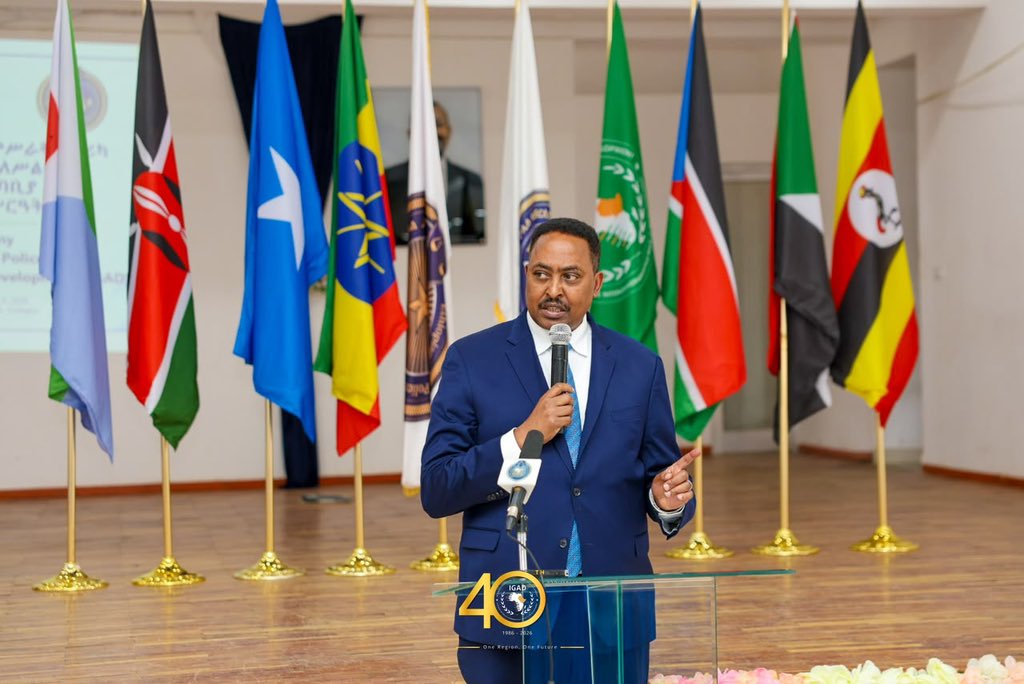
IGAD Executive Secretary Dr. Workneh Gebeyehu has emphasized that tackling global crises such as the severe drought in the Horn of Africa demands stronger, more inclusive multilateral cooperation grounded in genuine solidarity.
In his remarks following the Berlin based Hamburg Sustainability Conference, the executive secretary has stressed that sustainable development and effective disaster prevention rely on equitable partnerships that empower regional institutions, provide timely and predictable funding, and recognize all nations as equal stakeholders, not merely as donors and recipients.
According to Gebeyehu, without this renewed commitment to shared responsibility, the world’s ambitions for 2030 will remain out of reach.
“The threats that will decide 2030 keep no borders, so the answer to them cannot either. Cooperation, and the institutions that carry it, are the only grounds on which durable development has stood”.
As the Horn of Africa grapples with one of its most severe droughts in recent decades, the executive secretary has said this humanitarian crisis not only highlights the dire local conditions but also unveils a more profound issue: the critical lack of global solidarity essential for addressing borderless challenges that affect us all.
In a statement linked to the Hamburg Sustainability Conference, he articulated that the current crisis is not just about immediate relief but is emblematic of an urgent call for stronger and equitable partnerships that go beyond mere charity and token gestures. “No single nation can endure the Horn of Africa alone,” he emphasized, recalling the very inception of IGAD nearly forty years ago when six governments united to confront the common challenges of drought and famine collectively.
In light of the ongoing humanitarian emergency, Gebeyehu advocates for a comprehensive reform in the management of international development and climate finance. He asserts that financial resources should be allocated directly through regional organizations that are closest to the humanitarian issues at hand, thereby ensuring that assistance is not only timely but also contextually relevant.
By shifting the focus from reactive measures to proactive strategies, the region could minimize the impact of such disasters before they occur. Quoting the alarming statistic of a $4 trillion funding gap in the pursuit of the Sustainable Development Goals (SDGs), he warns that without practical cooperation anchored in local realities, the ambitious global objectives set for 2030 will remain elusive.
The Hamburg message delivered by Dr. Workneh was clear: sustainability and development will only thrive if nations act as equal partners, forging strong connections from both sides of shared challenges. It is imperative for countries to build robust bridges, thereby fostering mutual respect and understanding.