





By Lenah Bosibori
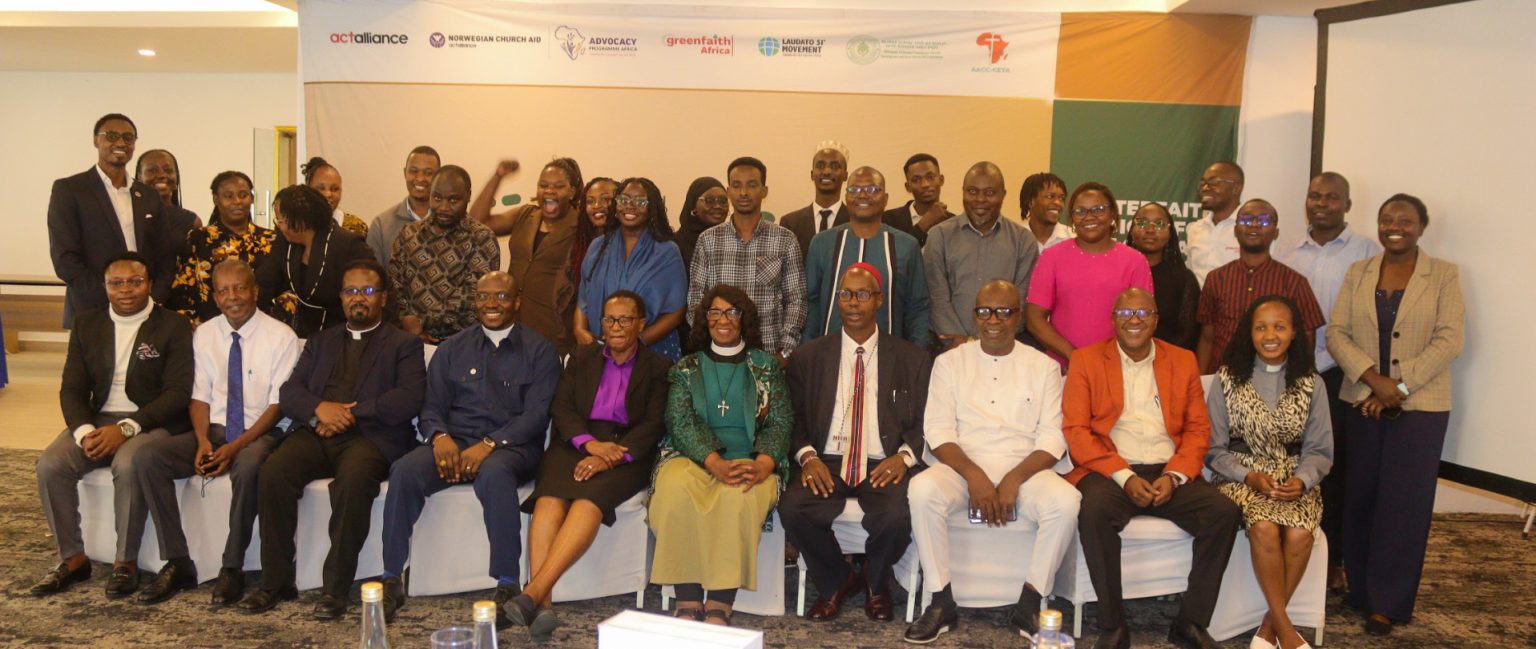
NAIROBI, Kenya: African faith leaders representing different religious traditions, faith-based organizations, women, youth, and community networks gathered in Nairobi ahead of the 31st conference of parties to the United Nations Climate Change Conference (COP31) urged governments to turn climate pledges into action, demanding more adaptation funding, grants rather than loans, and a fair transition to clean energy.
The Faiths warned that Africa cannot afford another round of international climate negotiations that produces promises without delivering tangible benefits to communities facing drought, floods, displacement, food insecurity and loss of livelihoods.
“The climate crisis is both an environmental, moral and structural challenge,” the leaders, under the “Africa Can’t Wait Campaign” meant to develop a common position on climate action and climate justice said those suffering the greatest negative impacts of climate change are often the people who have contributed least to the problem.
They said the success of COP31 should be measured not by the number of commitments announced, but by whether those commitments improve the lives of vulnerable communities, strengthen resilience and advance climate justice.
The meeting brought together religious leaders and community representatives for one and a half days of dialogue on Africa’s climate challenges, and the role faith communities can play in pushing governments and institutions to deliver on their commitments.
Africa needs adaptation finance that reaches communities
Adaptation emerged as a central priority, with the leaders calling for increased funding to help African countries prepare for and respond to climate impacts.
Rev. Phyllis said Africa’s vulnerability was compounded by its dependence on climate-sensitive economic sectors and high levels of poverty. She urged governments meeting at COP31 in Türkiye to establish a practical system for measuring adaptation progress and provide adequate, accessible funding.
Without clear implementation plans and reliable financing, she warned, the global goal on adaptation risked remaining an international framework rather than delivering meaningful improvements in people’s lives.
The leaders called for adaptation programmes designed and led by local communities, with particular attention to women, young people and persons with disabilities.
They argued that communities on the front lines of climate change should help determine the interventions they need, rather than have solutions imposed on them.
The faith leaders also expressed concern about the growing losses caused by climate change and the gap between financial pledges and the money actually made available to affected countries.
“The failure to reduce global emissions sufficiently is increasing the risk of severe climate impacts, particularly as the world struggles to remain within the 1.5 degrees Celsius warming limit,” said Rev. Beatrice Ruara.
While welcoming the establishment of the United Nations Loss and Damage Fund, the leaders said the limited funding available remained a major concern.
They called on countries that had pledged money to the fund to honour their commitments and urged developed countries to increase their contributions.
They also called for greater recognition of non-economic losses, including the destruction of cultural heritage, community identity and traditional ways of life.
For communities whose livelihoods, heritage and social ties are closely linked to their land and natural environment, the leaders said, climate damage extends beyond financial losses.
A just energy transition must benefit Africa
The leaders further called for a fair transition to low-carbon development that creates opportunities for African communities instead of deepening existing inequalities.
Sujata, chairperson of the Hindu Council of Kenya, said faith traditions placed a responsibility on communities to protect both people and the natural world.
“The shift away from highly polluting and extractive economic activities should support sustainable development, expand renewable energy and strengthen Africa’s capacity to develop its own technologies and green industries,” said Sujati
The leaders cautioned that the pursuit of critical minerals and other resources needed for the energy transition must not repeat patterns of exploitation that leave local communities with few benefits.
They called for a transition that ensures affordable and clean energy, strengthens climate resilience and gives African countries a meaningful role in shaping global climate decisions.
Climate finance was another major concern, with the leaders warning that African countries should not be forced to take on additional debt to address a crisis they have contributed relatively little to causing.
Bishop Teshome Amenu said climate finance should help countries protect lives and livelihoods rather than increase the financial pressures facing vulnerable economies.
The leaders called for grant-based funding to support adaptation, loss and damage responses, and a just transition. They also urged African governments to push for climate finance arrangements that provide vulnerable communities with direct, unconditional support.
They said the implementation of the New Collective Quantified Goal on Climate Finance, agreed at COP29, should ensure that the burden of addressing climate change does not fall unfairly on African countries.
The leaders also called for clarity on commitments to increase adaptation finance, alongside simpler procedures for accessing funds.
They said developed countries and international financial institutions should ensure that climate finance supports Africa’s economic transformation, resilience and sustainable development. They further demanded transparency and accountability in how funds are provided and spent.
The leaders also called for stronger protection of forests, wetlands, mangroves and other ecosystems that support livelihoods and help communities withstand climate impacts.
“Conservation and restoration efforts should respect human rights, protect community land rights and draw on Indigenous and local knowledge,” said Rev. Okpara Joshua. He stressed that affected communities must participate meaningfully in decisions about their environment and that nature-based solutions must receive adequate funding.
The leaders said faith teachings encouraged responsible stewardship of the natural world and rejected environmental destruction and extractive practices that undermine ecosystems and community wellbeing.
Faith leaders demand action, not more promises
Closing the meeting, Sheikh Hassan Kinyua said faith communities would strengthen their advocacy for climate action that delivers justice for Africa.
The leaders outlined a clear message for governments and climate negotiators ahead of COP31: Africa’s natural resources must generate meaningful benefits for its people, adaptation must be backed by adequate finance, and the transition to clean energy must be fair.
They also insisted that climate action should not increase the debt burden of vulnerable African countries and that African governments and communities must have a meaningful voice in global climate decisions.
Above all, they called for an end to climate pledges that are not followed by delivery.
The leaders said their advocacy would continue beyond COP31 towards COP32, with a focus on holding governments and institutions accountable for implementing their climate commitments.
Their message is that Africa needs more than promises. It needs climate finance that reaches communities, a transition that protects livelihoods, and policies that recognize the rights and priorities of those most affected by the crisis.
END
b.lenah89@gmail.com