





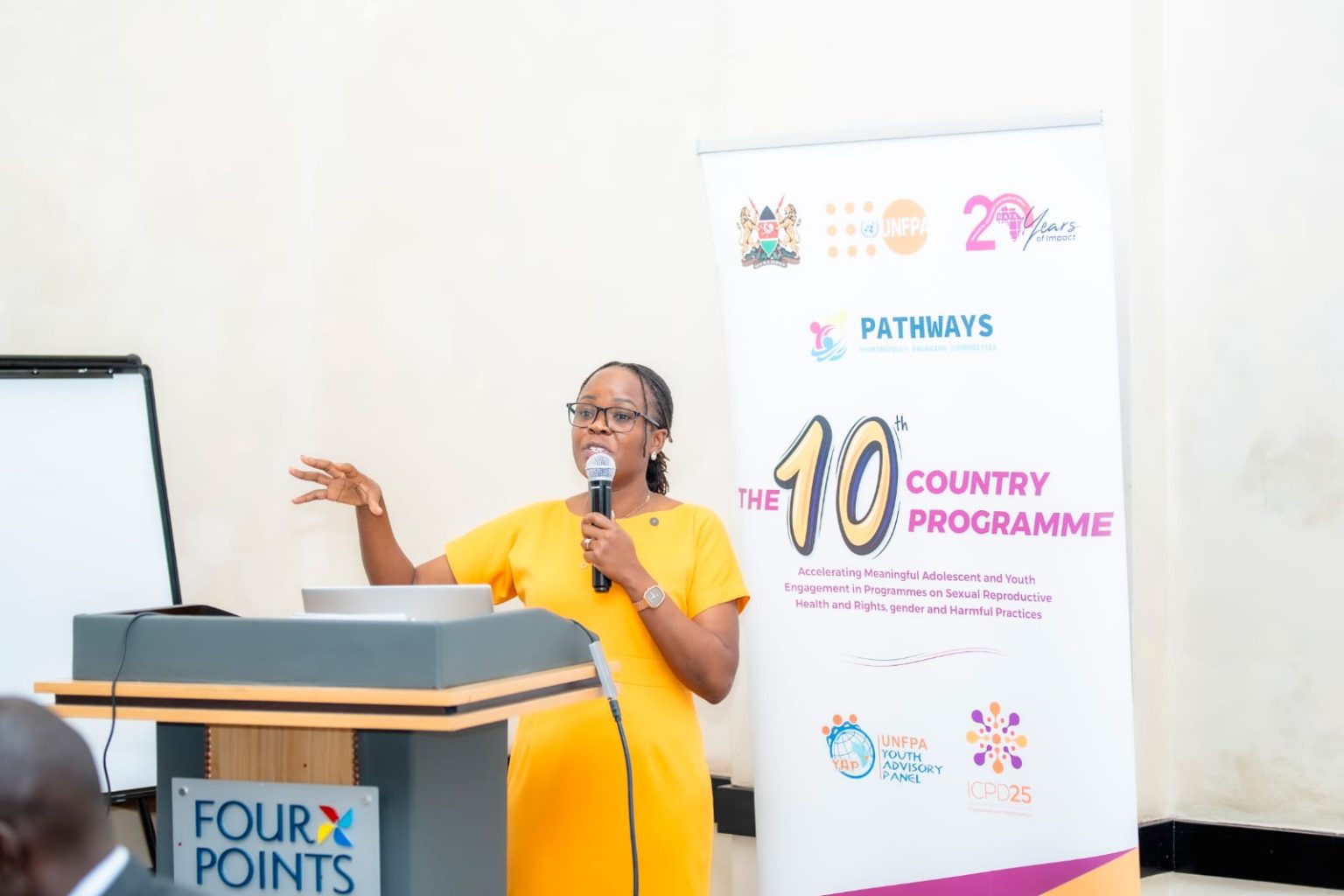
By Lenah Bosibori
Kenya’s efforts to make menstrual products affordable may be falling short because manufacturers and importers still face taxes, levies and distribution costs that are eventually passed on to women and girls, a new report has found.
The report, commissioned by the Network for Adolescent and Youth of Africa (NAYA), examines the regulatory and fiscal barriers that keep menstrual products costly despite government tax exemptions on some products.
Faith Masika, Co-founder of Covital Dynamics Limited and one of the consultants who developed the report, says menstrual products may be exempt from value added tax, but they are not entirely free from tax-related costs. “As much as the products are exempt, they are still attracting taxation, which is driving prices higher,” Masika says.
The report identifies five major issues affecting the affordability of menstrual products. These include taxes on some raw materials, hidden import charges, unequal tax treatment of different menstrual products, county levies and limited awareness among manufacturers about available tax relief measures.
The findings raise questions about whether tax exemptions have delivered meaningful relief to consumers, particularly low-income women and girls who struggle to afford menstrual products every month.
Victor Rasugu, Executive Director of NAYA, says low-income households spend about 10 percent of their income on menstrual health products. He describes this as a significant burden for families already struggling to meet basic needs.
He says the report examines how the fiscal framework affects the cost of menstrual products, particularly for small and medium enterprises.
According to Rasugu, manufacturers who receive duty remission spend about KSh55 to produce a pack of menstrual products. Those without remission spend about KSh62, while importers spend about KSh48. “These inequalities mean that some of these costs must be transferred to the final consumer,” he says.
Duty remission is a tax relief scheme where the government waives or reduces the import taxes (duties) on raw materials used by local manufacturers to make finished products.
Rasugu says the proposed reforms seek to make menstrual products more affordable for the majority of women and girls, especially those living in hard-to-reach parts of the country.
The hidden costs behind a tax-exempt pad
Disposable sanitary pads are exempt from value added tax. But Masika says manufacturers and importers still pay Value Added Tax (VAT) on some raw materials because not all inputs used to make menstrual products are exempt.
This means that while the final product may be exempt, manufacturers may still incur tax-related costs before a pad reaches the market.
The report also identifies what Masika describes as hidden costs, including the Railway Development Levy, Maritime Shipping Levy and Import Declaration Fee.
Many manufacturers and importers, she says, are unaware of these charges before beginning the import process. “When you add up these three levies, a manufacturer or importer can incur about 6 percent taxation on top of the VAT paid on specific imported products,” Masika says.
Manufacturers, importers and distributors eventually include such costs in the final retail price, meaning women and girls continue paying more for essential menstrual products.
“There is a need to understand the entire process behind the price of menstrual products,” she says. “At the end of the day, affordability is the key issue.”
Why reusable products cost more
The report also highlights unequal taxation among different types of menstrual products. Disposable pads are VAT exempt, but reusable pads and menstrual cups still attract VAT because they are classified differently for tax purposes. Yet all these products serve the same purpose.
Masika says this classification makes reusable products expensive for women who may want a longer-lasting menstrual option but cannot afford the high initial cost. “The cheapest menstrual cup can cost around KSh800, while disposable pads can cost between KSh50 and KSh80,” she says.
For many women and girls, the higher upfront price of menstrual cups and reusable pads makes them inaccessible, even though they could reduce long-term menstrual costs.
The report calls for a more uniform taxation system for menstrual products so that reusable options are not disadvantaged simply because of how they are classified.
County levies add to the final price
Manufacturers and distributors also face different levies when moving menstrual products across counties. Masika says each county has its own fees, creating an additional burden for businesses distributing products nationwide.
“If I produce products in Nairobi and distribute them to Busia, I should be able to pay the required costs in Nairobi and then have the freedom to transport and sell the products in other parts of the country,” she says.
She says the proposed County Revenue Bill could help reduce these costs by creating a more harmonized system for county charges.
A uniform distribution framework, she says, could make it easier for businesses to supply menstrual products across the country without facing multiple levies that drive up prices.
Masika says Kenya needs to strengthen local production of menstrual products to increase supply, create jobs and make it easier to monitor product quality.
“Only through local production can we properly monitor quality,” she says. Locally made products can be held accountable through national laws and relevant quality standards. More manufacturers could also create competition, increase supply and lower prices.
“When products are produced in large numbers, there is oversupply, and oversupply drives prices down,” Masika says.
She adds that there will always be demand for menstrual products because more than 17 million women and girls menstruate every month. “That is a very big market for manufacturers,” she says.
However, Masika says affordability should not come at the expense of safety and quality. “Menstrual products are used on the body and in a very sensitive area,” she says. “We should not compromise on quality simply because we want more products in the market.”
She says local manufacturers and importers must comply with relevant standards to ensure women and girls receive products that are safe and of good quality.
Calls for tax awareness and legal reforms
The report proposes a range of reforms, beginning with better tax awareness for manufacturers, including small, medium and large enterprises.
Many businesses do not understand the taxes and levies they must pay, how to claim VAT refunds or how to access duty remission opportunities.
Masika says manufacturers need information about compliance procedures and East African Community duty requirements, which may allow eligible businesses to access duty remission and sell products beyond Kenya.
“Some manufacturers do not know about the procedures for VAT claims or duty remission,” she says. “Tax education is important if we want to build a thriving menstrual economy.”
The report also calls for changes to laws that guide taxation.
One recommendation is to review the VAT Act of 2016 to consider zero-rating the inputs manufacturers need to produce menstrual products. This could reduce the cost of raw materials and make local production more affordable.
It also proposes a review of the Miscellaneous Fees and Levies Act of 2016, which provides for charges such as the Railway Development Levy and Maritime Shipping Levy.
Masika says any proposed legal changes must be supported by strong evidence and clear proposals submitted to the National Treasury.
“We need enough evidence to justify the reforms we want,” she says. Reducing taxes and levies will not automatically make menstrual products affordable unless the savings are passed on to consumers.
Masika says civil society organizations, the media, government agencies and consumers all have a role in holding manufacturers accountable.
As the government creates a more favorable environment for producers, she says, it must also ensure that manufacturers reduce prices for consumers.
“Manufacturers should be able to translate these reforms into reduced product prices,” Masika says. “At the end of it all, women should be able to menstruate with dignity and pride.”
She says consumers also need more information about why menstrual products cost what they do. While consumers may blame the Kenya Revenue Authority whenever prices rise, they may not understand the taxes, levies and supply costs that shape the final price.
The report’s central message is clear. Removing VAT from disposable pads is not enough if raw materials, import charges and county levies continue to raise the cost of menstrual products.
For Kenya to make menstrual health truly affordable, reforms must go beyond tax exemptions. They must support local manufacturers, protect product quality,