





By Henry Neondo
African universities, governments, communities and the private sector must deepen collaboration to translate climate science and indigenous knowledge into practical solutions that strengthen resilience across the continent, participants at the African Universities Climate Week 2026 have said.
The conference, held at Kenyatta University, brought together scientists, academics, policymakers, community leaders, indigenous knowledge holders and young innovators to explore Africa’s response to the growing impacts of climate change.
Held under the theme “One Heart for One Planet,” the conference placed partnerships, locally driven innovation and the integration of indigenous knowledge with modern science at the centre of discussions on sustainable development.
Opening the conference, Prof. Caroline Lang’at Thoruwa, Deputy Vice-Chancellor for Research, Innovation and Outreach, said hosting the gathering was both a privilege and a responsibility for the university, particularly at a time when climate change is increasingly affecting communities across Africa.
She said the conference provided an opportunity to strengthen relationships between universities and communities while creating platforms for shared learning between urban and rural populations.
“Research must lead to policy, innovation must move into practice, and dialogue must lead to action,” she said, stressing that universities should aspire to be more than centres of discovery.
According to Prof. Thoruwa, universities have a critical role to play in bringing together governments, civil society, communities and the private sector to ensure that knowledge generated through research contributes to solutions that serve both people and the planet.
The conference also highlighted the importance of food systems, health and biodiversity in the climate debate, particularly as vulnerable communities face increasingly complex environmental and socioeconomic pressures.
Participants argued that Africa’s climate response must recognise the value of indigenous knowledge systems, which have enabled communities to adapt to changing environmental conditions for generations.
The discussions emphasised the need to create spaces where indigenous knowledge and scientific research can interact on the basis of mutual respect, producing innovations that are locally relevant and capable of addressing contemporary climate challenges.
Climate change is already affecting African communities
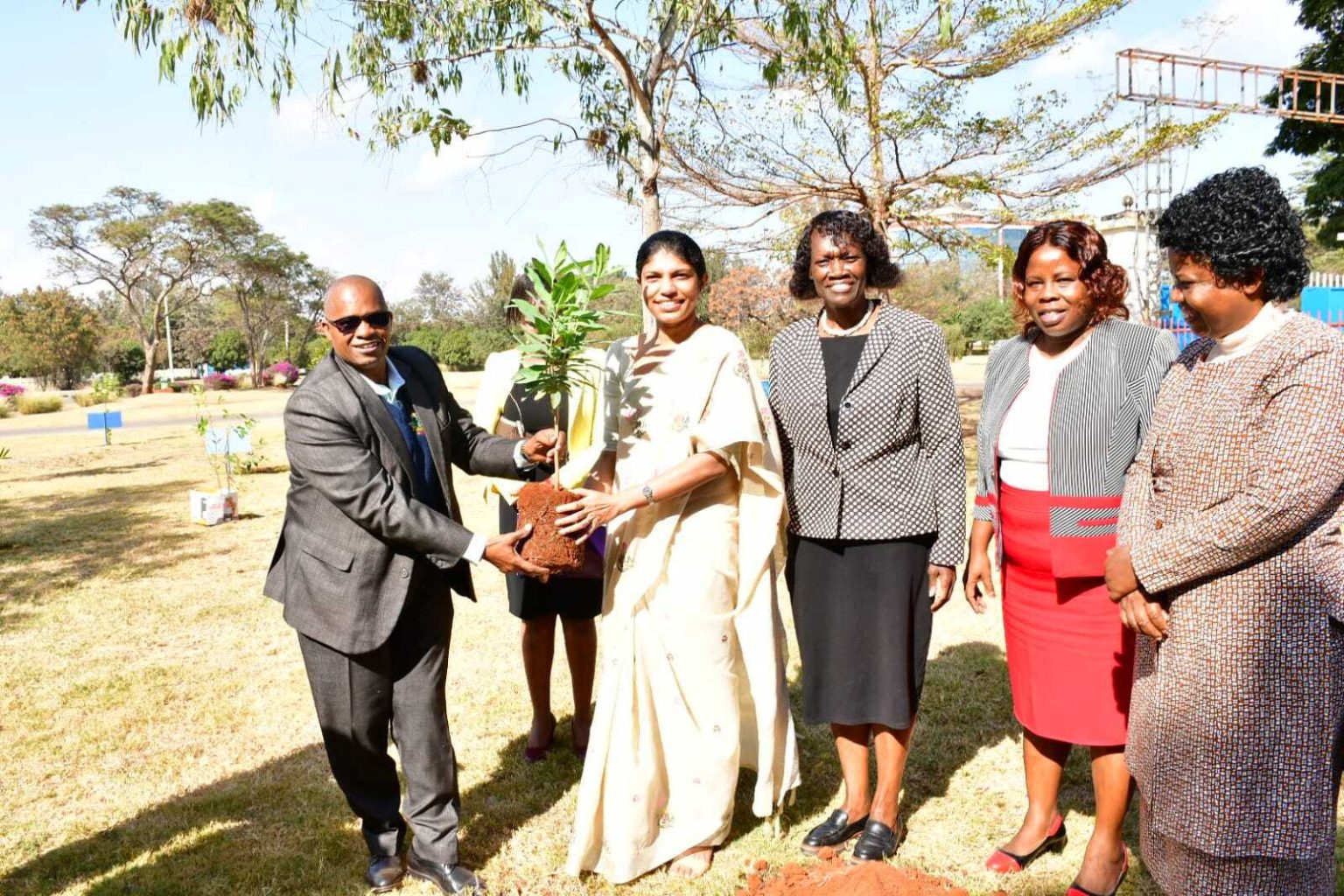
Officially opening the conference, Sri Lanka’s Acting High Commissioner to Kenya, Ms. Ruvini De Silva, commended Kenyatta University and the African Community of Climate Partners for Health and Environment for convening what she described as an important platform for collaboration.
She noted that climate change was no longer a distant or abstract threat for African communities.
Across the continent, communities are experiencing prolonged droughts, floods, drying rivers, declining biodiversity and growing health risks associated with environmental change.
“These realities require us to move beyond fragmented responses,” the conference heard, with participants calling for integrated approaches that bring together different disciplines, institutions and generations.
Ms. De Silva said Africa had significant potential to provide leadership in climate research, community restoration and innovation, particularly by drawing on solutions developed within local communities.
She pointed to the conference theme, “One Heart for One Planet,” as a reminder that effective climate action requires collective responsibility and stronger connections between scientific innovation and community knowledge.
From research to policy and practice
A central message emerging from the conference was the need to close the gap between research and implementation.
While African universities and research institutions are generating increasing amounts of knowledge on climate change, participants said scientific findings must be translated into policies, technologies and practical interventions that improve people’s lives.
This requires universities to strengthen their partnerships with governments, communities, civil society organisations and businesses, ensuring that research agendas respond to real-world challenges.
The conference also called for greater investment in collaborative and interdisciplinary research, particularly on the links between climate change, health, food security and biodiversity.
Participants stressed that climate impacts are interconnected and therefore cannot be effectively addressed through isolated interventions.
For example, climate-related disruptions to food systems can have consequences for nutrition and health, while environmental degradation can undermine livelihoods and biodiversity.
The conference therefore advocated for approaches that bring together expertise from climate science, health, agriculture, environmental management, social sciences and indigenous knowledge.
Putting youth and indigenous communities at the centre
Youth and indigenous communities emerged as important actors in Africa’s transition towards climate resilience and sustainable development.
Participants argued that young people should not only be treated as beneficiaries of climate programmes but as researchers, innovators, entrepreneurs and decision-makers capable of shaping Africa’s climate future.
Similarly, indigenous peoples and local communities should be recognised as knowledge holders and partners in climate action rather than simply as vulnerable populations.
The integration of indigenous knowledge with scientific research, participants said, could generate more context-specific approaches to adaptation, natural resource management and community resilience.
Ms. De Silva called for greater intergenerational collaboration, saying sustainable development must create space for knowledge and experience to move between generations.
Measuring the conference by its impact
Speakers challenged participants to look beyond presentations, exhibitions and academic discussions and focus instead on the partnerships and actions that emerge from the gathering.
The success of the conference, they argued, should ultimately be measured by the collaborations it generates, the policies it influences and the communities whose lives are improved as a result.
Prof. Thoruwa similarly expressed hope that African Universities Climate Week 2026 would become a milestone in Africa’s pursuit of resilience, climate justice and sustainable development.
The conference’s broader vision is to establish universities as centres of partnership where scientific knowledge, community experience, policy and innovation converge to address Africa’s most pressing challenges.
For Africa, the message from the gathering was clear: climate action cannot be delivered by universities, governments, scientists or communities working in isolation.
It will require stronger partnerships that connect science with society, research with policy, indigenous knowledge with modern innovation, and local solutions with global climate action.
As Africa confronts an increasingly uncertain climate future, participants said the continent’s greatest opportunity may lie not only in generating new knowledge, but in building the partnerships necessary to turn that knowledge into action.