




By Africa Scienc News
With international donor funding for healthcare becoming increasingly uncertain following the pullback of USAID and other foreign assistance programmes, African financial stakeholders are turning their attention to domestic capital as a potential source of long-term financing for the continent’s healthcare systems.
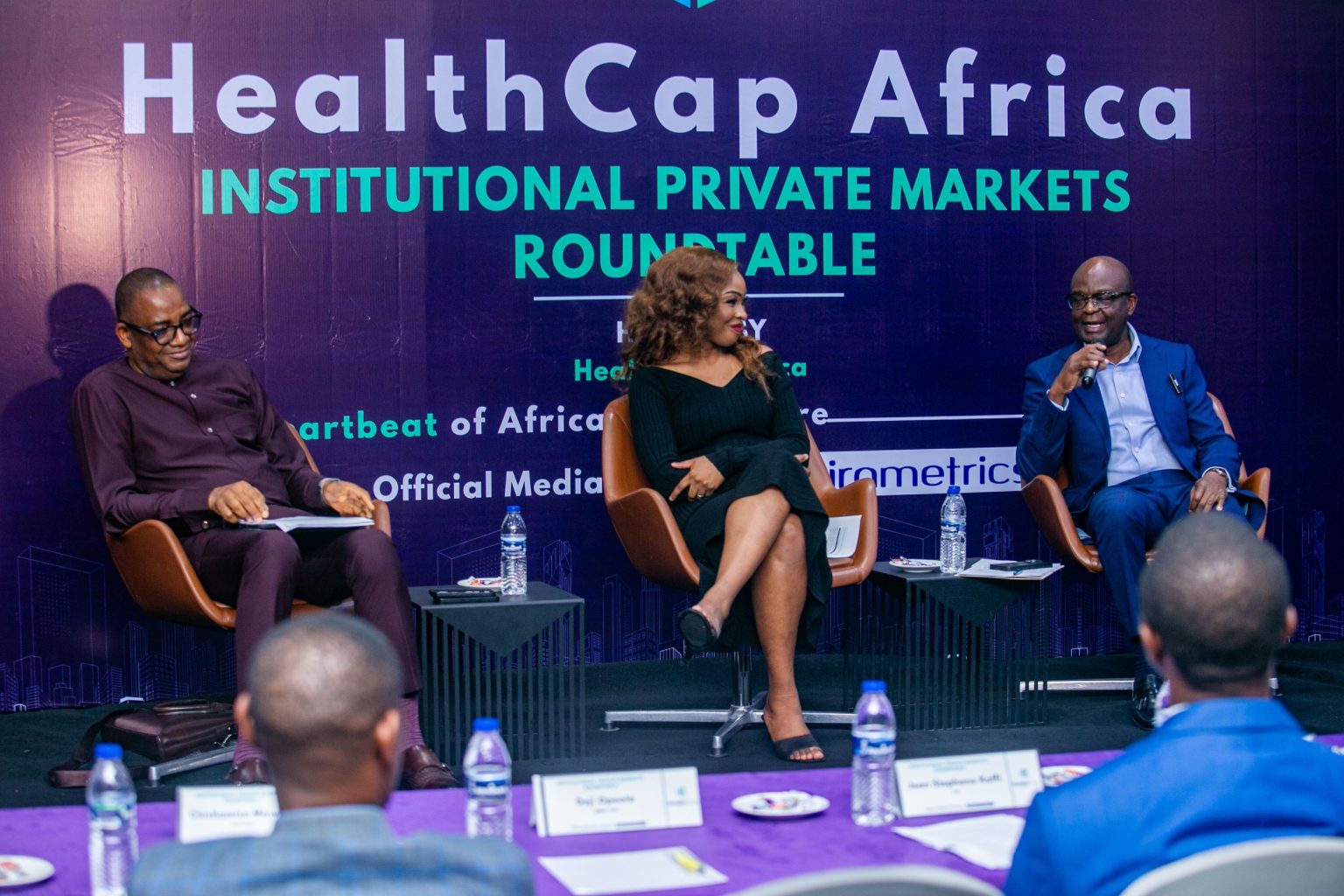
Representatives of pension funds managing more than US$5 billion in assets under management (AUM) joined regulators, development finance institutions, healthcare investors and operators at a high-level Private Markets & Healthcare Roundtable convened by HealthCap Africa in Lagos on September 9.
The invitation-only meeting, held alongside HealthCap Africa’s Annual General Meeting, was themed “Healthcare as an Asset Class” and focused on how Nigeria and other African countries can mobilise institutional and private capital to address persistent gaps in healthcare financing.
The discussions come against a backdrop of significant financing challenges. Africa accounts for about 22% of the world’s disease burden but receives only around 1% of global health spending, leaving an estimated US$1.1 trillion annual health financing gap.
Participants argued that the continent can no longer depend predominantly on external assistance to finance its healthcare needs. Instead, they called for a more diversified financing ecosystem in which governments, philanthropies, development finance institutions, pension funds, insurers and private investors play complementary roles.
Pension funds emerge as potential healthcare financiers
Pension funds were identified as one of the largest pools of domestic capital capable of supporting long-term healthcare infrastructure and businesses.
However, participants noted that unlocking pension capital requires the development of investment products that can provide appropriate risk-adjusted returns while meeting fiduciary obligations to pension savers.
The roundtable brought together senior representatives from the Securities and Exchange Commission (SEC), National Pension Commission (PenCom), Africa Finance Corporation (AFC), International Finance Corporation (IFC), World Bank, Stanbic CPFA, FCMB Pensions, PAC Capital, Leadway, PVAC Healthcare, Anchoria, PharmAccess, Afrinvest, ABC Health, ARM Holdco and FMDQ, among others.
The meeting was chaired by Deji Alli, Founder and Chairman of ARM, and co-chaired by Abu Jimoh, Founder and Group CEO of TrustBanc Financial Group.
A key recommendation was for regulators, pension fund managers and institutional investors to work together to translate growing interest in healthcare into investable products.
Moving beyond donor dependency
The withdrawal or reduction of major external funding streams has exposed the vulnerability of healthcare systems that depend heavily on international assistance.
Participants said the current financing environment should instead encourage African countries to mobilise the capital already available within their own economies, including pension assets, insurance funds, family capital, development finance and private investment.
The challenge, they noted, is not simply the availability of capital but ensuring that capital is matched to the right opportunities and risk profiles.
Dr. Mories Atoki, CEO of ABC Health, said Africa needs greater investment in the early stages of healthcare businesses and projects.
“There’s no such thing as an unbankable project. There’s only such a thing as a risk-investor match.”
According to Atoki, Africa needs investors willing to finance early-stage enterprises if the continent is to build healthcare businesses capable of attracting growth capital later.
DFIs could help unlock pension capital
Participants also identified development finance institutions as potentially important partners in helping pension funds enter healthcare and other private markets.
The Africa Finance Corporation offered to share the structure behind its new US$100 million venture capital fund, which has already been deployed into two underlying funds, as a possible model for institutional investors seeking diversification and risk-sharing mechanisms.
Such fund-of-funds structures could enable pension funds to gain exposure to healthcare and other high-growth sectors without having to select and manage individual early-stage investments themselves.
The World Bank’s Chishamiso Mawoyo stressed that governments also have an important role to play by creating policy and regulatory environments that make private investment possible.
The discussion highlighted the need for governments to reduce barriers to investment while maintaining appropriate safeguards for patients, investors and pension beneficiaries.
India offers lessons for Africa
Dr. Ola Brown, Founder and General Partner of HealthCap Africa, pointed to India’s healthcare investment experience as an example of what sustained specialised capital can achieve.
She cited Quadria Capital, one of Asia’s major healthcare-focused investment platforms, which has raised more than US$1 billion and has more than US$4 billion in AUM.
“Many Nigerians go to India for healthcare. Now imagine how much private capital has gone into building their healthcare sector,” Brown said.
She noted that Africa does not necessarily need to replicate India’s model but could draw lessons from the creation of specialised pools of capital dedicated to healthcare.
The example is particularly relevant as African countries seek to expand domestic healthcare capacity and reduce dependence on medical treatment abroad.
Private capital already financing healthcare infrastructure
Evidence of private investment in African healthcare is already emerging.
Humphrey Oriakhi of PAC Capital highlighted the company’s financing of a 250-bed multi-specialty tertiary hospital in Gateway, Abeokuta, which was developed entirely with private capital.
HealthCap Africa also reported that its pilot fund has contributed to the creation of more than 1,000 jobs across 10 African countries and reached more than 2 million patients.
These examples suggest that private capital can play a role not only in financing healthcare companies but also in expanding infrastructure, employment and access to healthcare services.
Nigeria has a growing investment ecosystem
Nigeria already possesses a substantial entrepreneurial and investment ecosystem from which to expand healthcare financing.
Between 2021 and 2025, Nigeria accounted for 513 Seed+ deals, representing more than a quarter of Africa’s early-stage investment activity. The country is also home to five of Africa’s eight unicorns.
Participants argued that the next challenge is to deepen domestic pools of capital around sectors with significant unmet demand.
Healthcare, they said, represents one of the clearest opportunities.
For Deji Alli, Founder and Chairman of ARM, innovation can also help overcome some of the regulatory and market barriers that constrain investment.
“Innovation can overcome regulation.”
The message from the Lagos roundtable was therefore not simply that Africa needs more money for healthcare. Rather, the continent needs new mechanisms for connecting available capital with investable healthcare opportunities.
From private markets to public markets
Participants also emphasised the importance of developing healthcare companies through the investment lifecycle.
Businesses often begin with early-stage private capital, grow, create jobs and generate tax revenues before eventually accessing public markets.
The roundtable therefore called for stronger links between private markets and public capital markets, allowing successful African healthcare businesses to scale while creating investment opportunities for institutional investors.
As international development assistance becomes less predictable, the emergence of domestic healthcare investment could become increasingly important to Africa’s health security.
The challenge for policymakers and investors will be to ensure that the pursuit of financial returns is aligned with the continent’s pressing need for affordable, accessible and quality healthcare.
The Lagos meeting signalled growing recognition that healthcare should not be viewed only as a social expenditure, but also as a potentially investable sector capable of generating economic value, jobs and improved health outcomes when capital is appropriately structured and deployed.