




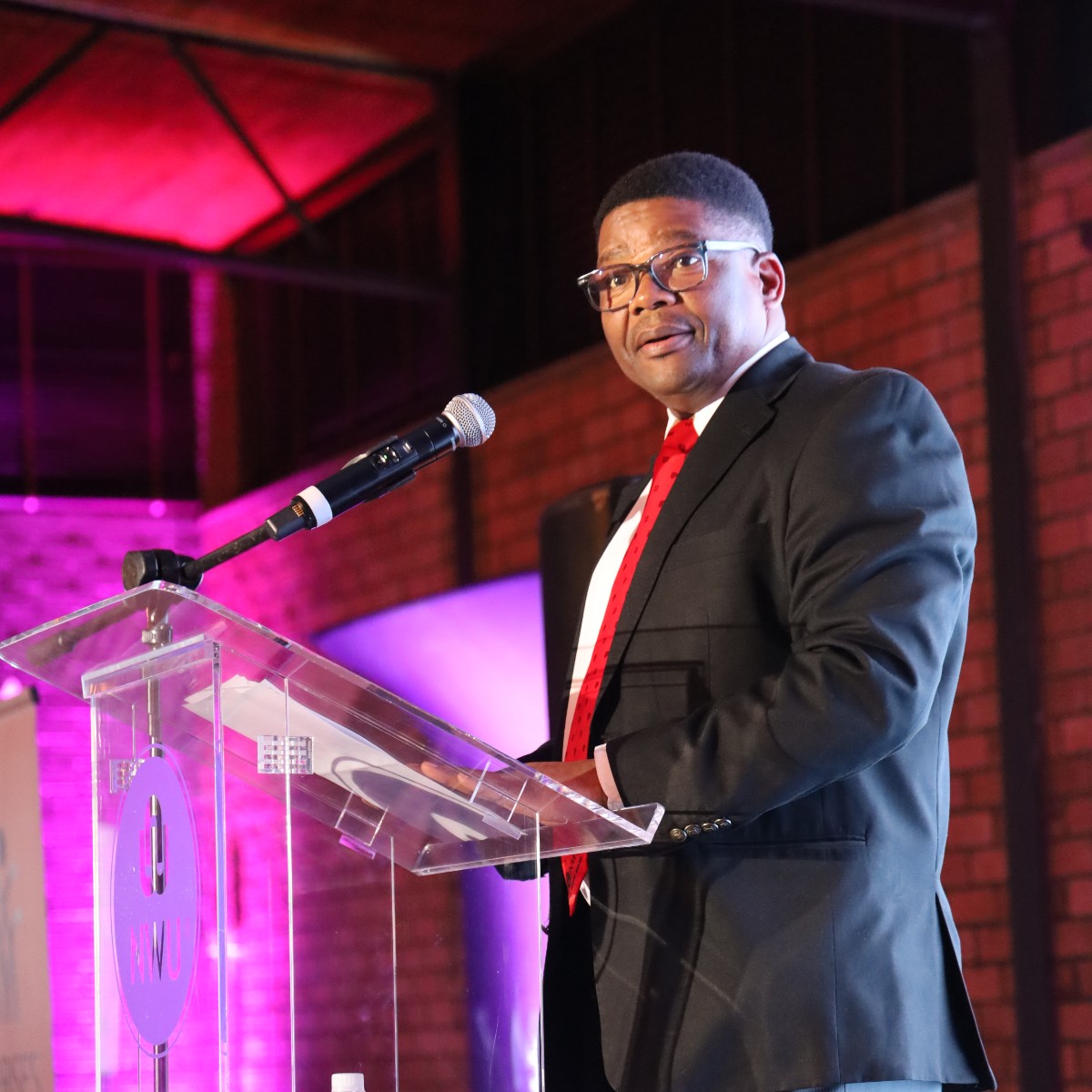
Prof. Jeffrey calls for sustained investment in science education, research funding and African talent to unlock the continent’s scientific potential.
By Africa Science News
Africa risks falling short of its development ambitions unless governments, universities and industry invest more heavily in scientific research, strengthen science and mathematics education, and create opportunities for researchers to build their careers on the continent, according to Prof. Jeffrey, Deputy Vice-Chancellor for Research and Innovation at North-West University (NWU) in South Africa.
In a call for renewed commitment to Africa’s scientific future, Prof. Jeffrey argues that the continent’s persistent research capacity gap is undermining its ability to address pressing challenges, including poverty, food insecurity, climate change, public health pressures and economic inequality.
His concerns come amid continuing armed conflicts in Sudan, Somalia and the eastern Democratic Republic of the Congo, where insecurity has disrupted communities, weakened institutions and diverted attention and resources from education and development.
“Education, research and development cannot flourish where survival is the daily priority,” he argues.
Beyond conflict, Africa faces interconnected challenges ranging from corruption and inadequate infrastructure to unemployment, fragile health systems and growing climate risks. Extreme weather threatens agricultural production and food security, while many economies continue to struggle to generate sufficient secure employment.
For Prof. Jeffrey, these challenges reinforce the need to build a stronger scientific and technological foundation for sustainable development.
Africa’s research capacity gap
Data from UNESCO highlight the scale of the challenge facing the continent.
According to UNESCO’s 2026 research data release, sub-Saharan Africa had just 88 full-time-equivalent researchers per million inhabitants in 2023. Europe and Northern America recorded 4,358 researchers per million people, approximately 50 times the African figure.
The disparity raises questions about whether African countries have the research workforce needed to generate the knowledge, technologies and innovations required to support their development priorities.
Prof. Jeffrey argues that increasing the number of researchers must become a central objective of national development strategies, rather than being treated as a secondary concern.
The continent’s research challenge is closely linked to weaknesses in education systems. UNESCO estimates for 2024 put primary school completion in sub-Saharan Africa at 68%, compared with 88% globally. Its 2026 Education Data Refresh reports upper secondary completion at just 29%, against a global figure of 62%.
The region also faces a significant teacher shortage. UNESCO’s 2024 Global Report on Teachers projected that sub-Saharan Africa would need an additional 15 million primary and secondary teachers by 2030.
These gaps threaten the pipeline of future scientists, engineers, health researchers and other specialists whose work will be needed to advance African economies.
Strengthening science and mathematics teaching, improving access to quality education and expanding opportunities for postgraduate training are therefore essential to building the continent’s research capacity.
Turning research potential into global impact
The Nobel Prize season provides another lens through which to examine Africa’s scientific representation and the opportunities available to its researchers.
By the end of 2025, 29 of the 990 individual laureates across the Nobel Prizes and the associated prize in economic sciences had been born in Africa, representing approximately 2.9%.
Although birthplace does not determine where research was conducted, and the figures cover achievements beyond science, Prof. Jeffrey says the numbers prompt important questions about how much more African talent could achieve with sustained investment and institutional support.
The issue is not a lack of potential, but whether the continent provides the conditions necessary for researchers to develop ideas, access advanced facilities, secure funding and translate discoveries into practical solutions.
For African universities, this means creating well-funded postgraduate programmes, properly equipped laboratories and stable career pathways that encourage talented researchers to remain on the continent.
Governments, meanwhile, must provide predictable, multi-year research funding and ensure transparent oversight of public investment in science.
Industry also has a critical role to play by partnering with universities and research institutions to commercialise discoveries, develop new technologies and create jobs.
Emerging investments offer grounds for optimism
Despite the challenges, Africa is making progress in building the infrastructure and partnerships needed to support scientific development.
In South Africa, the construction of the SKA-Mid telescope forms part of a major investment in radio astronomy and advanced scientific infrastructure. The project offers opportunities to strengthen research expertise, develop technical skills and expand participation in cutting-edge science.
African mRNA vaccine research and technology transfer initiatives also demonstrate the importance of developing local scientific capabilities to support health security and reduce dependence on external suppliers.
Beyond research institutions, wider infrastructure investments could help create the enabling conditions for scientific and industrial growth.
Mission 300, which aims to expand electricity access across Africa, is intended to address one of the basic requirements for productive economies, functioning laboratories and digital learning.
The modernisation and planned expansion of the Lobito Corridor could improve transport and trade links, while the completion of the core 2Africa subsea cable system strengthens international connectivity and creates opportunities for digital services, education and research collaboration.
Together, these initiatives point to the potential for infrastructure investment to support wider economic transformation. However, their benefits will depend partly on whether African countries develop the skills, research institutions and industrial capabilities needed to use these opportunities effectively.
A call for coordinated action
Prof. Jeffrey argues that Africa cannot realise its development ambitions without deliberately expanding the number of researchers it trains, supports and retains.
He calls for stronger science and mathematics education in schools, sustained public investment in research, greater support for postgraduate students and improved career opportunities for early-career scientists.
Universities, he argues, must be equipped to conduct high-quality research and nurture the next generation of scientific leaders. Governments must establish reliable funding frameworks, while the private sector should help translate research findings into products, services and employment.
Progress should be measured not only by research expenditure or the number of scientific publications, but also by the people trained, the researchers retained and the problems solved through locally generated knowledge.
Such an approach would help African countries build the capacity to respond to their own priorities, from climate resilience and clean energy to food security, disease prevention and industrial development.
The ultimate goal, Prof. Jeffrey says, should be an Africa whose economies are as rich in opportunity as its societies are in cultural diversity, and whose scientific contributions shape global progress rather than remaining on the margins of it.
Resilience must be matched with investment
Despite conflict, poverty and institutional challenges, Prof. Jeffrey sees resilience as one of Africa’s defining strengths. But resilience alone cannot compensate for inadequate investment in education, research infrastructure and scientific talent.
He envisions a continent where children complete school with the knowledge and confidence to shape their futures, where researchers have the resources to pursue ambitious ideas, and where African scientific achievements receive recognition on the world stage.
Realising that vision will require more than declarations of support for science. It will demand long-term political commitment, effective institutions, collaboration between academia and industry, and investment that allows research to flourish.
For Africa, the challenge is not simply to produce more research, but to build the scientific capacity to turn knowledge into better lives, stronger economies and sustainable development.
As Prof. Jeffrey’s argument makes clear, the continent’s future will depend in part on whether it can transform its resilience into a sustained commitment to scientific discovery and innovation.