


By Imali Ngusale
African women activists, feminist leaders, entrepreneurs and climate policy experts are calling for dedicated funding to implement the Belém Gender Action Plan (BGAP), warning that commitments to gender equality in climate action risk falling short without adequate financial resources.
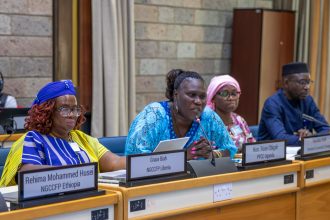
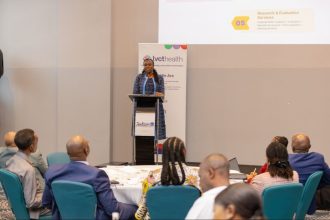
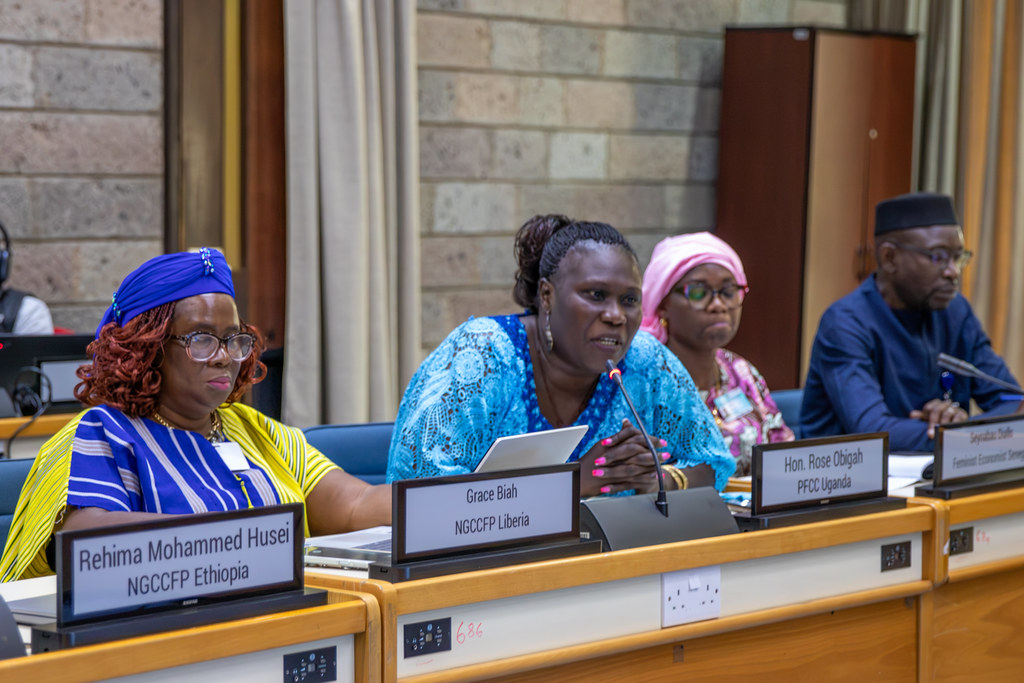
The call emerged during a pre-COP31 meeting on climate finance for gender equality held at the United Nations Office in Nairobi, Kenya. The convening, themed Unlocking Climate Finance for Gender Equality, brought together participants from 20 countries to discuss how climate finance can better respond to the needs and priorities of women and girls.
Participants included representatives of government institutions, diplomatic missions, academia, civil society and the private sector, with discussions focusing on how existing climate finance mechanisms can support gender-responsive climate action.
The meeting was jointly organised by UN Women, the United Nations Environment Programme (UNEP), the African Group of Negotiators Expert Support (AGNES), the Regional Collaboration Centre for Eastern and Southern Africa (RCC ESA), UN Women’s East and Southern Africa Regional Office (ESARO), its West and Central Africa Regional Office (WCARO), and the UN Women Global Office.
Funding gap threatens gender equality commitments
A central concern raised during the discussions was whether international climate finance institutions and national governments would allocate sufficient resources to translate the Belém Gender Action Plan into practical interventions.
The meeting examined financing opportunities through the Adaptation Fund, the Climate Investment Funds (CIF), the Green Climate Fund (GCF) and the Global Environment Facility (GEF). Participants also discussed domestic resource mobilisation, international climate funds and private-sector investment as potential sources of support.
Aina-Maria Iteta, Namibia’s National Gender and Climate Change Focal Point, said implementing the plan would require climate finance institutions to move beyond policy commitments.
“Prioritizing the Belém Gender Action Plan (BGAP) requires climate finance institutions to translate commitments into adequately funded action,” Iteta said.
Her remarks reflected a broader concern among participants that gender equality must be integrated into climate investment decisions, with funding reaching women and communities experiencing the effects of climate change.
Maria Matui, executive director of Women Action Towards Economic Development in Tanzania, described the BGAP as a blueprint for advancing gender equality through climate finance. She said adequate funding would be essential to translate its commitments into tangible results.
Rosebell Barbara, resource mobilisation lead at the African Center for Health, Climate and Gender Justice Alliance (ACHCGA), also urged governments and climate finance institutions to commit resources specifically for the plan’s implementation.
“The Belém Gender Action Plan gives African women an opportunity to advance gender equality in climate action, but there is no guarantee that climate finance will be specifically allocated to support its implementation,” Barbara said.
Barbara noted that the nine-year plan contains 98 deliverables, raising questions about how these commitments would be financed and implemented.
Without clear financial allocations, she warned, women risk being recognised in climate policies without receiving the resources required to address the inequalities they face or participate meaningfully in climate action.
Women seek a greater role in climate decisions
Beyond financing, participants emphasised the importance of involving women, girls and young people in climate policy development and investment decisions.
Pan-African feminist Kate Nyambura called for meaningful participation backed by investment in the people expected to contribute to climate solutions.
“Stakeholders must meaningfully engage African women, girls, and young people in climate policy discussions and meaningfully invest in their engagement,” Nyambura said.
She argued that women should be at the forefront of climate action because they are disproportionately affected by climate shocks.
Across African communities, climate-related pressures can compound existing inequalities affecting access to livelihoods, energy, healthcare and economic opportunities. Participants stressed that climate finance should therefore address not only environmental challenges but also the social and economic barriers that limit women’s resilience and participation.
The private sector was also represented at the meeting, including Old Mutual Limited Zimbabwe, KCB Bank Kenya Limited, Sun King, Strathmore University, the Global Off-Grid Lighting Association (GOGLA), the Climate Angels Fund and the Massive Earth Foundation.
Their participation provided an opportunity to consider how private investment and financial services could complement public climate finance in supporting gender-responsive solutions.
However, participants’ calls highlighted the need to ensure that investment priorities reflect the needs of women and girls rather than relying solely on broad commitments to inclusion.
Evidence needed to guide climate investments
Hon. Rose Obigah, district woman representative for Terego District in Uganda’s West Nile sub-region, called for climate finance decisions to be guided by data and evidence.
She said financing approaches should respond to women’s actual needs and account for the disproportionate effects of climate change on their health, safety and livelihoods.
Obigah warned that without addressing these inequalities, governments would struggle to achieve the objectives of the Belém Gender Action Plan.
She advocated evidence-based investment decisions that take women’s lived experiences into account, ensuring that resources reach the priorities and challenges identified by the communities they are intended to serve.
Such an approach would require financing institutions and governments to consider who benefits from climate investments, whether women can access funding, and whether funded interventions produce measurable improvements in their lives.
For women entrepreneurs, access to climate finance could also help expand opportunities to develop and scale solutions in areas such as clean energy, climate adaptation and sustainable livelihoods. Participants’ discussions underscored the importance of making financing mechanisms accessible to women-led initiatives and enterprises.
The road to COP31
The Nairobi meeting comes as African stakeholders seek greater recognition of gender equality in climate negotiations and implementation frameworks ahead of COP31.
Participants from Burkina Faso, Côte d’Ivoire, Ethiopia, Kenya, Liberia, Malawi, Mali, Mozambique, Namibia, Nigeria, Senegal, Sweden, Tanzania, Uganda, the United States and Zimbabwe were among those involved in the discussions.
The meeting brought together activists, academics, entrepreneurs and public-sector representatives to examine how climate finance could better support gender-responsive action across different national and regional contexts.
For African women working on climate justice, the challenge is no longer simply securing recognition of gender equality in climate policies. It is ensuring that commitments are accompanied by financing, meaningful participation and accountability for results.
The effectiveness of the Belém Gender Action Plan will ultimately depend on how governments and climate finance institutions mobilise resources for its 98 deliverables over the nine-year implementation period.
Whether the plan receives dedicated and accessible financing remains a key question ahead of COP31. For participants at the Nairobi meeting, translating commitments into adequately funded programmes will be essential to ensuring that women and girls are not left behind in Africa’s response to climate change.
— Africa Science News