





By Henry Neondo
As global leaders prepare to meet in Antalya, Türkiye, the November climate summit faces growing pressure to deliver on climate finance, clean energy, adaptation and the needs of vulnerable communities.
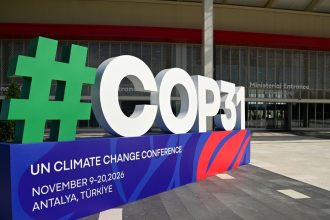
With the 31st United Nations Climate Change Conference (COP31) approaching, the spotlight is shifting from climate pledges to the more difficult task of delivering results. Scheduled for 9–20 November 2026 in Antalya, Türkiye, the summit comes at a critical moment as countries confront escalating climate impacts, energy insecurity and persistent disagreements over who should finance the transition to a climate-resilient future.
Türkiye, which will host the conference, has placed implementation at the centre of its presidency. Its message is that the world does not need another round of ambitious declarations without practical follow-through. It needs stronger partnerships, investment and measurable progress on commitments already made under the Paris Agreement.
The COP31 Action Agenda, unveiled in September by COP31 President-Designate and Türkiye’s Minister of Environment, Urbanisation and Climate Change, Murat Kurum, provides a framework for this ambition. It identifies ten priority areas, including clean energy transition and electrification, zero waste and methane reduction, climate-resilient cities, green industrialisation, food security, oceans and seas, youth and education, resilient health systems, and stronger implementation of national climate commitments.
Among its headline ambitions is a global electrification target that seeks to increase electricity’s share of final energy consumption to 35 per cent by 2035. Other targets include halving the projected growth in global waste generation, reducing energy intensity in buildings by at least 25 per cent and increasing the global circular material use rate to at least 15 per cent by 2035.
The presidency has argued that these measures could contribute to reducing global emissions by between 8.5 and 10 billion tonnes of carbon dioxide by 2035. Achieving these ambitions, however, will depend on countries translating targets into policies, infrastructure investments and practical programmes.
Climate finance remains a defining test
For developing countries, particularly those facing severe climate impacts despite contributing relatively little to global emissions, the credibility of COP31 will depend heavily on climate finance.
The challenge is not simply mobilising more money. It is ensuring that finance is accessible, predictable and responsive to the priorities of countries and communities on the front lines of climate change. Adaptation, resilience, early warning systems and protection of livelihoods require sustained investment, yet many vulnerable countries continue to face barriers in accessing available resources.
The Climate Implementation Bridge proposed under the COP31 Action Agenda seeks to address part of this challenge by helping countries translate their Nationally Determined Contributions (NDCs) into investment-ready project portfolios. The initiative is intended to connect national climate priorities with finance, technology, investors and development planning.
But the critical question will be whether this approach can deliver resources to countries and communities that need them most, including least developed countries, small island developing states and climate-vulnerable communities across Africa.
The debate also raises questions about the balance between private investment and public climate finance. While businesses and investors have an important role in scaling up climate solutions, public funding remains essential in areas where commercial returns are limited but the social and economic benefits are significant.
Science must inform climate decisions
Climate science is another essential pillar of the implementation agenda. Reliable climate data, observations, forecasting and early warning systems are necessary to help governments anticipate risks and protect people, infrastructure and livelihoods.
World Meteorological Organization Secretary-General Celeste Saulo has emphasised the importance of connecting climate science with practical decision-making. As she put it during discussions around the COP31 agenda, “Science connects each stage of this journey.”
For Africa, where climate change is intensifying droughts, floods, heat stress and threats to food production, the availability and use of reliable climate information are particularly important. Governments need stronger scientific and institutional capacities to translate evidence into decisions on agriculture, water management, public health, infrastructure and disaster preparedness.
The challenge is to ensure that scientific knowledge does not remain confined to research institutions and technical reports, but informs public policy and reaches communities in accessible and usable forms.
Pacific voices bring urgency to the negotiations
The road to Antalya has included an important focus on countries most exposed to climate change. From 5–8 October, Fiji, Tuvalu and Australia partnered in hosting the official Pre-COP31 ministerial meeting and leaders’ event in the Pacific.
The gathering provided an opportunity to bring global climate decision-makers closer to Pacific perspectives and build momentum ahead of the Antalya negotiations. For small island states, climate change is not a distant environmental concern; it is an immediate threat to livelihoods, infrastructure, food and water security, and in some cases national survival.
Their concerns reinforce a wider demand from vulnerable countries: climate action must be inclusive, and access to finance and technology must not be undermined by complicated procedures, limited institutional capacity or narrow eligibility requirements.
These concerns have direct relevance for Africa. From the Sahel and the Horn of Africa to coastal communities and small island states in the Indian Ocean, climate impacts are already disrupting economies and deepening existing inequalities.
Electrification, industry and artificial intelligence
COP31 is also expected to place considerable emphasis on the relationship between climate action, energy security and economic transformation.
The presidency’s 35-by-35 Global Electrification Pledge seeks to accelerate the shift towards electricity in buildings, transport and industry, supported by renewable energy, modern grids, storage and investment. The ambition reflects growing recognition that electrification can reduce dependence on fossil fuels while improving energy access and supporting new economic opportunities.
The presidency has also brought artificial intelligence into the climate discussion through the proposed Antalya AI Pledge and its AI for Clean Technologies initiative. These initiatives seek to encourage responsible use of artificial intelligence in climate solutions, including smart energy systems and green industrial development, while addressing the growing energy demands of data centres and digital infrastructure.
For African countries, the opportunities are significant but so are the risks. AI could strengthen climate forecasting, improve agricultural planning, support renewable energy management and enhance public services. However, these benefits will depend on reliable electricity, digital infrastructure, affordable technologies, skills development and safeguards against widening the digital divide.
Green industrialisation is equally important. Africa needs climate action that supports industrial development, creates decent jobs and expands access to affordable energy, rather than imposing transition costs on economies with limited financial and technological capacity.
A summit with two connected tracks
COP31 will bring together two related but distinct processes: the formal, country-led climate negotiations and the presidency’s Action Agenda.
The negotiations, under the leadership of Australia’s Minister for Climate Change and Energy, Chris Bowen, will remain a party-driven process requiring consensus. The Action Agenda, led by the Turkish presidency, is intended to mobilise voluntary initiatives, partnerships and investment to accelerate practical implementation.
The distinction matters. While the Action Agenda can encourage new partnerships and initiatives, it cannot substitute for negotiated outcomes or the fulfilment of countries’ existing obligations.
The two processes will therefore need to reinforce each other. The success of COP31 will depend not only on the announcements made by governments and private-sector actors, but also on whether the negotiations produce meaningful progress on the issues that continue to divide countries.
What should Africa demand from COP31?
For Africa, COP31 presents an opportunity to press for a climate agenda that recognises the continent’s development priorities and the scale of its climate vulnerabilities.
African governments and institutions will need to push for accessible adaptation finance, stronger support for locally led climate action, technology transfer, capacity development and investment in resilient infrastructure. They must also ensure that the transition to clean energy supports universal energy access, industrialisation, food security and employment.
Beyond government delegations, African scientists, researchers, young people, women, Indigenous communities, civil society organisations and the private sector have a stake in shaping the continent’s climate priorities. Their participation should extend beyond symbolic representation to meaningful influence over decisions, partnerships and the allocation of resources.
As delegates prepare to gather in Antalya, the central test is becoming clear: can COP31 move the climate conversation from commitments to delivery?
The world already has climate agreements, national targets and an expanding body of scientific evidence. What remains inadequate is the pace and scale of implementation.
For countries and communities living with the consequences of climate change, another summit of promises will not be enough. COP31 must demonstrate that international cooperation can deliver finance, technology and practical solutions where they are urgently needed.