





By Lenah Bosibori
Kenya is a signatory to the Bamako Convention, an African treaty that bans the import of hazardous waste and obligates governments to protect communities and workers from toxic exposure. But in Pipeline estate, a densely populated neighborhood in Embakasi on Nairobi’s eastern edge, that promise remains largely theoretical.
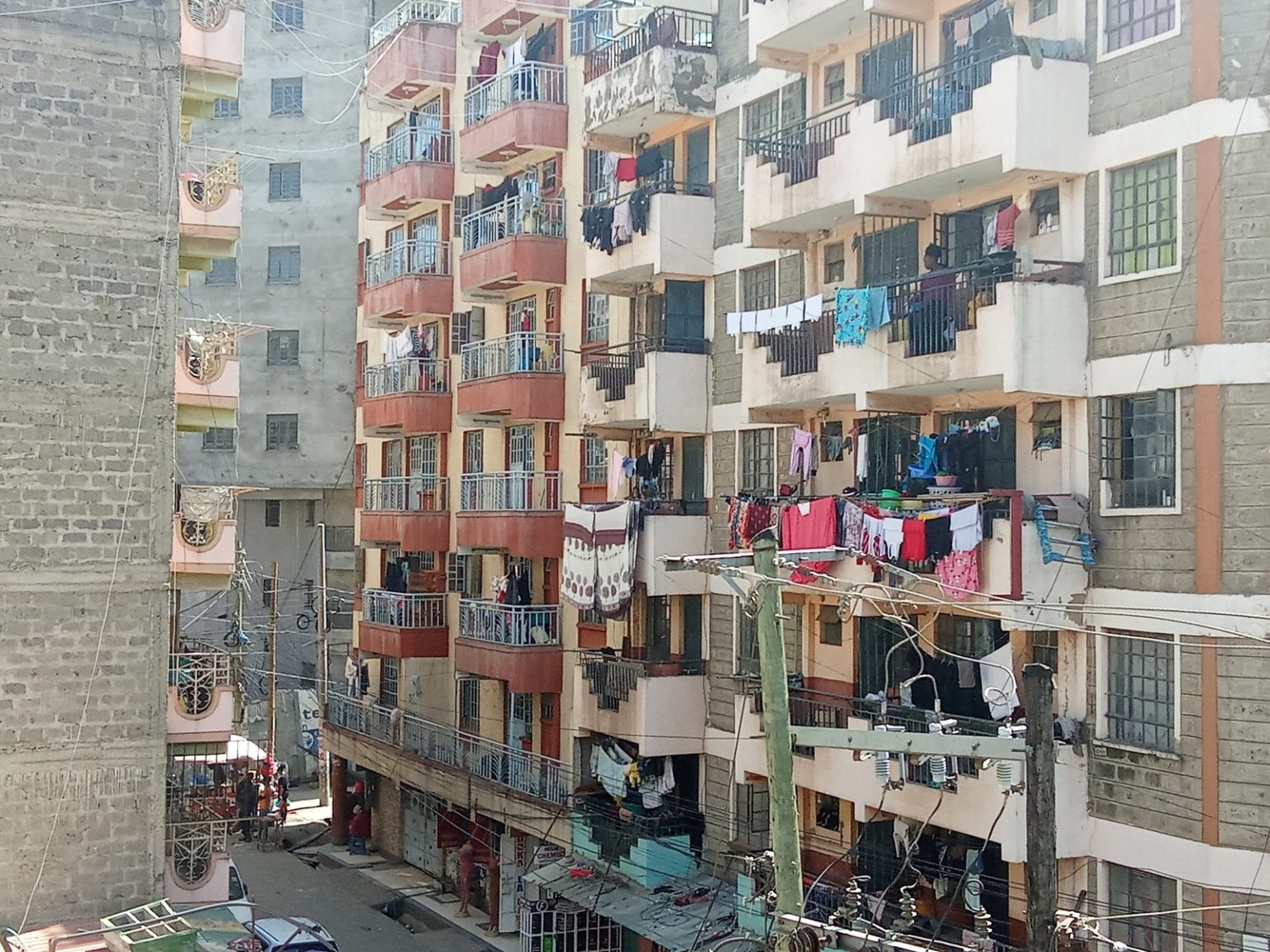
It is early Monday morning, and as the sun rises, large crowds of residents stream through narrow streets, rushing to work, school and daily errands. Within minutes, the estate comes alive with noise and movement. Inside the tall residential buildings, however, another reality unfolds one that exposes the gap between international commitments and everyday life.
Most buildings in Pipeline lack designated waste-sorting areas or secure collection points. Instead, two or three large plastic drums sit along corridors or at entrances, collecting all forms of household waste mixed together.
The drums frequently overflow with food remains, plastics, broken glass, alcohol bottles, used needles, batteries and chemical containers materials that should never share the same bin. When it rains, the smell of rotting waste fills the air, attracting flies and rodents, with rats running freely through corridors.
This is the environment where waste collectors like Joseph Kariuki work every day.
Working in the Shadows of Danger
During a recent visit to Pipeline, Kariuki, a recycler who collects waste from more than 10 residential buildings in the estate, transfers trash from basement drums onto his hand-pulled cart, covered with a blue mosquito net to prevent spillage. A young man approaches carrying a sack of empty alcohol bottles and empties it onto the cart.
Each time Kariuki reaches into a drum, he never knows what he will find hidden beneath the garbage. “I come across all kinds of waste,” he says. “Some of it is very dangerous, but I don’t have any protective gear to keep myself safe.”
He regularly encounters used syringes, broken glass, sharp metal pieces and chemical containers items that should be handled separately under Kenyan law. “These things can injure or infect someone very easily,” he adds.
According to a Sustainable Packaging report, Nairobi City County generates between 2,400 and 3,500 tonnes of solid waste every day. Much of it ends up in informal dumpsites as the county struggles with waste collection, segregation and enforcement.
Experts warn that hazardous materials including batteries, electronic components and chemical residues often enter the country legally or illegally through ports, but once inside Kenya, weak oversight allows them to seep into ordinary household waste streams like those seen in Pipeline.
A Job Taken Out of Necessity
Kariuki, a father of three, moved to Nairobi in 2015 after being promised a job by a friend. When he arrived, the employer asked for academic certificates he did not have. With no alternatives, he turned to waste collection.
“I have done this job for almost ten years,” he says. “Not because I like it, but because I don’t have another option. My children need to eat.”
His experience mirrors that of thousands of informal waste workers across Nairobi and other cities who are exposed daily to hazardous waste with little protection and no safety training.
According to Kenya’s Directorate of Occupational Safety and Health Services (DOSHS), waste handlers are among the workers most exposed to occupational injuries, particularly cuts from sharp objects and exposure to toxic substances. Most informal collectors, however, are not registered, meaning injuries often go unreported.
Kariuki is hired only to collect waste and receives a share of the day’s earnings. He has no formal contract and no assurance of compensation if injured on the job. “My work is to collect waste from buildings, and at the end of the day I get paid,” he says. “But there is nothing that would protect me if I get hurt.”
Where Policy Falls Apart
Pipeline estate illustrates a broader regulatory failure. Hazardous waste which is legally required to be segregated and handled separately routinely ends up mixed with household waste and handled by unprotected workers inside residential buildings.
Enforcement reports from the National Environment Management Authority (NEMA) repeatedly point to the same challenges: poor waste segregation, illegal dumping and weak compliance with hazardous waste regulations.
For decades, African countries have faced the dumping of hazardous waste, often disguised as recycling materials or second-hand goods. The global Basel Convention was established to regulate cross-border movement of hazardous waste, but African states found it insufficient in preventing toxic dumping on the continent.
That frustration gave rise to the Bamako Convention.
A Convention Born from Crisis
“The Bamako Convention was born out of Africa’s lived experience,” says Griffins Ochieng, Executive Director of the Centre for Environment Justice and Development (CEJAD). “Despite the Basel Convention, hazardous waste continued to be dumped in Africa.”
Several incidents exposed the weaknesses of global controls, including the toxic waste dumping in Côte d’Ivoire in 2006, which caused widespread illness and environmental damage.
“These cases made it clear Africa needed its own convention, one that was stricter and more protective,” Ochieng says.
Adopted in Bamako, Mali, the convention bans the import of hazardous waste into Africa and strengthens requirements for prior informed consent. Kenya has ratified the convention, making its provisions binding under national law.
“Once a country ratifies the convention, it must meet its obligations,” Ochieng explains. “That includes controlling hazardous waste from entry into the country to its final disposal and protecting the people who handle it.”
Laws on Paper, Risks on the Ground
In Kenya, hazardous waste is regulated by NEMA under the Environmental Management and Coordination Act (EMCA) of 1999, while household waste management is handled by county governments.
In 2024, Kenya enacted the Sustainable Waste Management Act, focusing largely on municipal waste. Hazardous waste remains regulated under EMCA.
“This split system weakens enforcement,” Ochieng says. “Hazardous waste slips into municipal waste streams and ends up in places like Pipeline.”
The Bamako Convention explicitly requires countries to protect communities and workers from exposure to hazardous waste. Yet in Pipeline, collectors handle toxic materials without gloves, masks or training.
“These wastes contain heavy metals like lead and mercury, as well as other toxic chemicals,” Ochieng says. “They can cause breathing problems, nerve damage and long-term health effects.”
According to the Ministry of Health, prolonged exposure to such substances increases the risk of chronic illness, particularly among people living or working near dumpsites.
In 2024, Kenya introduced Extended Producer Responsibility (EPR) regulations, requiring companies to take responsibility for their products throughout their life cycle.
“This is especially important for electronic waste,” Ochieng says. “E-waste contains hazardous materials.”
Producer Responsibility Organizations have been established to manage e-waste, but enforcement remains uneven. Experts argue that since Kenya does not manufacture most hazardous materials, strict controls at ports of entry and better tracking of waste handlers are essential.
Civil society groups say meaningful enforcement is possible when government agencies, the media and communities work together but warn that without political will, conventions and laws will remain words on paper.
Back in Pipeline, Kariuki finishes his rounds without gloves or a mask, pushing his cart toward the next building. For him, the Bamako Convention exists only in policy documents while its failure is carried daily in his hands.