





By Lenah Bosibori
Nairobi, Kenya— Civil society organizations, public health advocates, researchers, youth groups, and healthcare professionals have raised concern over what they describe as growing tobacco industry interference in Kenya, warning that efforts to weaken stronger tobacco control laws threaten public health gains.
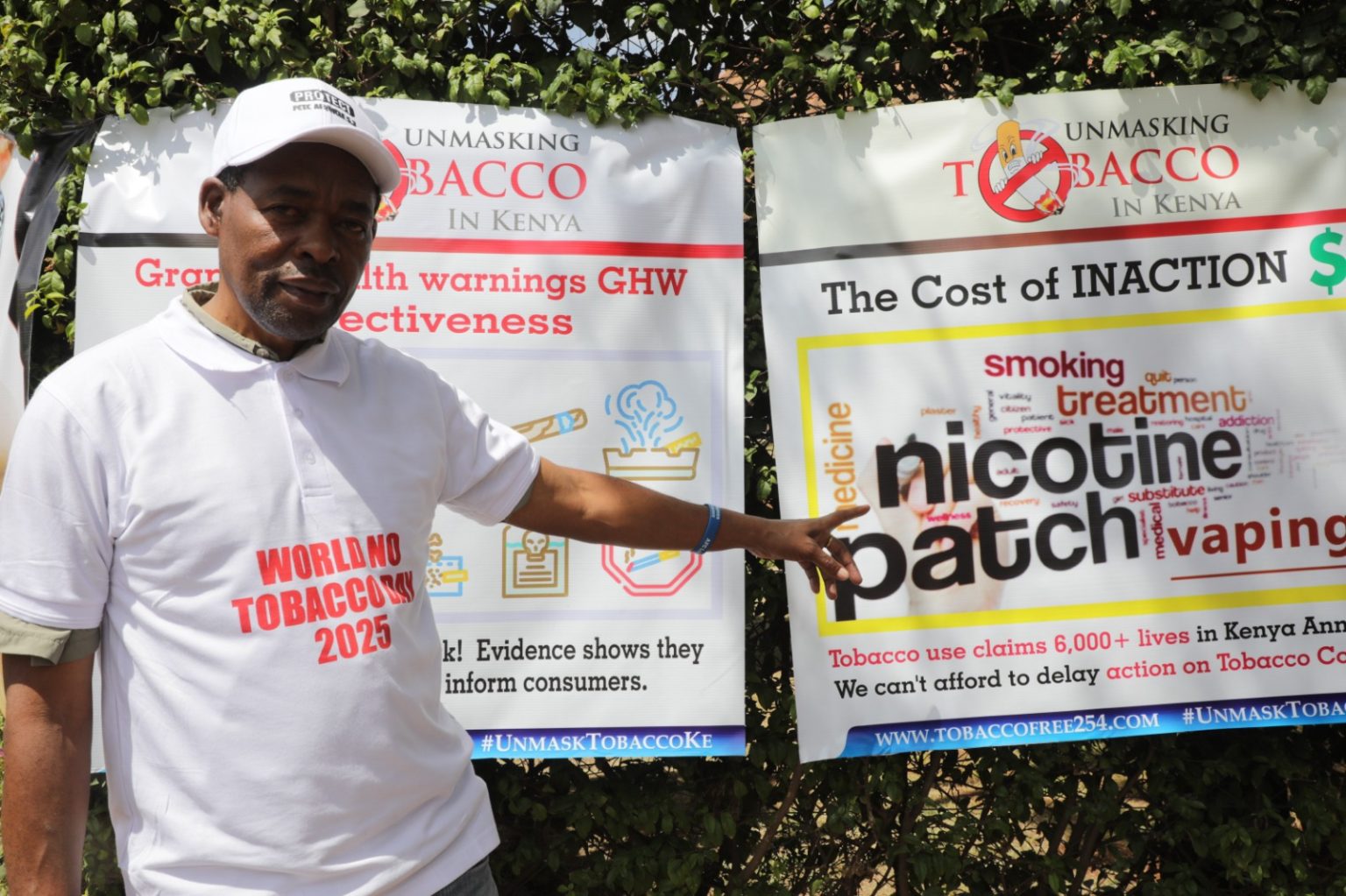
As Kenya joined the rest of the world in commemorating World No Tobacco Day 2026 under the theme “Unmasking the Appeal: Exposing Industry Tactics on Tobacco and Nicotine Products,” tobacco control advocates said the country faces increasing pressure from tobacco and nicotine companies seeking to weaken regulations.
The Tobacco Control Civil Society Organizations coalition said growing opposition to the proposed Tobacco Control Amendment Bill 2024 reflects coordinated efforts aimed at weakening public health protections.
According to the coalition, resistance to stronger tobacco regulation has increasingly emerged through sections of traders, business associations, social media campaigns, and individuals appearing in mainstream media to oppose reforms.
Of particular concern, the coalition said, is what it describes as increasing use of third parties to amplify tobacco industry narratives through voices presented as independent economic or medical experts.
“Tobacco control policies exist to protect public health, especially children and young people, from addiction, disease, and premature death,” the coalition said.
Growing tobacco burden
Civil society groups warned that tobacco and nicotine use continue to impose devastating health, social, and economic consequences in Kenya.
Data from Tobacco, Alcohol, Drugs and Substance Abuse Survey (TADSAS) 2022 and 2024 Data on Youth and Tobacco in Africa studies paint an alarming picture.
Approximately 2.3 million Kenyan adults and 244,000 adolescents currently use tobacco or nicotine products.
Tobacco use is linked to about 12,000 deaths annually in Kenya.
The average age of initiation into smoked tobacco products is 11 years, although some children begin using tobacco as early as six years old.
Advocates also raised alarm over increasing use of newer nicotine products among young people.
Children as young as five years are already using smokeless tobacco products, while nicotine pouches and shisha use have been reported among children as young as six years old.
Nearly 40 percent of Kenyan adolescents report exposure to tobacco and nicotine marketing through television, videos, and movies.
Among university students, 12 percent currently use tobacco products, while 5.8 percent use electronic cigarettes and 4.2 percent use nicotine pouches.
The coalition noted that nearly half of nicotine pouch users reported choosing the products because of flavors, while more than two thirds of electronic cigarette users cited attractive flavors as a reason for use.
Public health advocates argue that flavored nicotine products, aggressive digital marketing, influencer promotions, and products designed to appear modern and socially acceptable are increasingly attracting younger users.
Concerns over industry interference
The coalition expressed concern over what it described as persistent tobacco industry interference in public policy and media discussions.
Although Kenya’s Tobacco Industry Interference Index score improved slightly from 48 out of 100 in 2023 to 46 in 2025, advocates argued that the improvement masks deeper problems.
They pointed to what they described as attempts to frame the Tobacco Control Amendment Bill as anti-business rather than a public health intervention.
Other concerns include coordinated opposition campaigns involving sections of traders and business groups, narratives downplaying harms associated with tobacco and nicotine products, attempts to market emerging nicotine products as safer alternatives, delays in implementing tobacco control measures, and increasing digital marketing targeting young people.
The coalition reminded policymakers that Article 5.3 of the WHO Framework Convention on Tobacco Control obligates governments to protect public health policies from tobacco industry interests.
“Public health policymaking must remain independent, evidence based, and focused on protecting Kenyans from preventable disease and death,” the coalition said.
Advocates said tobacco use is not only a health crisis but also a growing economic burden.
According to estimates cited by the coalition, Kenya loses between 544 million dollars and 756 million dollars annually due to tobacco related illnesses and lost productivity.
They argued that for every dollar collected from tobacco revenue, approximately three dollars are lost through healthcare spending and productivity losses.
These losses affect healthcare spending, household incomes, workforce productivity, educational outcomes, and long-term economic growth.
Resources that could otherwise support hospitals, schools, and community development continue to be consumed by preventable tobacco related diseases, the coalition said.
Push for stronger taxation and regulation
Civil society groups described tobacco taxation as one of the most effective interventions for reducing tobacco use, particularly among young people.
However, they argued that Kenya’s current tax share remains significantly below global recommendations.
Currently, taxes account for about 34.1 percent of cigarette retail prices in Kenya, far below the World Health Organization recommended benchmark of 75 percent.
The coalition called on the Government to implement annual tax increases that outpace inflation and income growth to reduce consumption, prevent youth uptake, increase health financing, and reduce disease burden.
Advocates also urged reinvestment of tobacco tax revenues into universal healthcare, cessation services, youth awareness programs, education, and health promotion.
As Kenya marks World No Tobacco Day 2026, Tobacco Control Civil Society Organizations are calling on Parliament, the Ministry of Health, regulators, county governments, media institutions, and other stakeholders to take urgent action.
Among the priorities highlighted are passage of the Tobacco Control Amendment Bill 2024, stronger regulation of emerging nicotine products including electronic cigarettes and nicotine pouches, increased protection of young people from digital marketing, higher tobacco taxes, and full implementation of commitments under the WHO Framework Convention on Tobacco Control.
The coalition emphasized that while tobacco and nicotine products are often marketed as fashionable, modern, harmless, or socially acceptable, these messages frequently mask addiction, disease, and long-term harm.
“The future health and well-being of Kenya’s young people must take precedence over commercial interests,” the coalition said.
The coalition also called on Kenyans to challenge misleading nicotine content online, support stronger tobacco control laws, protect children from nicotine addiction, and hold the tobacco and nicotine industry accountable.
The coalition brings together a broad network of public health and advocacy organizations including the Kenya Tobacco Control and Health Promotion Alliance (KETCA), International Institute of Legislative Affairs (IILA), Consumer Information Network (CIN), Kenyan Network of Cancer Organizations (KENCO), Den of Hope Youth Group, National Taxpayers Association (NTA), Students Campaign Against Drugs (SCAD), NCD Alliance Kenya, Stowelink Organization, Being Africa, and Youth In Power Africa Rise (YIPAR).