




By Henry Neondo in Addis Ababa, Ethiopia
Climate change is intensifying water challenges across Africa, with droughts, floods, and erratic rainfall patterns becoming more frequent and severe, according to experts and policymakers.
These shifts are not only degrading freshwater ecosystems but also worsening water scarcity, placing additional strain on livelihoods, economies, and already fragile water systems.
Despite these mounting pressures, some progress has been recorded in water governance. Many African countries have improved Integrated Water Resources Management by as much as 30 percent, while 72 percent of shared aquifers are now covered by regional cooperation agreements—placing the continent above the global average in transboundary water collaboration.
However, experts caution that persistent data gaps and fragmented monitoring systems continue to undermine effective planning, decision-making, and investment in the sector.
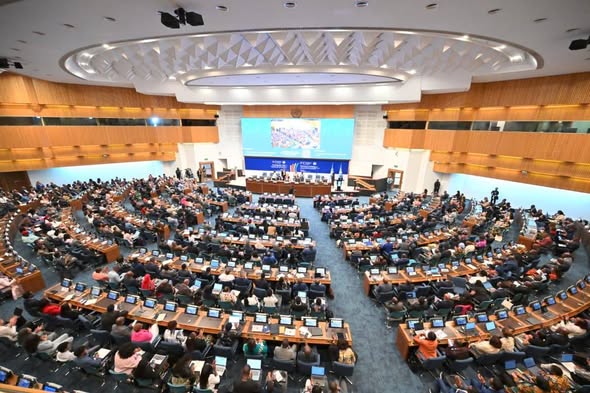
Country experiences shared during the meeting highlighted a range of practical responses to water stress. In Somalia, efforts are underway to strengthen policy frameworks, build community capacity, and enhance early warning systems through partnerships with international agencies.
Meanwhile, Uganda is scaling up investments in water infrastructure, sanitation, and catchment management, with an ambitious target of reaching 84 percent water coverage.
At the municipal level, leaders are increasingly adopting innovative approaches such as desalination, rainwater harvesting, and renewable energy-powered water systems to improve reliability and resilience in service delivery.
Discussions also brought into focus persistent governance challenges, including fragmentation and chronic underinvestment. In Lesotho—often referred to as the “water tower” of Southern Africa—leaders emphasized the importance of integrated water resource management and stronger regional cooperation.
The country plays a critical role in supplying water to millions of people in neighboring South Africa, underscoring the interconnected nature of water security in the region.
Speakers stressed that water and sanitation must be recognized not only as development priorities but also as fundamental human rights. They argued that adopting a rights-based approach is essential to ensure equitable access, protect vulnerable populations, and prevent widening inequalities in access to water services.
The meeting concluded with a strong call for coordinated and scaled-up action, urging governments, development partners, and the private sector to accelerate progress toward the Agenda 2030 and Agenda 2063.
Leaders emphasised the need for stronger political commitment, more robust institutions, and increased investment to close the water gap and secure sustainable water and sanitation systems for all Africans.
“The time for ambition has passed,” one panelist said. “What Africa needs now is implementation—at scale, with urgency, and with accountability.”