




By Shobha Shukla – CNS
The global fight against HIV and AIDS has reached a critical moment. Decades of community leadership, scientific breakthroughs and policy advances have made it possible not only to prevent new HIV infections, but also to ensure that people living with HIV can lead long, healthy and fulfilling lives. Yet, despite these tools, AIDS-related deaths and new infections continue—raising urgent questions about political will, funding and equity.
Scientific evidence is clear. People living with HIV who are on sustained antiretroviral therapy (ART) and achieve viral suppression live lives comparable to those without the virus. Crucially, they cannot transmit HIV to others—a principle endorsed by the World Health Organization and widely known as “Undetectable Equals Untransmittable” (U=U).
However, global access to treatment remains uneven. According to UNAIDS, an estimated 40.8 million people were living with HIV worldwide in 2024, but only 31.6 million were receiving lifesaving treatment. That gap continues to cost lives. In the same year, 1.3 million people acquired HIV—new infections that experts say could have been prevented through universal access to combination prevention and treatment. An estimated 630,000 people died from AIDS-related illnesses in 2024, despite the availability of proven, life-saving interventions.
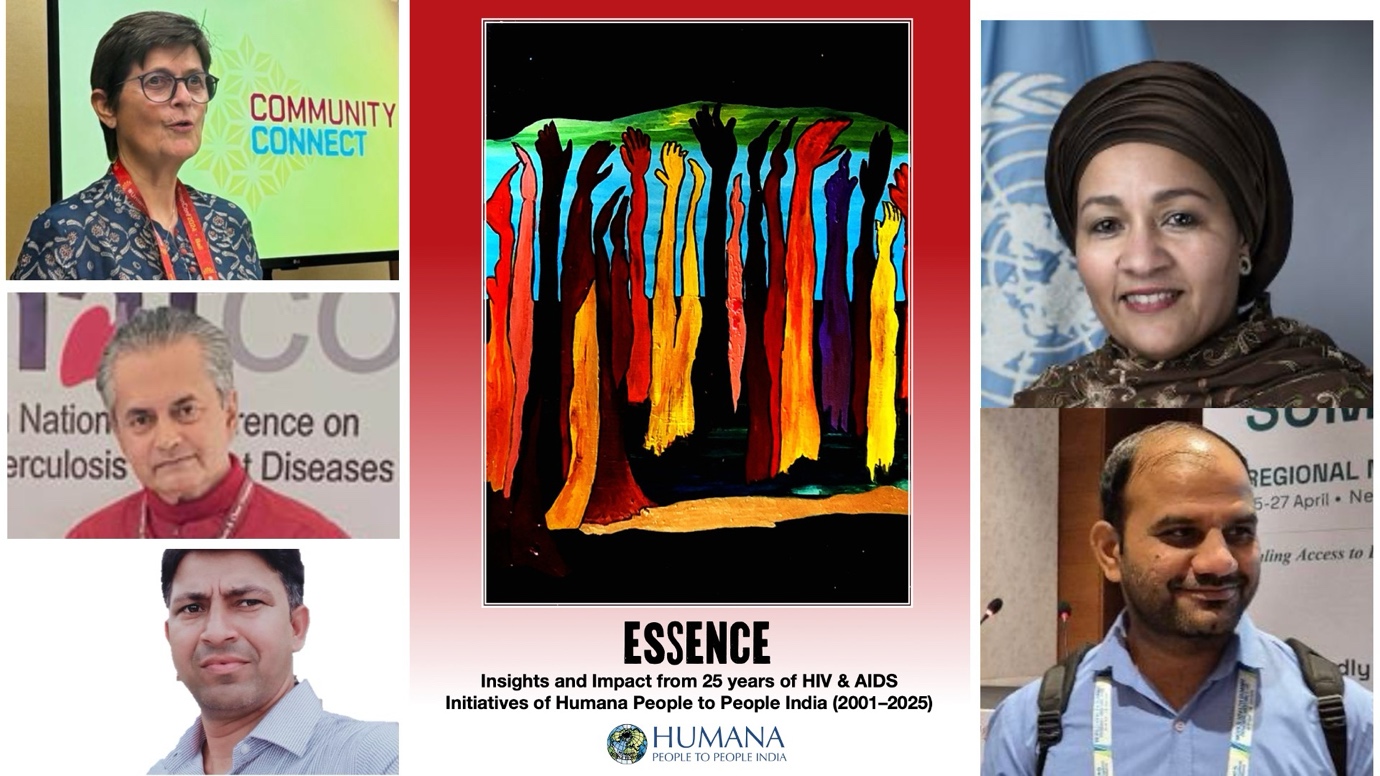
“Ending AIDS remains achievable,” said United Nations Deputy Secretary-General Amina Mohammed during a recent UNAIDS meeting. “But only if resources match our ambition.” She warned that growing debt burdens and fiscal pressures in low- and middle-income countries are forcing governments to make painful trade-offs. “Even when governments want to prioritise HIV, they are taking away from education and health because they cannot meet the cost,” she said.
These challenges highlight the need to address not only biomedical solutions, but also the social, economic and structural factors that fuel vulnerability to HIV. Progress towards ending AIDS is inseparable from broader commitments to human rights, gender equality and the Sustainable Development Goals.
The power of sustained, community-led responses is illustrated in India, where a new report—ESSENCE: Insights and Impact from 25 Years of HIV and AIDS Initiatives of Humana People to People India (2001–2025)—documents a remarkable journey. When Humana began its work 26 years ago, free antiretroviral treatment was unavailable in the country. Today, the Government of India provides free HIV treatment to more than 1.8 million people nationwide, following its landmark rollout announced on World AIDS Day in 2003.
Humana People to People India has worked closely with communities most affected by HIV, including sex workers, men who have sex with men, transgender people, people who inject drugs, migrants, young people and pregnant women. “Ending stigma and discrimination is central to reducing HIV and TB risk,” said Lisbeth Aarup, Head of Project Development at Humana India. Public health expert Dr Sugata Mukhopadhyay noted that structural barriers—such as gender-based violence, social exclusion and human rights violations—often prevent underserved communities from accessing care.
As the world prepares for the 26th International AIDS Conference in July 2026 and the United Nations General Assembly High-Level Meeting on AIDS later that year, global efforts are at a crossroads. Progress has been real, driven largely by communities. But it is not enough.
Ending AIDS by 2030 is still within reach. Achieving it will require renewed political commitment, sustainable financing and an unwavering focus on people, rights and dignity. The tools exist. The choice now lies with governments and global partners to act—decisively and urgently.