



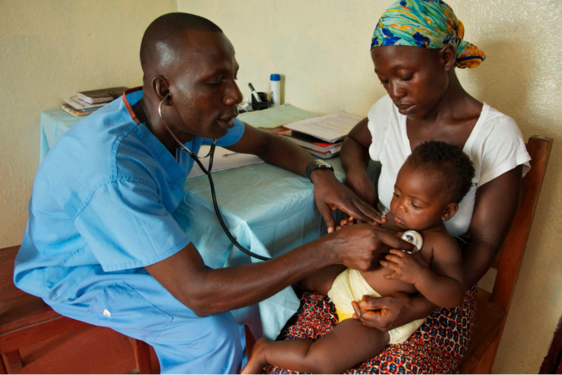
Recent withdrawal of US government funding has opened a major financing gap in Kenya’s health sector, threatening healthcare delivery and outcomes while exposing the country’s deep dependence on external aid, a new report reveals.
The new report, Immediate Impact of External Funding Withdrawal on Kenya’s Health Sector, by the Centre for Epidemiological Modelling and Analysis (CEMA), University of Nairobi, provides a comprehensive analysis of the external funding landscape and tracks the funds within the health care system, highlighting the areas that are the most affected.
Kenya’s health system is financed through the government, the private sector, and external funders. In 2018/19, external funders contributed 18 percent of total health expenditure, with the US government accounting for over 60 percent of all external funding to the overall health sector.
To arrive at its findings, the report authors assembled data from the Kenya Ministry of Health (MoH) approved budgets, commodity quantification reports, human resources (HRH) budgets, donor-specific annual reports, and development partners’ operational and grant reports. Their focus was mainly on service disruptions, equity in service access, workforce implications, and impact on the commodity supply chain and infrastructure.
Counties would need KES 47.8 billion annually to absorb all the 41,170 PEPFAR-supported staff, the majority of whom are deployed in high HIV burden counties. Health information systems used to collect, analyze, and disseminate health information in Kenya are highly dependent on external funding.
Vulnerable populations, including pregnant women, children, adolescents, and adolescent girls and young women (AGYW), are likely to be disproportionately affected, widening inequities in access to HIV prevention and treatment services.
In addition, the multilateral external funders are also affected by the change in the US government’s foreign aid policy. Global Fund, World Bank, WHO, and GAVI are recipients of the US government funding. A cut in their global budgets may lead to a reprioritization of their interventions in the country to fit within their resource envelopes.
While the withdrawal of external funding poses serious risks to health service delivery, the report argues it also presents a critical opportunity for Kenya to reset and build a more self-reliant, resilient health system. Dr. David Khaoya, Lead Author and Senior Research Fellow at CEMA, said, “External funding has long played a significant role in Kenya’s health sector, but it is unpredictable and unsustainable.”
“This funding shock is a wake-up call. While the challenges are significant, Kenya and other African countries now have an opportunity to rethink how health systems are financed and build long-term resilience.”
“Increasing domestic investment, strengthening national ownership, and reducing overreliance on external aid are essential if we are to protect health outcomes in the future,” he added.
A long-term impact analysis of this withdrawal is currently underway and will be released in due course.