




By Lenah Bosibori
Technology, climate change and migration are creating new risks for people searching for work and better lives, exposing some to exploitation and human trafficking, stakeholders at the 2026 Global Forum on Modern Slavery said.
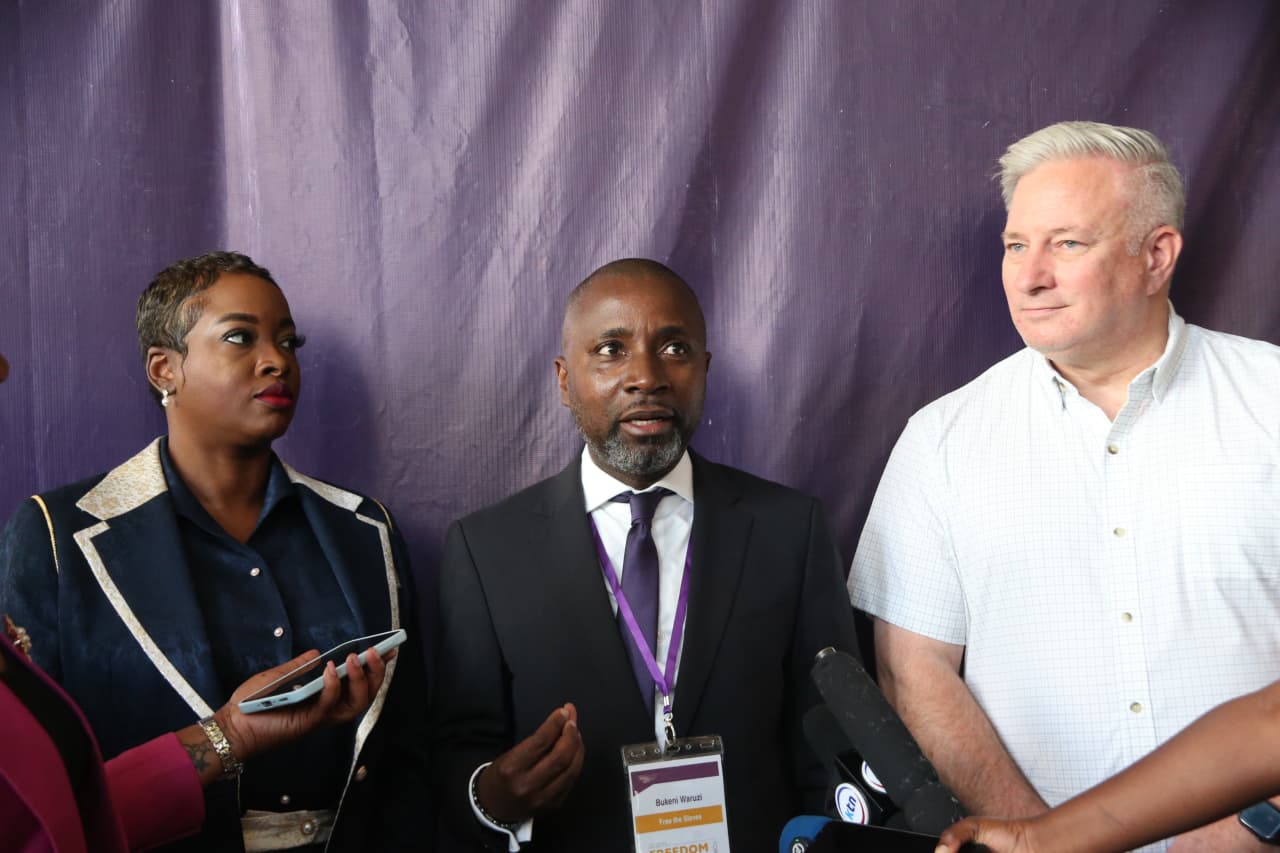
Speaking on Monday in Nairobi, Bukeni Waruzi, executive director of Free the Slaves, said poverty continues to leave many people vulnerable to exploitation. But the risks are changing, with technology, climate change and migration creating new ways for traffickers to target vulnerable people.
“Global estimates of modern slavery have increased from nearly 40 million people several years ago to more than 50 million,” Waruzi said. “The actual number could be higher because many victims never appear in official statistics.”
East Africa is an important route for people moving across borders in search of work and better opportunities. But as migration patterns change, experts warn that traffickers are also finding new ways to exploit people.
The problem affects people of all ages and genders, including children, men and women. “No one is immune,” Waruzi said. “But we can do more to prevent it.”
Traffickers are adapting to new technology
John Richmond, a former US ambassador who led international efforts to monitor and combat trafficking in persons, said traffickers have always adapted to new technology.
“They once used ships, the printing press and telephones, and have now moved online,” Richmond said. “Today, they are also turning to generative artificial intelligence,” Richmond said.
Richmond further added that the same digital tools can help investigators identify traffickers, trace people being exploited, connect survivors to care and strengthen cases against those responsible.
The financial rewards are one reason the crime continues. Richmond said traffickers make an estimated KSh30.6 trillion ($236 billion) a year from exploiting other people. He described human trafficking as a crime where the financial rewards are high while the chances of being caught and punished can be low.
“Human trafficking is a high reward, low risk crime,” Richmond said.
He said communities can play a bigger role in prevention, while law enforcement must investigate and prosecute offenders. Businesses, he added, must also ensure that forced labour does not enter their supply chains.
“We can stop them,” Richmond said. “Communities can rise with prevention. Law enforcement can prosecute. We can build a culture that does not tolerate forced labour in supply chains, or sex trafficking in our workplaces.”
But he warned that governments must back their commitments with money, staff and other resources. “Promises alone will not end trafficking,” he said.
For Kenyan journalist Jeff Ochieng, the risks associated with migration became personal two years ago when he left Kenya for Qatar in search of a job.
An agent recruited Ochieng and 17 others and took them to Qatar, where they expected to work for a company that, according to Ochieng, never existed. But when they arrived, the promise of employment quickly turned into a struggle for survival.
Ochieng found himself without documents proving his legal status in the country, making it difficult to access basic services and move freely. “One thing that gave me hope was my Equity card. We used it to buy food and other necessities that kept us going,” he said.
Desperate for help, Ochieng contacted a friend in Canada, who helped him reach the International Organization for Migration (IOM).
IOM later connected them with an NGO in Qatar, which intervened and helped open a case on their behalf. Ochieng eventually decided to return to Kenya. Before leaving, however, he made sure the other workers were in safe hands.
Back home, he began writing about what he had experienced. His ordeal changed the direction of his work. Today, Ochieng is a human rights activist who documents the experiences and challenges faced by people affected by human trafficking.
He wants authorities to take a closer look at how Kenyans are recruited and sent abroad for work. His experience is a reminder that the employment search can sometimes expose migrants to exploitation and trafficking.
Survivors must be at the centre
At the 2026 Global Forum on Modern Slavery held in Kenya, survivors, activists, government officials and other leaders warned that modern slavery and human trafficking remain a growing global threat.
They also stressed that no single organization, government or sector can tackle the problem alone. Survivors, they said, must be at the centre of efforts to fight trafficking.
Shamere Mackenzie, CEO of the Sungate Foundation, survivor leader and co-chair of the forum, said people who have experienced trafficking must remain at the centre of efforts to fight it.
“This is a human rights issue,” Mackenzie said. “We have to keep working on the laws that shape people’s lives and on protection. That means services for survivors.”
“Government agencies, law enforcement, civil society organizations and communities must work together to prevent trafficking and support people who escape exploitation,” she said.
Richmond said trafficking does not always involve people being moved across countries or continents. “Traffickers can recruit victims from their own communities, sometimes using shared language and cultural connections to gain their trust,” he said.
In some cases, victims are moved only a short distance. Technology is also being used to control victims and generate money from their exploitation. Richmond warned that generative AI is creating new challenges, particularly around child sexual abuse material.
“Livestreaming is also creating challenges for laws that were written before such technology existed,” he said. He said public awareness must also move beyond campaigns and slogans. “The best awareness campaign I have ever heard of is an indictment,” Richmond said.
When someone is arrested, prosecuted and held accountable, he said, the message can spread quickly through a community. Richmond also called for hospitals, teachers and first responders to be trained to recognize the signs of trafficking.
Protecting children who are being exploited in unsafe homes, he said, remains one of the most difficult challenges.
That is the gap Ochieng is now trying to address from another side. He escaped exploitation. He made sure the people he left behind were safe. Then he returned home and turned his experience into journalism and activism.
His investigations now focus on recruitment organizations sending Kenyans abroad for work. He wants authorities to look beyond the promise of employment and examine what happens to workers after they leave the country.
Protecting survivors is not enough. Cases must be followed to the end. Recruitment systems must be scrutinized. Communities must be involved, and governments must invest in prevention and justice. “If we want human trafficking to disappear,” Richmond said, “it will take collective action, a concerted effort, and real resources.”