


By Edwin Austin
Along Kenya’s coastlines, discarded flip-flops have become an increasing threat, piling up in the ocean and choking vital marine ecosystems that local communities rely on. But amid this rising tide of pollution, one man’s journey from a life marked by poverty and crime to becoming a skilled artisan offers a powerful example of transformation.
Through his work turning flip-flops into vibrant art, Byrant Muhanji not only found a new purpose for himself, but continues to play a vital role in restoring Kenya’s coastal environment.
Muhanji’s early life was a turbulent journey shadowed by hardship and missteps. Growing up amidst poverty and limited opportunities in the sprawling Kenyan slums, he found himself caught in a revolving door of police custody, drifting dangerously close to a life defined by crime.
It wasn’t until a family friend intervened slightly over a decade ago, offering not just guidance but a lifeline, that Muhanji’s path began to shift.
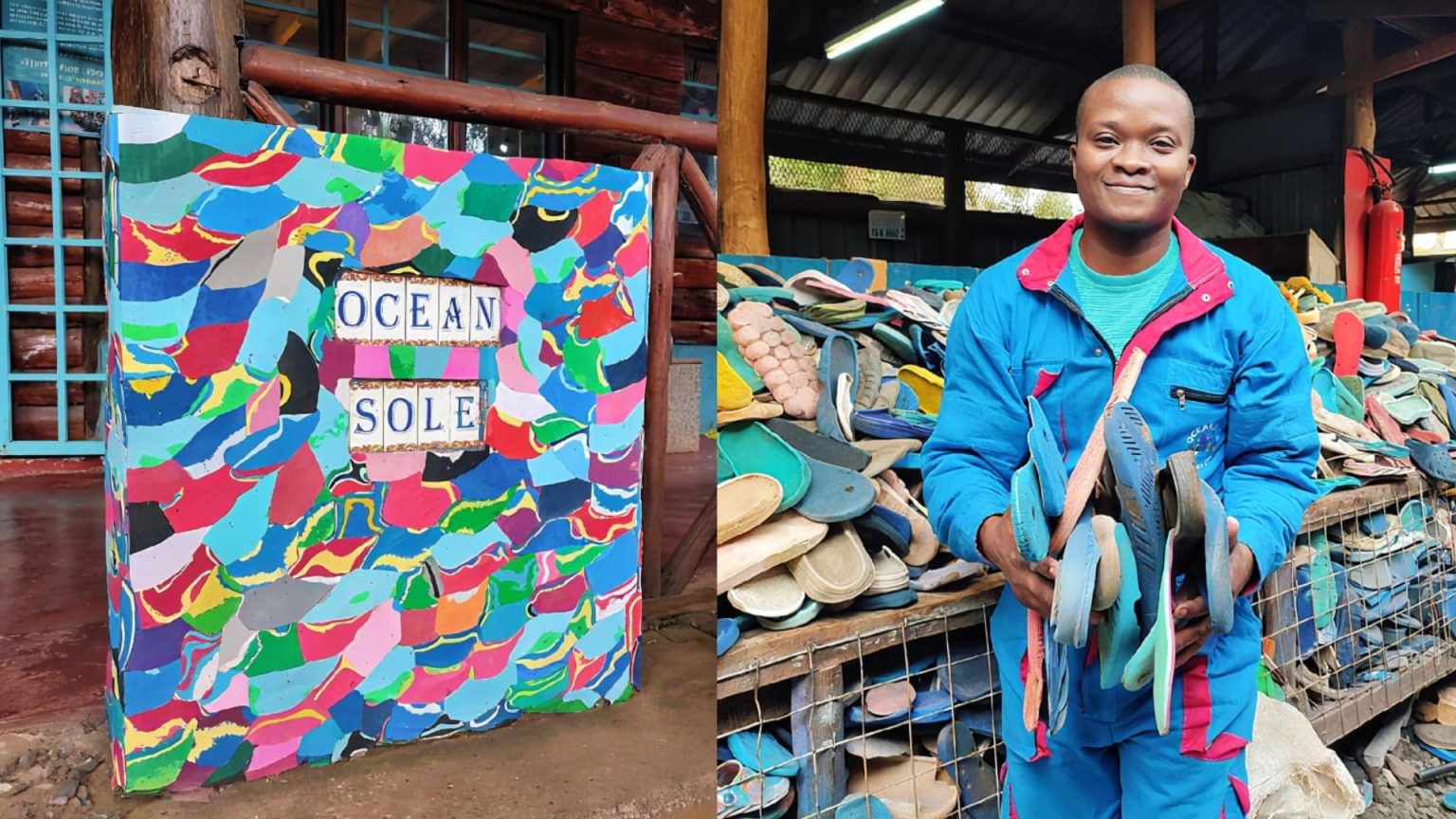
This friend introduced him to Ocean Sole, a Nairobi-based social enterprise that transforms discarded flip-flops into radiant artworks.
Through this chance encounter, Muhanji found more than a job: he found purpose, dignity, and a way to reinvent himself. Today, far from the struggles of his past, Muhanji is a devoted father and husband, embracing family life with love and hope. With each sculpture he carves, he shapes not only artworks, but a powerful new narrative, one of redemption, creativity, and environmental stewardship. “I was young, lost, and made mistakes,” Muhanji recalls.
“Joining Ocean Sole didn’t just change my daily routine, it changed my whole perspective on life.” At Ocean Sole, Muhanji found a purpose far beyond employment.
His hands, once idle or misguided, began to craft hope from the very waste that once symbolized pollution and neglect. Through carving thousands of flip-flops into colorful sculptures of Kenya’s iconic wildlife, Muhanji reclaimed not only his future and that of his family, but also contributed directly to the healing of his environment.
Ocean Sole’s model creates room for artisans like Muhanji who come from vulnerable backgrounds. By providing them with not only a livelihood but also training and support.
Ocean Sole empowers these individuals to build stable, dignified lives. In turn, their craftsmanship transforms tons of ocean-bound plastic into artworks that raise international awareness about environmental sustainability.
Suffice it to say, the physical act of carving discarded flip-flops is more than artistic expression; it is a profound act of reclamation.
Every sculpture shaped by Muhanji’s hands is a tangible symbol of renewal, a discarded object reborn into a beacon of cultural pride and environmental responsibility.
“This work gave me responsibility and showed me what I can do to protect my environment,” Muhanji said.
Reimagining Kenya’s Environmental Future through Art Ocean Sole’s process begins where most see waste: the thousands of flip-flops washed ashore along Kenya’s beaches and waterways.
Each week, the organization collects and recycles well over 10,000 flip-flops, redeploying this ocean-bound plastic into colourful, handmade sculptures that depict Kenya’s rich wildlife and coastal culture.
Across Kenya, over 50 dedicated Ocean Sole team members, ranging from artisans and collectors to sales representatives, distributors, marketers, and administrative staff, work collaboratively to drive the organization’s mission forward.
Each individual plays a vital role in the journey from ocean pollution to powerful art, ensuring that every step is handled with care, commitment, and purpose. “This process speaks volumes about Kenya’s ability to solve its own environmental problems,” says Joe Mwakiremba, Ocean Sole’s Head of Sales.
“By turning trash into art, we reclaim not only discarded materials but also our future. Creating a giraffe or a turtle from flip-flops reshapes how we envision our coast.” “Moreover, one of the aspects of sustainability we approach is, for example, during the production process, there are a lot of offcuts that result from curving using a knife. We shred these offcuts into smaller pieces and make mattresses which we donate to our refugee program in Northern Kenya,” Joe Mwakiremba asserted.
Through programs like Ocean Mamaz, beach cleanup initiatives led by community women, the impact ripples further, generating income and reinforcing a shared commitment to safeguarding natural heritage.
Muhanji’s story is a powerful testament to how creative, community-driven solutions can rewrite lives and landscapes. His journey from crime to craftsmanship illustrates the profound potential of environmental initiatives that place people at their heart.
By turning trash into remarkable art, Muhanji and his fellow artisans not only reshape Kenyan coastlines but carve pathways toward hope, dignity, and sustainable futures. In a world grappling with plastic pollution and social inequality, such transformative tales remind us that change begins with investing in human potential.
Through the hands of artisans like Muhanji, discarded flip-flops are no longer symbols of neglect; they become statements of resilience, sculpting a better tomorrow, one piece at a time.