



By Henry Neondo
African Group of Negotiators calls for grant-based climate finance, tripling of adaptation funding and stronger implementation mechanisms, warning against attempts to renegotiate the Paris Agreement.
Africa has called on developed countries to translate their climate commitments into tangible financial support, insisting that the success of COP31 in Antalya, Türkiye, must be measured by the resources made available to developing countries to implement climate action.
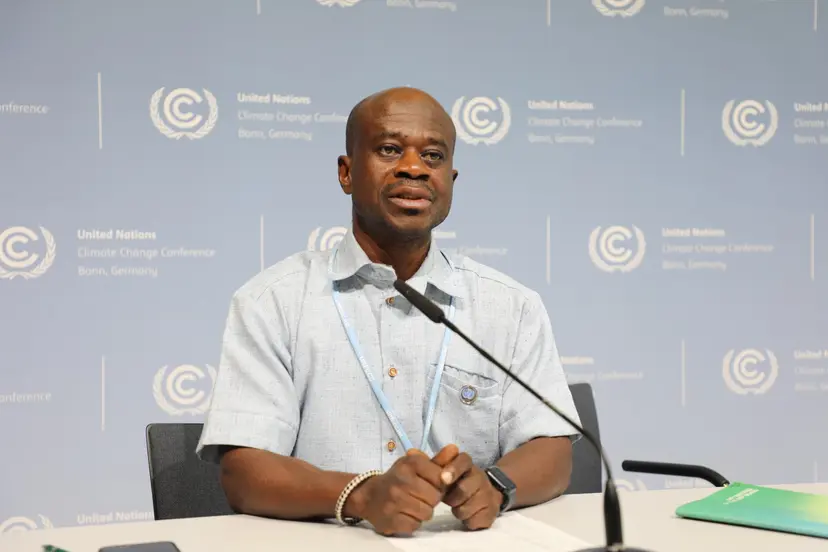
The African Group of Negotiators on Climate Change (AGN), briefing journalists on Thursday, November 19, said the remaining days of negotiations would be critical in determining whether the conference delivers meaningful outcomes for the continent’s climate resilience, development priorities and implementation of the Paris Agreement.
Led by its chair, Nana Iribosia Kwame, the African negotiating team identified climate finance, adaptation, mitigation and the protection of multilateralism as key priorities, arguing that ambitious climate commitments must be matched by adequate means of implementation.
“Implementation meets means of implementation,” the chair said, emphasising that countries with obligations to provide climate finance must demonstrate their commitment through practical support.
The African group also warned against attempts to renegotiate the Paris Agreement, particularly provisions relating to the obligations of developed countries towards developing nations.
According to the chair, preserving multilateralism remains a fundamental African priority, as the United Nations climate process provides an important platform through which countries can collectively address the climate crisis.
“Any attempt, any plans to destroy this process is a red line for us as Africa,” the chair said.
Africa demands concessional and grant-based climate finance
Climate finance emerged as one of the most contentious issues in the negotiations, with the African group pushing for predictable, accessible and affordable funding to support the continent’s climate commitments.
A representative of the finance negotiating team said African countries had demonstrated ambition through their Nationally Determined Contributions (NDCs), National Adaptation Plans (NAPs) and long-term adaptation strategies, but implementation remained constrained by inadequate financial resources.
The group is advocating for climate finance that is concessional and grant-based rather than loans that could further increase the debt burden of African countries.
Three major areas are shaping the finance discussions.
The first concerns the climate finance work programme and the implementation of Article 9.1 of the Paris Agreement, which addresses the provision and mobilisation of financial resources by developed countries to support developing nations.
The African group wants a clear process for discussing how Article 9.1 supports the implementation of other provisions of the Paris Agreement.
The second issue relates to Article 2.1(c), which seeks to align financial flows with pathways towards low greenhouse gas emissions and climate-resilient development.
Africa maintains that implementation of this provision must respect the principles of equity and common but differentiated responsibilities, recognising that countries have different development circumstances and capacities.
The group further argues that international financial flows, including resources from private-sector actors, should be managed in ways that reflect national priorities.
The third concern relates to funding for institutions operating under the UN climate finance mechanism, including the Green Climate Fund (GCF), Global Environment Facility (GEF), Fund for Responding to Loss and Damage and Adaptation Fund.
The negotiating team expressed concern over declining contributions to some of these institutions, warning that reduced funding could undermine their ability to support vulnerable developing countries.
It particularly highlighted the forthcoming third replenishment of the Green Climate Fund, arguing that COP31 should establish the foundation for an ambitious replenishment process in 2027.
African countries push for tripling of adaptation finance
On adaptation, the African group is seeking stronger commitments to address the continent’s growing vulnerability to climate impacts.
The negotiating team said its priorities include advancing the Global Goal on Adaptation (GGA), strengthening the technical framework for measuring adaptation progress and securing additional financial resources for implementation.
One of the major issues is the development of technical guidance for the Belém indicators, which are intended to help countries measure progress towards achieving the global adaptation goal.
Africa is calling for the establishment of a party-selected task force to develop metadata and guidance on how information relating to the indicators should be collected, aggregated and assessed.
The group also wants countries to be given an opportunity to test the indicators and submit their experiences to inform their eventual integration into the UN Framework Convention on Climate Change (UNFCCC) architecture ahead of COP32.
However, financing remains a major concern.
The African negotiators are pushing for the operationalisation of the commitment to triple adaptation finance, arguing that current funding levels remain inadequate in relation to the needs of developing countries.
They are also seeking a clear financing baseline, with the negotiating team referring to a proposed level of US$120 billion annually to support adaptation programmes and instruments.
Another priority is ensuring that National Adaptation Plans move beyond development on paper to actual implementation.
Although more African countries have developed adaptation plans over the past three years, the group said financial and technical support remains necessary to translate these plans into concrete interventions.
Mitigation must support Africa’s industrialisation ambitions
On mitigation, the African group emphasised the need to balance emissions reduction with economic development, industrialisation and the responsible development of critical minerals.
The mitigation negotiating team noted that Africa contributes approximately four per cent of global greenhouse gas emissions, arguing that the continent’s climate ambitions should not undermine its development aspirations.
It maintained that mitigation should enable African countries to decouple economic growth and industrialisation from emissions increases while supporting sustainable development.
One of the group’s key demands is the extension of the Mitigation Work Programme until 2030 to support enhanced mitigation ambition and implementation during the current decade.
The group believes the extension would also provide an opportunity to address the implications of global temperature overshoot and avoid locking countries into pathways that could constrain future development choices.
On the Global Stocktake, African negotiators said countries should retain the nationally determined nature of their climate commitments when translating global outcomes into domestic policies and NDCs.
They also rejected proposals that could introduce compliance mechanisms into the mitigation work programme, arguing that the existing Enhanced Transparency Framework provides an appropriate basis for tracking progress.
Instead, Africa is advocating for the establishment of a Mitigation Implementation Facility to help convert project concepts and proposals into financed and implemented projects.
The facility would address the implementation gap facing African countries by improving access to climate finance, technology and technical capacity.
Just transition must reflect Africa’s development realities
Beyond the three thematic areas, the African group reiterated the importance of a just and credible energy transition that reflects the continent’s development circumstances.
The chair said transition pathways must protect farmers and workers, create opportunities for African countries to process and utilise their natural resources domestically, and establish credible institutions to support the transition.
The group cautioned against transition approaches that impose additional economic and social burdens on African countries while failing to address existing inequalities in energy access and development.
For Africa, a just transition must therefore be connected to industrialisation, energy access, employment creation and the ability of countries to derive greater economic value from their natural resources.
The negotiations also come against the backdrop of growing concerns about global temperature overshoot and its implications for vulnerable African economies.
The African group argued that temperature overshoot should not be treated exclusively as a mitigation concern but must also be addressed in terms of its consequences for adaptation, livelihoods and economic development.
It warned that the effects of global warming could be significantly more severe in some African geographical contexts, reinforcing the urgency of strengthening adaptation measures and financing.
COP31 outcomes must translate commitments into action
As negotiations continue in Antalya, the African Group of Negotiators maintains that the credibility of COP31 will ultimately depend on whether parties can agree on practical mechanisms for delivering climate action.
The group’s position reflects a broader concern that African countries are increasingly expected to demonstrate climate ambition without receiving the financial, technological and institutional support necessary to implement their commitments.
With climate finance, adaptation and mitigation implementation remaining central to the discussions, Africa is urging parties to ensure that the final decisions reflect equity, historical responsibility and the different development circumstances of countries.
The message from the African negotiating team is clear: climate ambition cannot be separated from the resources required to achieve it.
For a continent facing intensifying climate impacts while pursuing industrialisation, energy access and sustainable development, the remaining days of COP31 will be an important test of whether international climate commitments can deliver meaningful results on the ground.