



ANTALYA, Türkiye, November 14, 2026 – Extreme heat is no longer just disrupting sporting events; it is exposing the growing human health risks of climate change. From footballers struggling under high temperatures to film industries embedding climate themes in mainstream entertainment, COP31 is highlighting the untapped power of sports, media and popular culture to bring climate science closer to millions of people.
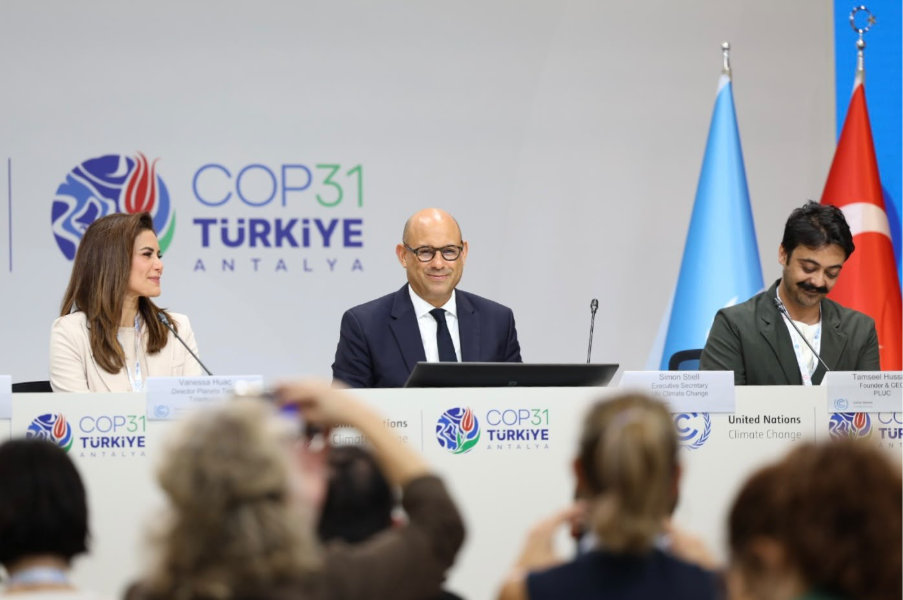
UN Climate Change Executive Secretary Simon Stiell says the global climate movement must move beyond negotiation rooms and scientific conferences to reach audiences through the cultural platforms, entertainment and sporting events that shape everyday life.
“We need to meet people where they are at, in their everyday lives,” he said, noting that films, music, television and art could help audiences understand climate-related losses while making climate action more imaginable.
He cited the recent FIFA World Cup as an example of how sporting events can provide an entry point for climate science communication.
Telemundo journalist and environmental programme director Vanessa Hauc told the press conference that her network used hydration breaks during the tournament to explain the effects of extreme heat and humidity on athletes.
Hauc said she interviewed medical experts, players and a referee from Guatemala who collapsed on the field because of extreme heat.
Research by World Weather Attribution had indicated that one-quarter of the matches were expected to take place under conditions posing risks to human health, particularly for athletes.
Rather than interrupting hydration breaks with commercial advertisements, Telemundo allowed viewers to watch players cooling themselves with water and ice packs while Hauc explained the scientific factors behind the conditions.
The broadcasts examined how temperature and humidity affected players’ bodies, health and ability to perform.
Hauc also linked the growing climate risks to the fossil fuel industry, arguing that climate reporting must include accountability for the drivers of global warming.
She said the experience demonstrated that audiences did not necessarily need to seek out scientific publications or climate documentaries to understand climate change.
Instead, journalists could bring climate information into spaces where people were already engaged.
“The World Cup is much more than a sporting event. It’s a moment where people connect beyond language, beyond borders, beyond generations,” she said.
Meanwhile, India’s growing film industry is emerging as another potential platform for integrating climate awareness into mainstream entertainment.
Tamseel Hussain, founder and chief executive of PLUC, said India could leverage its expanding clean energy transition and creative economy to make climate issues part of popular storytelling.
India produces more than 1,800 films annually across approximately 20 languages, offering significant opportunities to incorporate environmental themes into mainstream cinema.
Hussain said PLUC had partnered with Netflix India to establish the country’s first climate scriptwriting lab, which attracted more than 6,000 applications from credited screenwriters. Only 65 applicants were selected.
Rather than instructing writers to produce conventional climate films, the initiative encouraged them to develop love stories, horror films and science fiction narratives that could incorporate climate themes naturally.
The approach, he said, was designed to reach audiences in their homes through stories they already enjoy.
Beyond storytelling, India’s film industry is also working to reduce the environmental footprint of film production.
Hussain said an initiative that began with nine major studios had expanded to 170 studios working together under the Producers Guild of India to develop the country’s first green production handbook.
The handbook brings together practical approaches from India and international film industries to reduce production emissions while maintaining creative quality.
Stiell welcomed the growing engagement of the sports and entertainment sectors, saying the work was still at an early stage but had enormous potential.
Through its Entertainment and Culture for Climate Action (ECCA) initiative, UN Climate Change is working with creators and industry partners to encourage a new generation of storytellers to develop climate narratives rooted in people’s everyday experiences.
The appeal comes as nearly 200 countries continue negotiations at COP31, working through 165 mandates covering different aspects of international climate action.
Stiell said negotiations were progressing but urged governments to move quickly on difficult issues and avoid tactical delays as the summit entered its second week.
He also highlighted the importance of translating political commitments into practical action through the COP31 Action Agenda, particularly in clean energy, resilient infrastructure, cleaner industry and disaster protection.
He stressed that no single climate summit could resolve the crisis, but each must deliver measurable progress.
For the UN climate chief, bringing sports, culture and entertainment into climate communication represents an important step towards building wider public participation in climate solutions.
The message from Antalya is that climate action must not remain confined to negotiation rooms and scientific conferences. It must also become part of the stories, sporting moments and cultural experiences that connect people across the world.