



By Hinjal Bhatia and Susan Lin
The movement toward African self-reliance is a defining health theme, with decision-makers seeking greater autonomy over policy levers to advance national interests. At its core, this shift advances health sovereignty by enabling countries to set their own agendas, develop local solutions, and respond to disease burdens with less reliance on external actors.
African leaders are taking steps to reduce reliance on external entities by increasing domestic financing for health innovation and expanding local manufacturing of medical countermeasures. As recently as February, leaders at the African Union Summit signaled a focus on building Africa’s end-to-end R&D ecosystem.
‘From commitment to capability: Are current R&D trends delivering on Africa’s health sovereignty ambitions?’, reveals the scale and importance of this challenge. Our data shows that nearly three-quarters of all clinical trials in Africa between 2001 and 2025 were led by institutions based outside the continent.
On funding, we find that in 2024, COVID-19 received nearly 60% of global R&D funding for Africa Centres for Disease Control and Prevention (Africa CDC) priority diseases, leaving only 30% of funding for malaria, dengue, cholera, typhoid, and leishmaniasis, with malaria capturing three-quarters of that share.
Evidence shows that R&D funding and leadership are not sufficiently aligned with Africa’s disease burden. The challenge is further compounded by the geographical concentration of clinical trial capacity within Africa, with a handful of countries hosting the majority of activity.
South Africa, Kenya, Burkina Faso, Uganda and Mali, for example, account for most trial-country placements, with South Africa and Kenya alone hosting more trials than the next three combined. Not only does this result in a concentration of skills and capacity, but it could also lead to limitations around innovations intended for use across the continent if testing has only occurred in specific regions and is not representative of the populations who will be using the products.
The geographical imbalance also points to a more practical way forward. Rather than expecting every country to develop full capacity across all areas of R&D, Africa should strengthen a coordinated regional model in which countries build complementary capabilities.
Some countries may be better positioned to specialise in clinical trials, while others focus on product development, regulatory science, manufacturing, or implementation research. Coordinated through regional and continental institutions such as the African Medicines Agency (AMA), this approach could help broaden participation, reduce over-concentration, and build a more resilient research ecosystem across the continent. Local manufacturing is central to achieving health sovereignty in Africa.
Sustainable manufacturing cannot exist in isolation. It depends on a steady pipeline of locally relevant innovations from robust R&D systems. If few products progress from research through clinical development to regulatory approval, African manufacturers will have limited opportunities to produce and scale them.
In this way, weak R&D ecosystems constrain the growth of local industry and, by extension, the continent’s ability to secure its own health needs. Two priorities are critical to turning this regional model into reality.
First, the AMA, now in its early stages, must be given the political commitment and financing it needs to fulfil its mandate, so that R&D investment translates into health outcomes across the continent. Second, external funders must shift from short-term, project-based grants towards sustained partnerships that help African institutions lead their own research agendas, while African governments, for their part, prioritise health R&D within national budgets.
Ultimately, achieving health sovereignty in Africa will require aligning research leadership, funding, and manufacturing capacity with the continent’s real health needs. The convergence of stronger R&D systems and expanded local manufacturing offers a pathway not only to improved health outcomes, but also to greater economic resilience and self-determination.
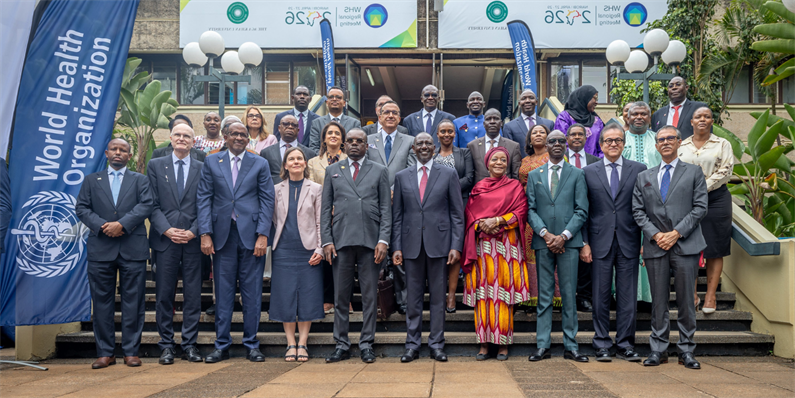
As leaders gathered last week in Nairobi, Kenya, for the World Health Summit Regional Meeting, the political momentum is clear. The question is whether it translates into the structural changes our data shows are long overdue.
The writers are Technical Officer, Impact Global Health IGH and Regional Policy Lead: Health Research and Development, PATH respectively