



Africa’s leading agricultural development organizations have called for a fundamental shift in how agricultural innovations are scaled, arguing that the continent’s greatest challenge is no longer the generation of innovative technologies, but the creation of integrated systems that enable proven innovations to reach millions of smallholder farmers.
The call was made recently in Abuja at a side event organized by the Sasakawa Africa Association during the just-concluded 9th Africa Agricultural Science Week, which also served as the 10th FARA General Assembly of the primary convener, Forum for Agricultural Research in Africa (FARA). SAA participated as an official sponsor.
The side event themed, “Scaling Agricultural Innovations in Africa through Integrated Innovation Ecosystems: Transforming Agrifood Systems in Nigeria and Across Africa,” was attended by policymakers, researchers, academia, agricultural extension practitioners, development partners, private sector actors, and farmer representatives.
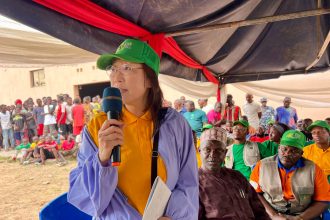
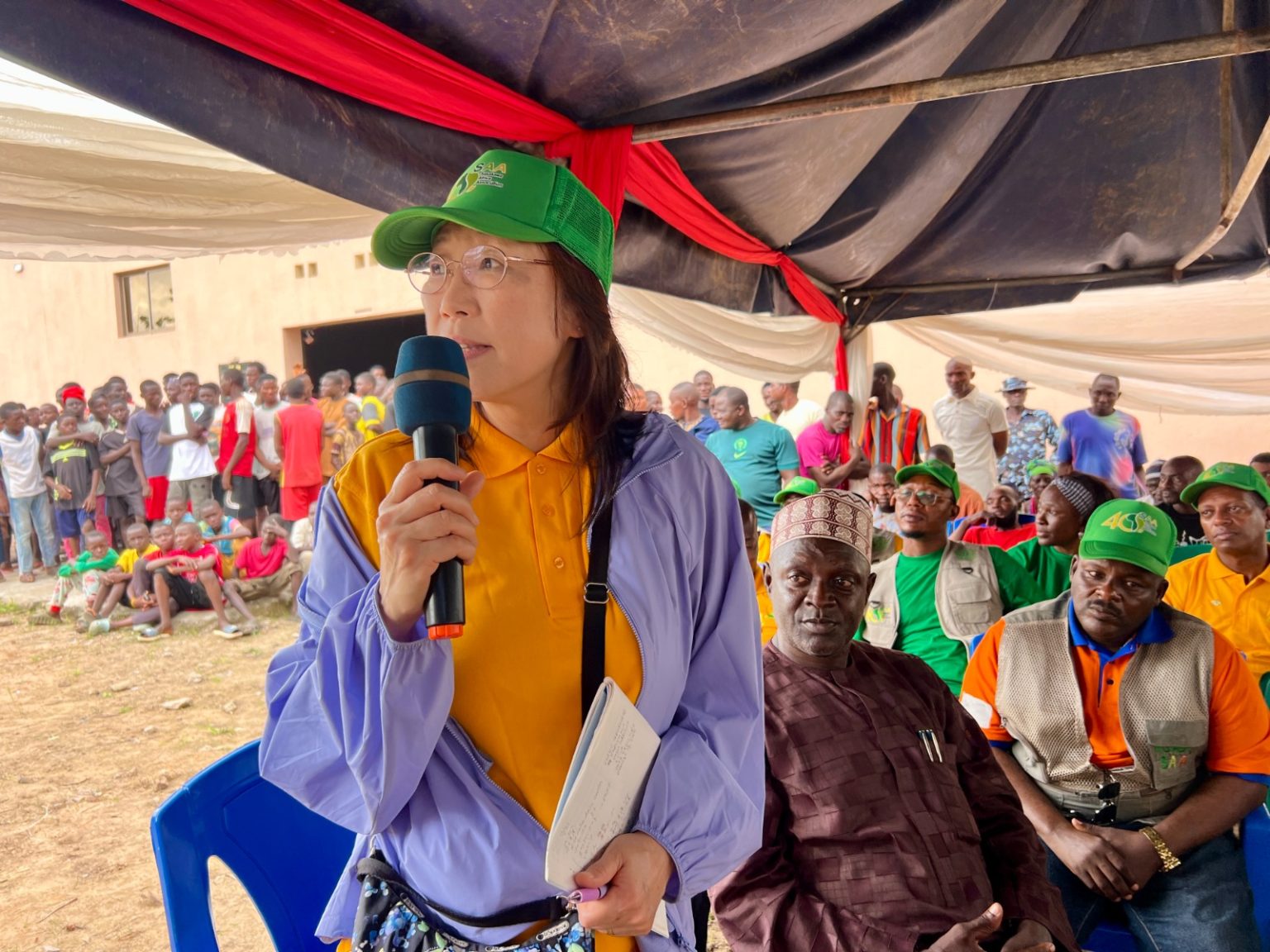
In her opening address, SAA Managing Director, Ms. Emiko Mutsuyoshi, stressed the need to move beyond innovation generation to innovation at scale.
“Our focus is on scaling what works. Africa already has many proven technologies, models, and partnerships. The challenge before us is to connect them better, invest in them more strategically and ensure they reach farmers at scale.”
Her remarks set the tone for discussions that repeatedly returned to one central message: agricultural transformation cannot be achieved through technology dissemination alone. Instead, it requires integrated innovation ecosystems that connect research, extension, markets, finance, policy, and local institutions around the needs of farmers.
Presenting evidence on how integrated innovation ecosystems create successful scaling, the Country Director of SAA Nigeria, Dr. Godwin Atser, disclosed that more than twenty million farmers have been reached through regenerative agriculture initiatives implemented across multiple states, supported by strategic partnerships with governments and development organizations.
Discussants also identified successful experiences from Nigeria and other African countries that could be replicated. One of them was the Kano State Agropastoral Development Project (KSADP), which SAA implemented with funds from the Kano State Government. The project was cited as an example of how coordinated investments in agricultural extension, technology dissemination, mechanization, seed systems, market development, and institutional partnerships can deliver measurable improvements in productivity and rural livelihoods.
The growing collaboration between SAA and the African Forum for Agricultural Advisory Services (AFAAS), particularly in advancing co-creation planning for AI-enabled digital advisory services and strengthening agricultural extension across Africa was also identified as a potent strategy.
Representing the African Development Bank (AfDB), Dr. Martin Fregene advocated the institution’s “triple helix” model that promotes stronger collaboration among government, industry, and research institutions to accelerate agricultural transformation. He emphasized the importance of reducing investment risks, strengthening farmer organizations, and improving access to finance and technology.
Participants also discussed opportunities to integrate livestock into regenerative agriculture systems, strengthen circular bioeconomy approaches, and improve the translation of research findings into practical farm-level solutions.
Presenting more experiences from Uganda, Mr. Robert Anyang, Country Director of SAA Uganda, challenged conventional approaches to agricultural development by illustrating how placing farmers at the center of agricultural business models creates stronger incentives for innovation adoption than project-driven technology delivery.
Rather than viewing farmers as beneficiaries, he argued, successful agricultural transformation depends on enabling them to become active participants in profitable value chains while creating opportunities for local entrepreneurs, service providers, and extension actors.
Building on this perspective, Dr. Fantahun Mengistu, Country Director, SAA Ethiopia, reflected on Ethiopia’s experience during the 1990s, where SAA’s extension model was adopted by the government and contributed to the establishment of a national agricultural extension programme that laid the foundation for the country’s first Green Revolution.
He outlined SAA’s current strategy for scaling impact through three interconnected pillars: Climate-Resilient Agriculture Systems, Safe and Nutritious Food Systems, and Inclusive Market and Agribusiness Development, supported by farmer training centres, agricultural commercialization clusters, and strong partnerships across the agrifood system.
In Mali, speakers highlighted the development of integrated seed systems and strengthened extension services as essential building blocks for scaling innovation beyond pilot projects.
Progress reported over the past five years also showed increasing adoption of conservation agriculture practices, including mulching, crop rotation, intercropping, and reduced tillage, while maintaining productivity. Presenters further highlighted improvements in household dietary diversity, food consumption, post-harvest management, and farmer incomes, demonstrating that integrated approaches generate benefits beyond crop yields alone.
Development partners stressed the importance of strengthening partnerships and creating enabling environments for scaling agricultural innovations across Africa. Accentuating this, Dr. Esther Ibrahim, a Program Officer with AGRA, stressed that technologies alone cannot transform agriculture unless farmers also have access to financing, advisory services, storage facilities, and reliable markets. She called for governments, development partners, and the private sector to align value-chain priorities that create lasting opportunities for smallholder farmers.
Dr. Mel Oluoch, SAA’s Director of Strategic Partnerships, reinforced the leading role of agricultural extension, arguing that farmer ownership of innovation remains essential for long-term adoption and sustainability.
Adding another perspective, Dr. Solomon Assefa Gizaw, Head, Technologies for African Agricultural Transformation (TAAT) Clearing House, identified four critical drivers for scaling innovation across Africa: proven technologies, enabling public policies, sustainable financing, and strategic partnerships.
Goodwill messages from Raoul Fani Djomo, project management specialist in charge of Nigeria, Gabon and Sierra Leone portfolio at the Islamic Development Bank (IsDB) and Ibrahim Garba, the State Project Coordinator of the KSADP, reinforced the value of long-term institutional partnerships in scaling agricultural innovations.
The SAA delegation concluded the week with a two-day working visit to Nasarawa State, one of its core program locations. The field mission provided headquarters, regional and country leadership with an opportunity to engage directly with farmers, state government officials and implementation partners while observing ongoing interventions supported by SAA.
The delegation visited Community-Based Seed Multiplication (CBSM) plots, rice aggregation and value chain development centres, Family Business Garden/climate-resilient demonstration plots and local agricultural fabricators supported through SAA’s capacity development programmes. The team also held engagements with officials of the Nasarawa State Agricultural Development Programme (NADP) and the State Ministry of Agriculture to review implementation progress and identify opportunities for expanding successful interventions across the state.
Speaking at the Japanese Ministry of Foreign Affairs-funded 300 MT Rice Value Chain Development Centre in Assakio, Lafia LGA, the center manager, Mr Emmanuel Angulu, told the delegation that the Centre currently employs over sixty members of the community and had revolutionized rice cultivation and processing in the community.
Participants further expanded agricultural advisory services to better integrate crop and livestock systems, strengthening farmer organizations to improve access to finance and markets, promoting commercially viable pathways for agricultural innovation, and documenting successful partnership models that can be adapted across African countries.
About Sasakawa Africa Association
Sasakawa Africa Association (SAA) is an international non-profit organization dedicated to advancing resilient, inclusive, and sustainable agrifood systems across Africa. Since 1986, SAA has partnered with governments, research institutions, development partners and farming communities to strengthen agricultural extension systems, promote innovation, improve nutrition, expand market opportunities, and enhance the livelihoods of smallholder farmers through practical, evidence-based agricultural solutions.