


By Henry Neondo
Women and Gender Constituency says negotiations remain stalled on climate finance, just transition and adaptation, warning that wealthy nations are weakening commitments while communities on the front lines of climate change continue to bear the greatest burden.
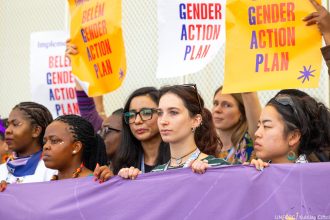
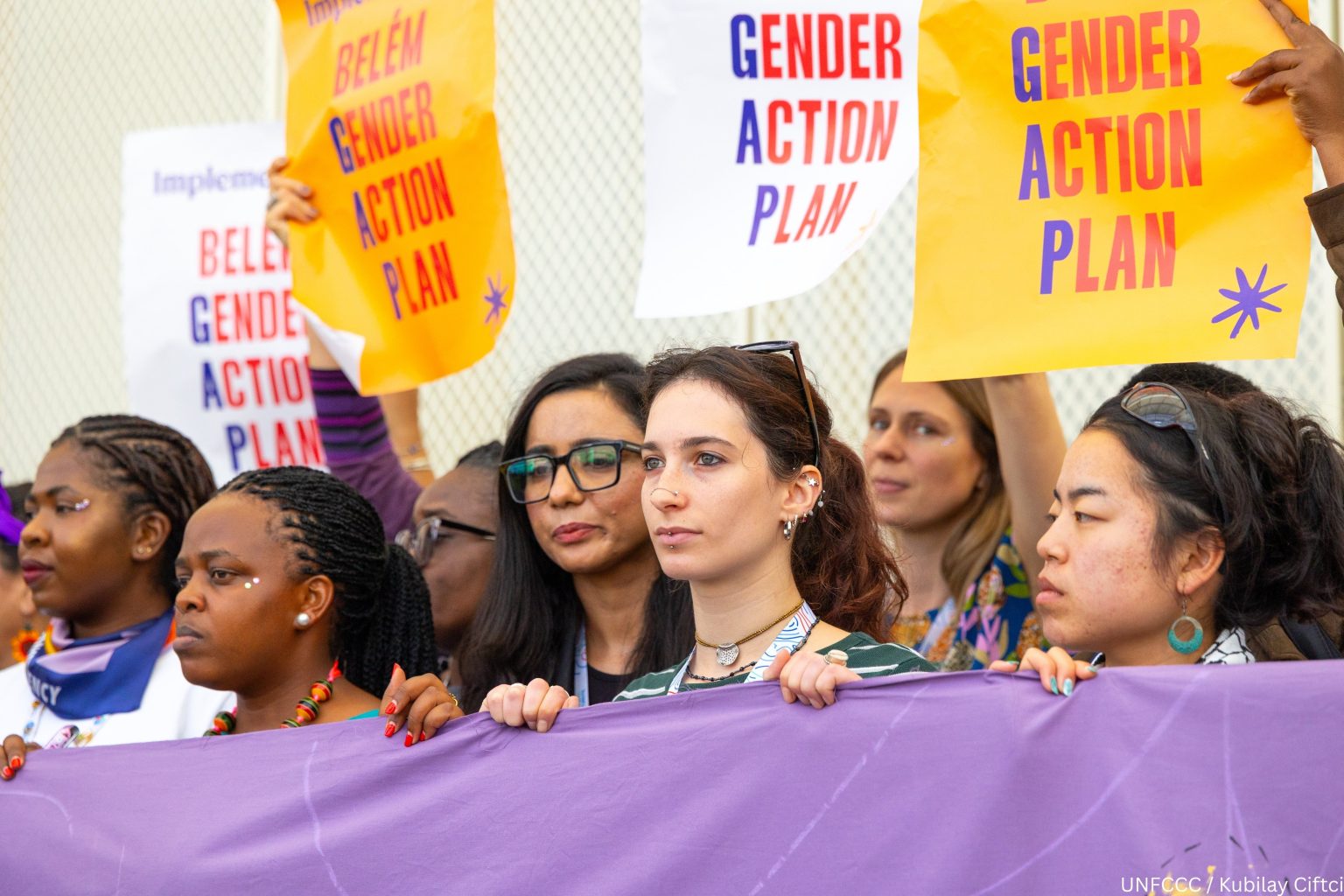
As COP31 enters its final hours, women’s rights advocates have warned that the climate negotiations risk delivering inadequate outcomes for vulnerable communities, particularly women, girls, Indigenous peoples and gender-diverse groups, amid disagreements over climate finance, adaptation and just transition.
Speaking during a press conference organised by the Women and Gender Constituency under the theme “Deliberately Blunt: A State of Negotiations, the Failing COP,” representatives of the constituency expressed frustration over what they described as a lack of transparency, insufficient financial commitments and continued resistance by developed countries to take responsibility for supporting climate action in developing nations.
The advocates argued that despite the urgency of the climate crisis, negotiations remain largely concentrated in closed-door consultations, with little evidence of meaningful progress on the financial and policy commitments needed to protect communities.
“This COP is failing people and planet,” said Valeria, who moderated the press conference, warning that those who have contributed least to climate change continue to experience its most devastating consequences.
The constituency called on governments to use the remaining negotiating time to deliver concrete decisions rather than rely on further dialogue and diluted commitments.
Climate finance remains a major sticking point
Leanne Tech, a representative of the Women and Gender Constituency’s Finance Working Group, said developed countries were undermining progress by questioning their obligations to provide climate finance under the Paris Agreement.
She argued that climate finance must remain central to negotiations because developing countries require substantial resources to strengthen resilience, implement adaptation measures and respond to climate-related loss and damage.
Tech drew attention to the distinction between Article 9.1 and Article 2.1(c) of the Paris Agreement, arguing that the two provisions should not be conflated.
While Article 9.1 establishes the obligation of developed countries to provide financial resources to developing countries, Article 2.1(c) concerns making financial flows consistent with pathways towards low greenhouse gas emissions and climate-resilient development.
According to Tech, attempts to shift discussions towards mobilising private-sector finance risk weakening the responsibility of developed countries to provide public financial support.
She maintained that private investment cannot substitute for public climate finance, particularly in adaptation, where many interventions in vulnerable communities may not generate commercial returns.
She also questioned the commitment of wealthy countries to scaling up adaptation finance, arguing that discussions must address the quantity, quality and accessibility of funding, including grants and other non-debt-creating financial instruments.
Tech cited the limited pledges made towards the Adaptation Fund, noting that its modest resource mobilisation target of US$300 million had attracted only US$50 million in pledges from six countries at the time of the press conference.
She said the scale of financing being mobilised remained inadequate compared with the estimated needs of developing countries.
“Climate finance as the core means for implementation and impact here needs scale, quantity, but yes, even more so, it needs quality, concessionality, access,” she said.
She called for climate finance frameworks that centre human rights and gender responsiveness, ensuring resources reach communities undertaking climate action on the ground.
Calls grow for a permanent just transition mechanism
Dr Melania Chiponda, an activist and Executive Director of Shine Collab, a global network of ecofeminists, said the just transition must address the inequalities that leave women, energy-poor communities and informal workers bearing the costs of energy transitions without benefiting from their outcomes.
She emphasised that the transition must be rooted in social and economic justice rather than technological advancement alone. “Energy transition must not leave energy-poor communities, women and informal workers behind,” Chiponda said, calling for energy policies that prioritise equitable access, affordability and the needs of marginalised communities.
The negotiations on just transition have also emerged as a major area of concern, with advocates accusing some developed countries of obstructing efforts to establish a permanent institutional mechanism under the UN climate process.
Gina, who addressed the just transition negotiations, said 135 countries had supported the call for a permanent home for the mechanism, arguing that it would strengthen international cooperation and unlock the resources needed to implement just transition pathways.
However, she said resistance from countries including members of the European Union, Japan, Norway and Canada was threatening progress.
She criticised the continued emphasis on dialogue and reports, arguing that previous discussions had not translated into tangible improvements in people’s lives.
“We have had so far in the last years six dialogues, and I would like to ask: after those six dialogues, please tell us which new neighbourhood has gotten access to reliable energy on the ground, for which new trade union have gotten different livelihoods and working conditions,” she said.
She argued that just transition must be measured by its impact on communities, workers and households rather than the number of international discussions convened.
For developing countries, she said, the transition must address energy poverty, improve access to electricity and create decent livelihoods while enabling countries to pursue equitable development pathways.
She cited the need to electrify hospitals and educational facilities, particularly in communities where inadequate energy access undermines healthcare and education.
Gina also challenged the idea that ambition in the energy transition should be measured primarily through the expansion of electric vehicles and other technologies accessible mainly to wealthier populations.
Instead, she said, a meaningful transition should prioritise communities that remain excluded from reliable and affordable energy.
“As feminists, our ambition is to build and shape caring economies and caring systems,” she said, adding that the transition must address deeper inequalities in economic and development systems.
She further questioned the leadership of developed countries in supporting Pacific Island nations facing existential climate threats, pointing to the need for practical solidarity and support for countries seeking to transition away from fossil fuels.
Women and vulnerable communities demand meaningful participation in adaptation decisions
Adaptation was identified as another critical area where negotiations risk falling short of the needs of vulnerable populations.
Pabrya Lobos, speaking on behalf of the constituency, said discussions on adaptation had become bogged down in disagreements over responsibility, financing and implementation, despite the urgency of climate impacts.
She argued that the technical nature of the negotiations should not obscure their direct implications for communities already experiencing climate-related disruptions.
Lobos also criticised the continued struggle by civil society constituencies to secure meaningful representation in technical working groups and implementation processes.
She called for the inclusion of women and other affected communities in the technical task force addressing the Global Goal on Adaptation (GGA).
According to her, participation should not be treated as a symbolic exercise but as an essential part of ensuring that climate decisions reflect the realities of people experiencing climate impacts.
She warned that even existing commitments to increase adaptation finance would remain insufficient to meet the needs of developing countries.
Citing findings from the United Nations Environment Programme’s Adaptation Gap Report, she highlighted the widening gap between available adaptation finance and the resources required by developing countries.
“Our lives literally depend on these negotiations, including adequate adaptation finance, reference to our work on the ground and actual inclusion within implementation frameworks,” she said.
She urged governments to ensure that women, girls, gender-diverse people and LGBTQ+ communities are represented in climate decision-making and implementation frameworks.
North-South divisions threaten COP31 outcome
The constituency also raised concerns over disagreements surrounding the proposed COP31 cover decision, which is expected to provide an overarching political direction for climate action.
David Lauren, who addressed the issue, said parties remained divided over the scope and content of the proposed decision, with disagreements reflecting broader tensions between developed and developing countries.
He said the draft presented by the COP presidencies contained 144 paragraphs but had attracted criticism over transparency, the handling of negotiating language and the inclusion of issues still under discussion.
Among the contentious issues were recognition of the historical responsibility of developed countries for climate change, the risk of exceeding the 1.5°C temperature threshold, transitioning away from fossil fuels and increasing adaptation finance.
Lauren accused wealthy countries of resisting references to historical responsibility and separate financial obligations for developed countries while seeking to narrow the discussion to improving access to finance.
He warned that removing critical language from the cover decision could weaken the interests of developing countries and communities most affected by climate change.
The proposed decision, he said, must provide a strong political signal on the commitments required to address both the climate crisis and the inequalities underpinning it.
He further criticised the continued availability of substantial resources for military spending and fossil fuel subsidies while governments claim insufficient resources to support climate action.
“Enough of wars. Enough of watching our homes and livelihoods destroyed. Enough of rich governments claiming there’s no money to support them, while at the same time having unlimited resources for the war machinery and for fossil fuel subsidies,” he said.
A call for climate justice beyond negotiations
Across the four thematic areas, the Women and Gender Constituency’s message was that COP31 must move beyond political declarations and deliver outcomes that translate into tangible improvements in people’s lives.
The advocates argued that climate finance, adaptation and just transition cannot be treated as separate technical issues because they are interconnected with questions of human rights, gender equality, economic justice and development.
For African countries and other developing nations, the stakes are particularly high as they face increasing climate risks while dealing with limited financial resources and persistent energy access inequalities.
Chiponda further argued that the success of COP31 should be measured by whether its outcomes advance feminist and decolonial approaches to climate action while adequately financing just transition pathways in developing countries.
She said African communities, women and Indigenous peoples must have a central role in shaping energy decisions that directly affect their livelihoods and futures. “A successful COP31 is one whose decisions will genuinely be feminist, decolonial in text and adequately resource Just Transition that puts African communities, women and indigenous peoples at the centre of energy decisions,” she said.
The constituency called on developed countries to honour their climate finance obligations, support grant-based adaptation financing, establish effective institutional arrangements for just transition and ensure meaningful participation of affected communities.
As negotiations approach their conclusion, the advocates insist that the credibility of COP31 will depend not on the language adopted in the final documents alone, but on whether governments commit the resources and political will necessary to implement climate action.
Their warning is clear: a climate agreement that overlooks the needs of women, Indigenous peoples, workers and energy-poor communities cannot deliver a genuinely just transition.