





By Lenah Bosibori
Nairobi, Kenya, As Africa faces growing public health challenges including infectious disease outbreaks and rising antimicrobial resistance, a network of African scientists is using data and mathematical modelling to strengthen health decision making and improve women’s health across the continent.
This effort is being driven by the African Modelling and Analytics Academy for Women (AMAX), a pan African initiative bringing together Francophone and Anglophone research institutions to strengthen Africa’s capacity in mathematical modelling and expand research focused on women’s health.
AMAX was established under the Gates Foundation’s Global Grand Challenges initiative through the Gender Data Equity program, in response to a major gap in health systems where women’s health challenges remain underrepresented in health data and are often insufficiently integrated into public health modelling and policy design.
At the same time, outbreaks and health emergencies are becoming increasingly complex across Africa, where health systems often operate with limited resources, creating an urgent need for stronger modelling and analytics capacity within governments and public health institutions.
“COVID 19 showed the world that mathematical modelling is not just an academic exercise, it is essential for epidemic preparedness, rapid response, and policy action,” said Prof. Amira Kebir, Principal Investigator of the AMAX project.
“AMAX was created to ensure African countries have the expertise and collaborative networks needed to respond to public health challenges while also addressing gender inequities in health data and decision making.”
Mathematical models can help policymakers predict disease spread, estimate healthcare needs, identify vulnerable populations, evaluate vaccine strategies, optimize resource allocation, and prepare for future pandemics before crises escalate.
Through collaboration across African institutions, AMAX is helping build a new generation of African modelers capable of translating complex data into practical solutions for ministries of health and public health agencies.
Researchers within the network apply epidemiological, statistical, and economic models to answer urgent public health questions, forecast disease trends, evaluate interventions, and support evidence-based policy decisions.
The initiative focuses on five major health challenges affecting women and vulnerable populations including human papillomavirus (HPV), hepatitis B virus (HBV), COVID 19, antimicrobial resistance (AMR), and schistosomiasis.
“This initiative reflects the growing need to build strong local research capacity capable of developing locally grounded solutions for Africa’s most pressing health challenges,” said Dr. Mutono Nyamai, Senior Research Fellow at the Centre for Epidemiological Modelling and Analysis.
“Strengthening expertise in data analytics and mathematical modelling within African institutions will enable countries to respond more effectively to outbreaks and health emergencies through timely evidence-based decision making, ultimately saving lives,” she added.
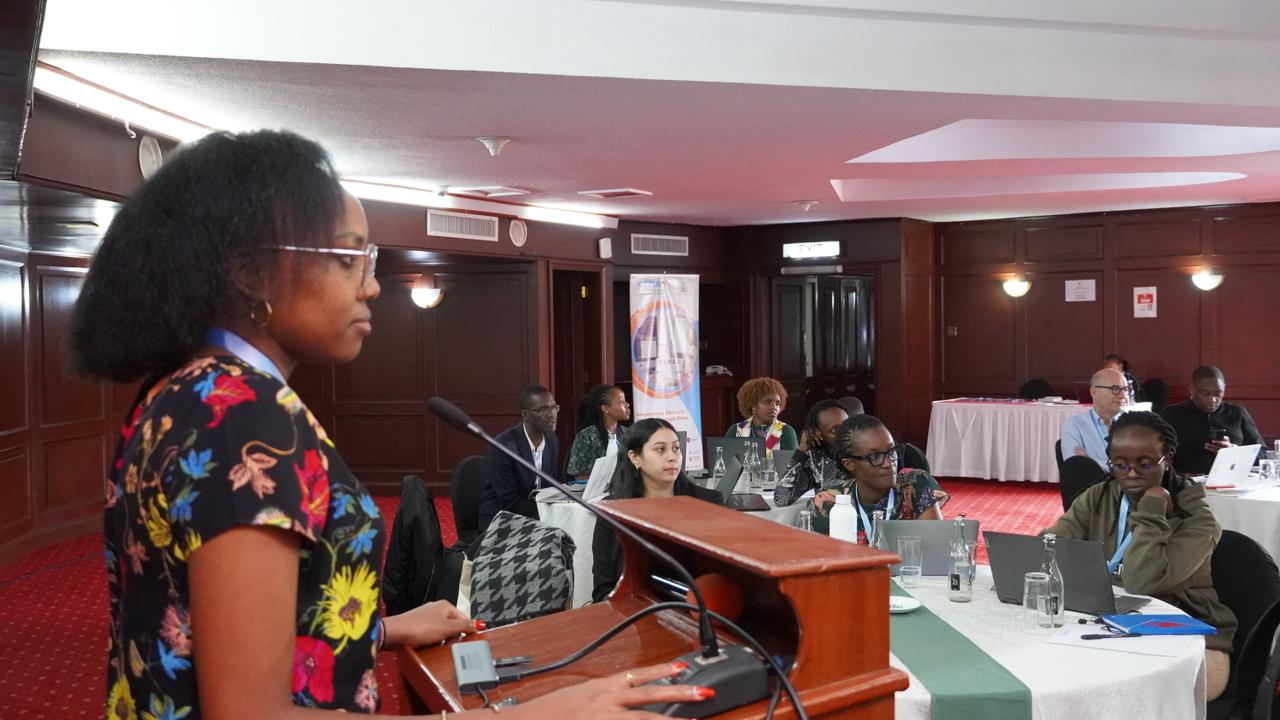
For the past two weeks, researchers within the AMAX network and leading institutions from across Africa gathered in Nairobi for the third AMAX Summer School under the theme Modelling for Health Decision Making Integrating Epidemiological Economic and Equity Evidence for Policy Action.
Hosted by the University of Nairobi’s Centre for Epidemiological Modelling and Analysis in collaboration with the Laboratory of Bioinformatics, Biomathematics and Biostatistics at the Pasteur Institute of Tunis, the programme brought together researchers from across East, West, Central, and North Africa.
Participants included researchers from Cameroon, Kenya, Niger, Senegal, Tunisia, and Uganda, with support from the Gates Foundation.
Over the past three years, AMAX has supported PhD researchers, postdoctoral fellows, and early career scientists through placements and exchanges across partner institutions throughout Africa, while securing continued support to sustain and expand these efforts over the next three years.
One example is Joy Kalekye, a PhD fellow at CEMA and member of the AMAX team in Kenya, who worked closely with Senegal’s Ministry of Health and Public Hygiene to support efforts aimed at controlling and eliminating schistosomiasis, a neglected tropical disease that remains a major public health concern in Africa.
Her research demonstrated the benefits of expanding treatment programmes to include children under five years old and recommended aligning Senegal’s National Strategic Plan for Neglected Tropical Diseases with updated WHO guidelines. She also advocated for including these children in mass drug administration campaigns tailored to different levels of endemicity to accelerate elimination efforts.
Meanwhile, during a six-month fellowship at CEMA, Dr Oumaima Laraj, a postdoctoral researcher, and Sahar Trabelsi, a PhD student in Applied Mathematics from the Pasteur Institute of Tunis, applied mathematical modelling and gender focused data analysis across multiple projects.
Their work focused on four infectious diseases that disproportionately affect women including HPV, hepatitis B, COVID 19, and antimicrobial resistance.
Dr Laraj examined the economic impact of HPV vaccination strategies across several African countries, developing models that assessed both health outcomes and financial costs to identify approaches that are effective and affordable for national health systems.
At the same time, Trabelsi focused on developing adaptive data driven models aimed at strengthening epidemic response strategies and improving healthcare resource allocation with a strong focus on equity and real time public health decision making.
The AMAX network has also enabled broader regional collaborations.
Building on earlier HPV modelling work in Tunisia, researchers from Senegal and Tunisia adapted the same framework to Senegal’s epidemiological and financing context at a critical time as the country transitions away from vaccine financing support.
The study provided evidence to support more sustainable and equitable health investment decisions while demonstrating how shared modelling approaches can be adapted across countries to strengthen public health policymaking.
Research on antimicrobial resistance has also expanded through collaboration between teams from Uganda and Tunisia.
“Africa is growing its expertise in mathematical modelling,” said Prof Slimane Ben Miled, Professor of Applied Mathematics at the Pasteur Institute of Tunis.
“The challenge is that expertise remains unevenly distributed across the continent. Some countries have established modelling programmes while others still face significant gaps despite carrying a high burden of public health challenges.”
“AMAX was created to help close those gaps by strengthening local expertise, fostering collaboration, and promoting shared learning across African institutions.”
“Importantly, AMAX is not only training scientists, it is creating a collaborative ecosystem linking researchers, ministries of health, data providers, and policymakers across Africa,” he added.
Participants at the Nairobi Summer School engaged in lectures, practical group work, case studies, and policy focused hackathons designed around real-world challenges facing African ministries of health.
The training integrated epidemiology, health economics, research ethics, and equity considerations to ensure modelling remains relevant for decision making.
Beyond the Summer School itself, the initiative has a broader mission of enabling Africa to generate its own evidence, strengthen local expertise, and design policies rooted in African realities.
This growing network is helping shape a new generation of African scientists who are not only technically skilled but also closely connected to the policy needs of their countries.