


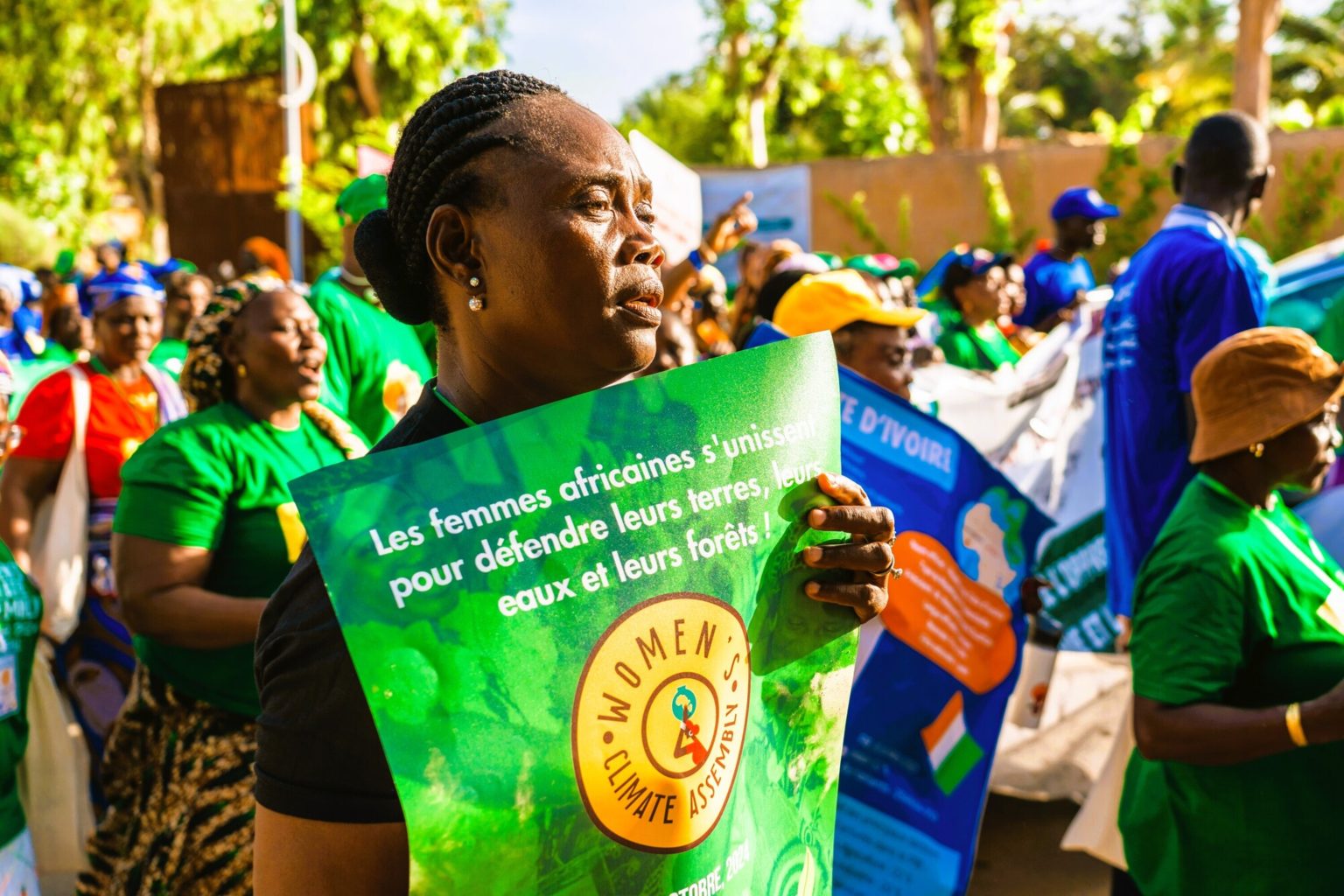
Cameroon, will host the fourth regional Women’s Climate Assembly (WCA) under the theme Our lands, our voices: African women united for climate justice and reparations! The landmark gathering unites women across West and Central Africa to strengthen their fight for climate justice rooted in ecofeminist resistance and the defence of the commons—land, forests, water, seeds and other resources collectively sustained and stewarded by communities.
While Africa’s contribution to global greenhouse gas emissions remains minimal, its communities—particularly women in rural, coastal, and forest areas—face disproportionate climate impacts. The WCA highlights this fundamental injustice and the climate debt owed by historically polluting nations and multinationals to the continent.
The overall objective of the Women’s Climate Assembly is to strengthen and unify a Pan African ecofeminist movement for climate justice that connects women’s collective struggles. Key objectives include women’s leadership, fostering shared strategies for climate justice, promoting community-based alternatives centred on food sovereignty and sustainable resource management, and advancing calls for climate reparations and just development models.
Climate reparations – more than empty promises
African women, who play vital roles in food production, water management and protecting natural resources, are on the front lines of a deepening climate crisis, defending their lands and livelihoods against land degradation, droughts, extreme weather and the expansion of extractive industries such as oil and gas, alongside conflicts over resources and critical minerals.
The scale of this injustice is stark: the World Meteorological Organisation’s latest State of the Climate in Africa 2025 reports that climate- and weather-related hazards affected at least 13 million people and caused more than 3,000 reported deaths across Africa in 2025 alone, with floods, droughts and tropical cyclones devastating communities across the continent.
Rising temperatures, ocean warming and accelerating sea-level rise are further undermining food systems, livelihoods and ecosystems. Yet Africa has contributed the least to the climate crisis while bearing a disproportionate share of its impacts.
These losses cannot be treated as an unavoidable cost of development or left for African communities to finance. This year’s WCA theme makes a powerful call for climate reparations that go beyond empty promises of future aid, demanding substantial, consistent resources for loss and damage, adaptation, ecosystem restoration and community-led alternatives, alongside accountability by those most responsible for historical and ongoing emissions.
Co-hosted by Green Development Advocates, WoMin African Alliance and other partners, the Assembly will bring together over 75 women community leaders and activists, NGOs and allies from Burkina Faso, Cameroon, Côte d’Ivoire, DRC, Guinea Conakry, Liberia, Nigeria, Sierra Leone and Senegal. By uniting women’s struggles against exploitative industries and false climate solutions, the WCA embodies a vital ecofeminist resistance essential for the future of Africa and the planet. It offers a collective call to action for climate justice rooted in solidarity, sovereignty, reparations, and sustainable alternatives.
“The Women’s Climate Assembly taking place in Cameroon will allow women from other countries to experience firsthand the realities of Cameroonian women’s lives impacted by major projects and how they overcome these challenges” – Bela Marie Victorine, Cameroon
A permanent platform for African women-led resistance
Building on previous assemblies held in Nigeria and Senegal, the space serves as a powerful political platform where community women on the front line share their struggles, build solidarity, and develop ecofeminist analyses rooted in their lived realities. The 2026 edition aims to transform the WCA into a permanent platform spanning local, national, subregional, and Pan African levels to amplify women’s voices and demands which are often missed in national and global discourse.
The WCA continues to be a pivotal space for strategy building, learning, organising, solidarity, and movement-building. Key sessions include discussions on national and sub-regional assembly processes; climate crisis impacts in Africa and strategies for resistance and alternatives led by women.
Thematic workshops will focus on the defence of the Congo Basin’s forests, food sovereignty and seed protection, feminist advocacy strategies for climate justice, climate debt and reparations and oil and gas expansion. Popular education sessions will help support women in seed conservation, mangrove management, processing natural products and preserving traditional ecological knowledge.
“Participating in the Women’s Climate Assembly gives me a platform to share my community’s experiences and learn from other African women. I believe our voices and lived experiences must be part of climate decisions. I am here to connect, learn, and strengthen our collective voice for our land, livelihoods, and future.” – Abbie Freeman, Liberia
This year’s assembly in Cameroon marks a decisive milestone for a growing African women-led climate justice movement. It brings to life African women’s vision of making the WCA a permanent structure for resistance and advocacy and, most critically, drawing attention to the voices of community women that have for too long been unheard.