



By Lenah Bosibori
As Eastern Africa experiences rapid economic growth with a growing number of multinational corporations seeking investment opportunities from major infrastructure developments, faith leaders have urged governments and investors to ensure development does not come at the expense of people or the environment.
Speaking at a workshop on ethical investments for Catholics in Nairobi, Ashley Kitisya, Africa Director of the Laudato Si’ Movement, said that as more corporations establish a presence in the region, stakeholders are taking a closer look at whether these partnerships are ethical and beneficial to local communities.
“Oil and gas projects are expanding rapidly across our region, with the East African Crude Oil Pipeline among the most prominent examples. But these developments come with serious consequences, especially for communities that rely on the Lake Victoria Basin. They threaten water resources, displace families and put wildlife and fragile ecosystems at risk.”
Kitisya noted that although many extractive projects are promoted as drivers of economic development, they often come with serious environmental and social consequences. “We need to have honest conversations about their impacts, including the pollution of our ecosystems and the welfare of people working under these conditions,” she said.
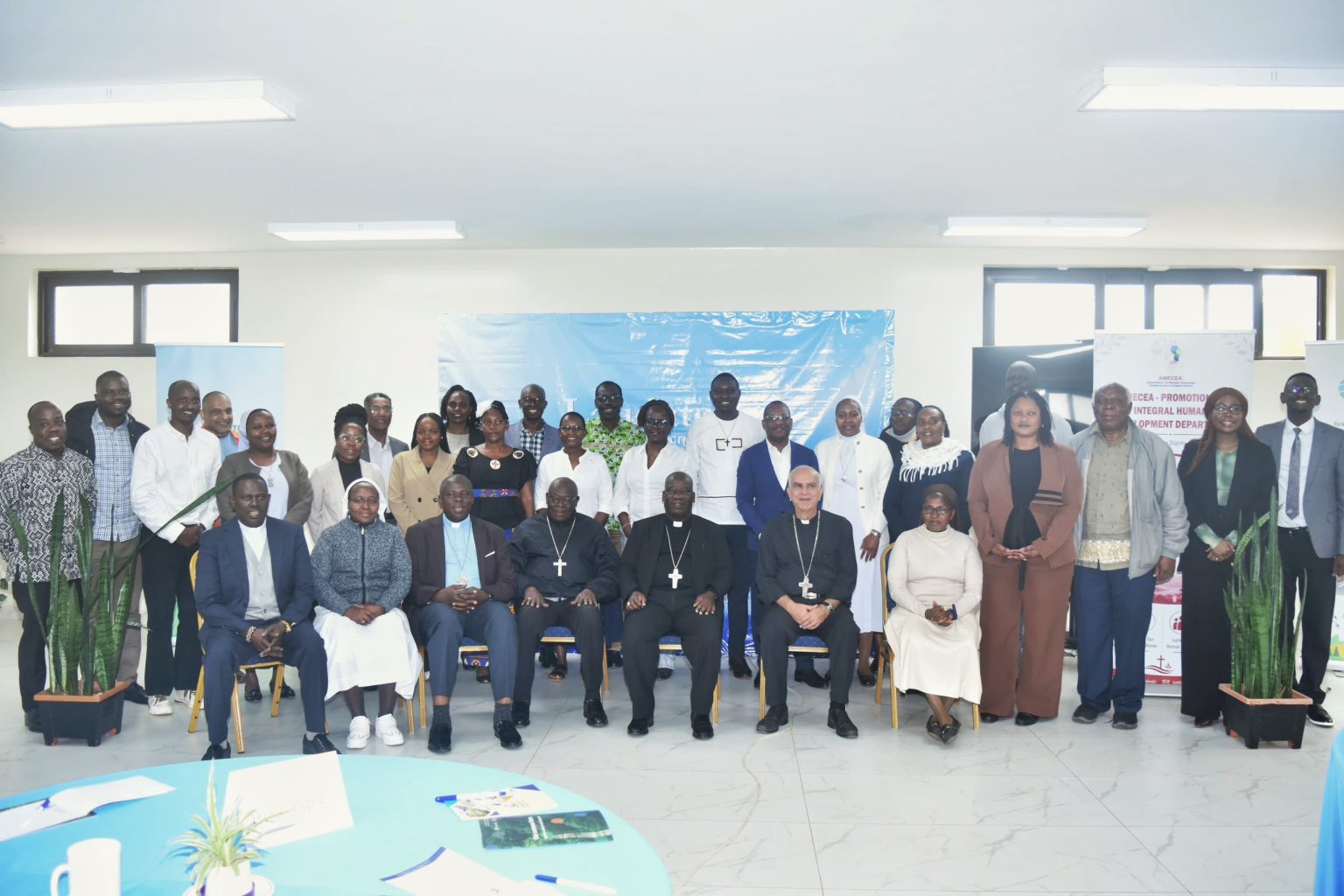
The workshop, organized by the Laudato Si’ Movement Africa in partnership with the Association of Member Episcopal Conferences in Eastern Africa (AMECEA) Department for the Promotion of Integral Human Development, brought together bishops, environmental advocates, civil society organizations and development experts to examine the future of ethical investment in the region.
The Laudato Si’ Movement is a global Catholic network that mobilizes people, communities and institutions to care for the environment and promote climate justice, inspired by Pope Francis’ 2015 encyclical Laudato Si’.
Held alongside AMECEA’s 21st Plenary Assembly and the regional body’s celebration of sixty-five years of service, participants called for stricter scrutiny of large-scale investments, warning that projects that threaten communities, water resources and ecosystems should not move forward.
“We do not have to move forward with partnerships that negatively affect people and the environment,” Kitisya said. “Instead, we should pursue investments that promote the common good, protect creation and do not worsen the climate crisis.”
Kitisya said projects presented as engines of economic growth must undergo rigorous environmental impact assessments to ensure they do not compromise ecosystems, livelihoods or the country’s internationally recognized heritage sites.
“We need honest conversations about the impacts of these projects,” she said. “If there is any doubt about their effect on people, waterways or the environment, then we should be willing to pursue alternatives that benefit everyone.”
Christian Aid Senior Energy Advisor for Africa, Jacqueline Kimeu, said ethical investment has become one of the continent’s defining development issues as financing continues to favour fossil fuels over renewable energy.
“We are working with governments, faith-based organizations and development banks to redirect financing from fossil fuels towards renewable energy and energy access,” Kimeu said. “Investments should respond to the needs of local communities.”
She added that Africa’s energy future depends on expanding access to affordable and reliable renewable energy, particularly for rural communities that remain disconnected from electricity despite living beneath power lines.
“Energy is not just a service,” she said. “It is an enabler of education, healthcare, businesses and climate resilience.”
Kimeu called for stronger policies that prioritise decentralised renewable energy systems capable of supporting climate adaptation while creating economic opportunities for underserved communities.
Archbishop Thomas Luke Msusa of the Archdiocese of Blantyre in Malawi urged religious leaders to become stronger advocates for both vulnerable communities and the environment.
Quoting Pope Francis’ call to respond to “the cry of the poor and the cry of creation,” Archbishop Msusa said the Church has a moral responsibility to ensure that development benefits people without destroying the natural resources on which future generations depend.
“Our responsibility is to be prophetic,” he said. “We must speak for the poor and for creation because this earth belongs to all of us, not only human beings but also animals, vegetation and water.”
He called on governments, faith institutions, civil society organizations and citizens to work together in promoting investments that create prosperity while protecting the environment.
“Investment is necessary for development,” he said. “But we must protect what God has entrusted to us. We should enhance our natural resources, not destroy them, so that future generations can also benefit.”
Participants said Africa stands at a critical moment. With demand for minerals, oil, gas and infrastructure continuing to grow, adding that the choices made today will determine whether development strengthens communities or leaves them more vulnerable to climate change, environmental degradation and inequality.
For the faith leaders, ethical investment is not about rejecting development. It is about ensuring that economic progress respects human dignity, safeguards ecosystems and leaves a healthier, more resilient future for generations to come.