




By Lenah Bosibori
Learning from the COVID-19 pandemic—when Africa was left at the back of the global vaccine queue—Kenya is moving to produce its own vaccines to protect its citizens and the continent against future health crises.
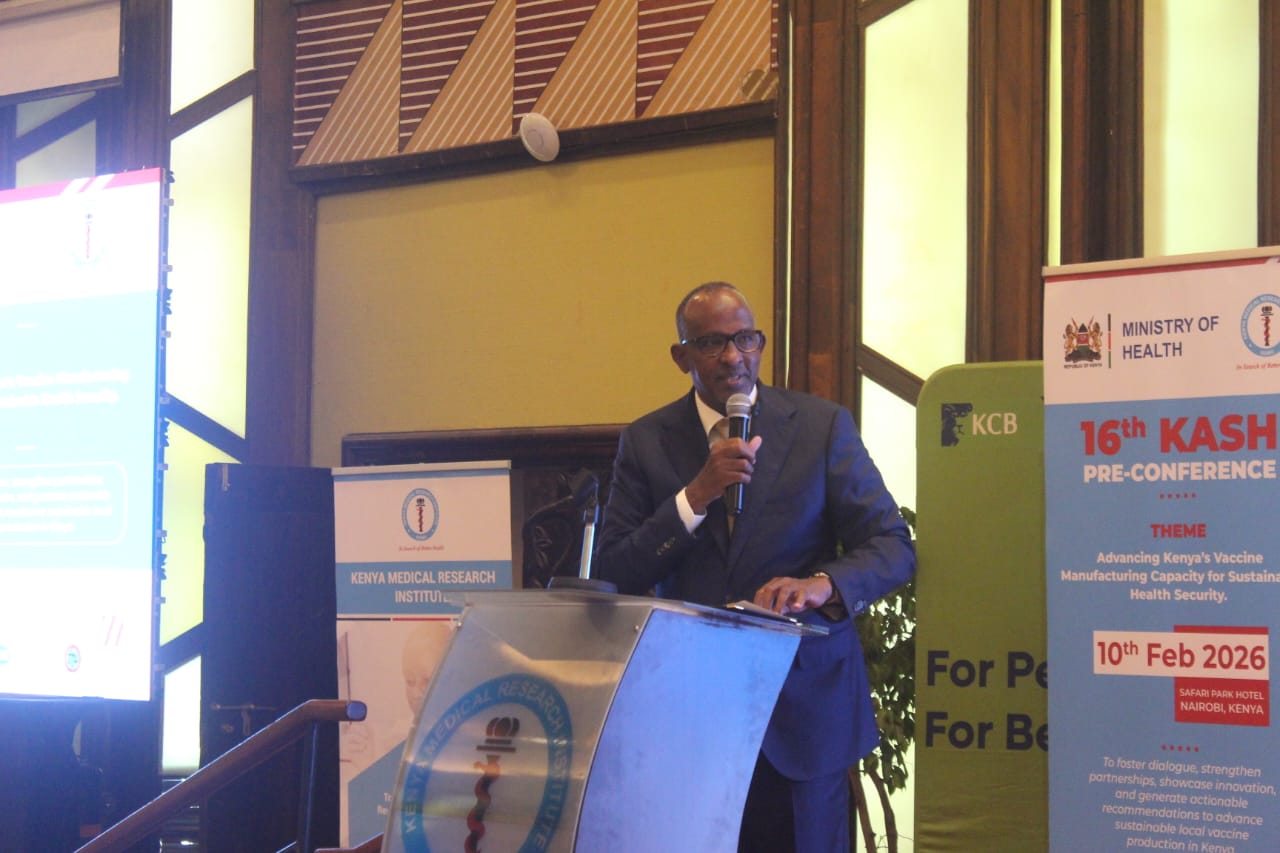
Speaking in Nairobi at the 16th Kenya Medical Research Institute (KEMRI) Annual Scientific and Research Conference (KASH), Cabinet Secretary for Health Aden Duale emphasized the urgent need for self-sufficiency in vaccine production.
“Unless we are prepared for future pandemics, the most developed countries will always prioritize their own citizens,” he said. “It is alarming that 99% of vaccines used in Africa are imported.”
Duale explained that local manufacturing has become a national priority, especially as the Global Alliance for Vaccines and Immunization (GAVI) is expected to phase out its support for Kenya by 2030. This shift has accelerated the country’s push toward vaccine independence.
He noted that COVID-19 exposed deep inequalities in global vaccine access, with Africa forced to wait while wealthier nations vaccinated their populations first. “We have learned from COVID-19 and are preparing for the next pandemic,” he said.
To support this effort, the government has established the Kenya Biobank Institute, which aims to locally produce 60–70% of vaccines and position Kenya as the region’s leading vaccine manufacturing hub.
Building domestic production capacity is now seen as essential for pandemic preparedness, supply chain resilience, and affordable access to life-saving medicines.
“Vaccine manufacturing is not just about science,” Duale said. “It is about health security, economic growth, industrial development, and national sovereignty. If we align science, policy, and investment, we will protect our people and secure Kenya’s place in the global knowledge and manufacturing economy.”
Kenya is also strengthening its health system through science, innovation, and local manufacturing. KEMRI has been elevated to a strategic national institution, while the government has established the State Department for Science, Research, and Innovation. In addition, a 10-year Science, Research, and Innovation Master Plan (2026–2036) has been developed, and research funding is set to increase from 0.8% to 2% of GDP.
At the center of Kenya’s health agenda is Universal Health Coverage (UHC), built on four pillars: sustainable financing, a skilled health workforce, community-based systems, and a strong digital health ecosystem.
Digitization now enables real-time tracking of hospital bed occupancy across public, private, and faith-based facilities through a system known as the bed access rule.
“I can now monitor bed occupancy in all our hospitals in real time,” Duale said. “Hospital billing is more accurate and transparent, patients are properly accounted for, and errors caused by outdated systems have been eliminated. This improves efficiency and reduces overcrowding.”
The conference, held under the theme “The Future of Health: Scientific Research, Innovation, Technologies and Manufacturing for a Resilient Universal Health Coverage,” brought together scientists, policymakers, industry leaders, and development partners to discuss how research and innovation can shape Africa’s health future.
Dr. Cecilia Mbae, Chair of KASH, praised Kenya’s progress in vaccine manufacturing, financing, regulatory systems, quality standards, supply chains, and market development, describing it as both timely and strategic.
“These discussions highlight the importance of translating research, innovation, and policy into sustainable manufacturing capacity,” she said. “They strengthen health security, support Universal Health Coverage, and reduce reliance on external supply chains.”