


New ‘ZERO’ project tests renewable ’energy-as-a-service’ model with UN agencies in Chad to provide cleaner and more affordable electricity to humanitarian operations without major upfront investment – ZE-Gen seeks funding to expand impact in humanitarian sector.
Support for a new UK-backed renewable energy initiative designed to help humanitarian agencies replace expensive diesel generators with solar and battery power and free up valuable resources for frontline services is being announced by the international ZE-Gen initiative ahead of the 2026 Global Off-Grid Solar Forum and Expo in Kigali, Rwanda (27-29 October).
The ‘ZERO’ project, backed by the UK Government’s Ayrton Fund via seed-funding from the Transforming Energy Access platform through the ZE-Gen initiative, is piloting a renewable energy utility model with UN agencies in Chad that that is cutting energy costs by at least 25%, reducing emissions and creating a blueprint for wider adoption across humanitarian operations.
Diesel generators remain widely used across humanitarian operations, including offices, water and sanitation facilities, accommodation and camp infrastructure. Humanitarian agencies are estimated to spend more than US$100 million each year on generator fuel, leaving them exposed to volatile prices, fragile supply chains, high maintenance costs and avoidable emissions.
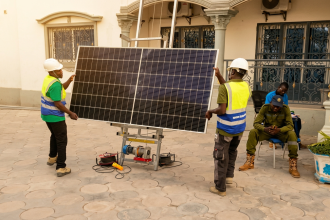
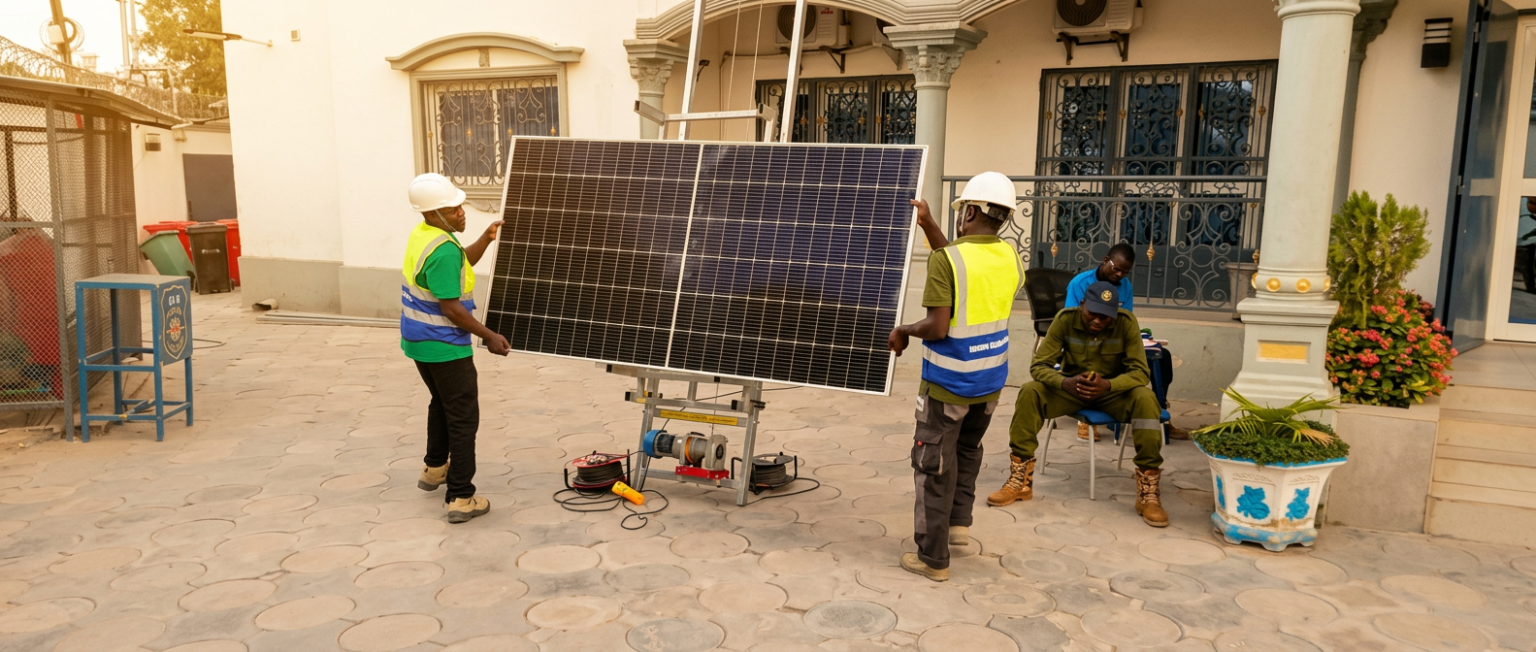
The pilot in Chad is testing an energy-as-a-service model in which humanitarian agencies pay an agreed tariff for only the electricity they use, rather than financing, procuring and maintaining the actual renewable energy systems themselves. The first system is operating at a UN agency’s country office in N’Djamena and is projected to reduce generator runtime by 73-85%. A second site is currently under development. Together, the first two sites are expected to save around US$1 million over ten years.
The ZE-Gen project is delivered by the Access to Energy Institute (A2EI), with support from the Global Platform for Action. ZERO combines solar and battery systems with smart metering and digital monitoring to improve energy planning, performance and investment readiness. A2EI finances, builds and operates the systems through trusted local partners, while GPA supports engagement and partnerships with humanitarian and UN agencies.
ZERO aims to prove that humanitarian organisations can gain access to more reliable and affordable renewable electricity without taking on the upfront cost, specialist procurement or long-term maintenance responsibilities that can hold back renewable energy projects in humanitarian settings.
It will also generate open evidence that can help humanitarian agencies, investors and funders understand the economics and performance of renewable energy in difficult operating environments, developing an investable project pipeline and the potential to deploy additional systems by early 2027. Potential countries identified in the project material include Chad, Kenya, Ethiopia, South Sudan and Nigeria.
Lily Beadle, ZE-Gen Programme Director at the Carbon Trust said:
“Humanitarian agencies need reliable power to deliver water, healthcare, protection and other essential support, but many remain dependent on expensive diesel generators – costing millions of dollars in polluting fuel. At the Carbon Trust, we work with partners to identify and scale practical solutions to complex energy challenges. ZERO is a strong example of that approach, testing a model that could help humanitarian agencies access cleaner, more affordable power without taking on major upfront costs.
“ZE-Gen has backed the first phase of ZERO with funding from Ayrton Fund via Transforming Energy Access because the model has the potential to move beyond individual solar installations and create a route to wider, commercially sustainable change. Every pound spent on generator fuel is money that cannot be used elsewhere in the humanitarian response. We are now looking for funders and investment partners that can help ZE-Gen take ZERO to more humanitarian sites and support other high-potential solutions that can replace fossil fuel generators at scale.”
Thomas Gottschalk, managing director and founder of the A2EI said:
“ZERO is a model that allows every organisation that is relying on large fuel generators to switch to solar without the burden of an initial investment. We piloted ZERO in humanitarian settings, but it can be applied to any fuel generator. The logic is simple: We provide an Energy-as-a-Service model that is reliable, clean and makes economic sense from day one.