


African Group of Negotiators warns against another climate deal built on promises, calling for predictable grant-based finance, stronger adaptation commitments and fairer trade in critical minerals.
By Henry Neondo
African ministers have called on developed countries to honour existing climate finance commitments and ensure that the final outcomes of COP31 translate into concrete action, warning that the continent will not accept declarations without the resources needed for implementation.
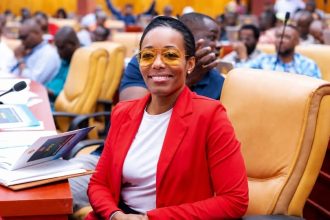
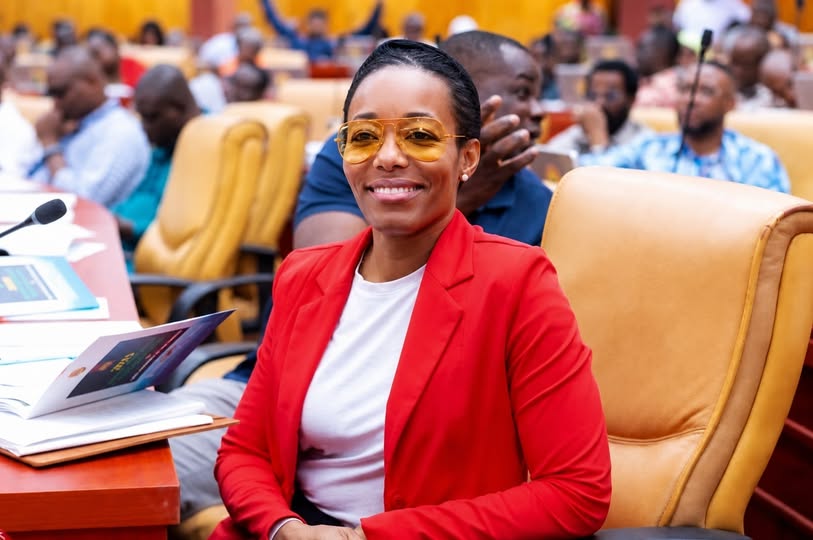
Speaking during a press briefing in Antalya, Türkiye, as negotiations entered their final hours, the Chair of the African Group of Negotiators (AGN) on Climate Change, Ghana’s Minister of Environment, Science and Technology, Zaneta Ajiman Rawlings, said Africa was demanding accountability, fairness and recognition of its development priorities.
Representing 54 African countries, Rawlings said the continent was increasingly being excluded from meaningful climate decision-making through inaccessible financing arrangements, technical barriers and shifting conditions attached to commitments made by developed countries.
“We didn’t come here to beg. We came here to claim what is rightfully ours for our people,” she said, arguing that African communities, which have contributed least to global greenhouse gas emissions, continue to bear disproportionate climate impacts.
She warned that Africa would not accept another COP outcome that produces political declarations without adequate financial and technical support to implement them.
The ministers said the credibility of COP31 would depend not simply on the adoption of negotiated texts but on whether commitments translate into measurable improvements in climate resilience, sustainable development and economic opportunities for African countries.
Adaptation finance remains a major sticking point
A central concern raised by African ministers was the lack of a clear and credible pathway to significantly increase adaptation finance for developing countries.
Africa had arrived at COP31 seeking a commitment to triple adaptation finance, but the proposal was reportedly left off the conference’s official agenda on the opening day.
Rawlings said African negotiators had continued pushing the issue across different negotiation tracks, insisting that adaptation finance must remain central to the final outcome.
According to figures presented by the ministers, public adaptation finance to developing countries stood at between US$28.2 billion and US$31.7 billion in 2024, against estimated annual needs of approximately US$305 billion by 2035.
Although the draft COP31 cover text referenced at least US$120 billion annually by 2035, the ministers cautioned that a financial target without clear delivery arrangements would risk repeating previous climate finance pledges that failed to translate into adequate support.
They called for a clearly established baseline, annual milestones, public tracking mechanisms and a credible implementation plan.
The ministers further insisted that climate finance should be new, predictable and primarily grant-based, warning against financing arrangements that could deepen debt distress among vulnerable African economies.
They urged developed countries to fulfil their obligations under Article 9.1 of the Paris Agreement, which requires developed country parties to provide financial resources to assist developing countries with mitigation and adaptation.
Africa rejects a just transition that reproduces inequalities
The African ministers also challenged the current framing of the global just transition, arguing that the transition to low-carbon economies must not reproduce historical inequalities or leave African communities bearing the costs of a transition from which others benefit.
Rawlings said Africa must participate meaningfully in the global energy transition rather than remain a supplier of raw materials for industrial transformation elsewhere.
She drew parallels between the continent’s historical exploitation during the transatlantic slave trade and colonialism and the risks of a new resource extraction model driven by global demand for transition minerals.
“Africa has a legitimate right to develop,” she said, calling for an approach that ensures African workers, women, young people, children and persons with disabilities benefit from climate action.
She further criticised the relatively low value attached to African carbon credits, particularly those generated through forest conservation, and called for fairer valuation of the continent’s carbon assets.
The ministers maintained that a genuinely just transition must be supported by accessible finance, technology transfer and capacity-building rather than imposed obligations and conditional loans.
Zambia pushes for adaptation, mitigation and green industrialisation
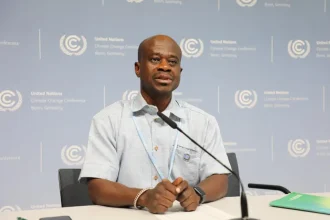
Zambia’s Minister of Green Economy and Environment, Gilbert Sime, said Africa’s climate priorities must be addressed through a balanced package covering adaptation, mitigation, loss and damage, and industrial development.
He warned that the world was approaching an increasingly dangerous climate overshoot, which would significantly increase the costs of climate adaptation and mitigation, particularly for vulnerable African countries.
Sime argued that adaptation should not be treated as a secondary priority in the final COP31 decisions.
He called for increased financial resources, access to technologies that can strengthen climate resilience and investment in institutional and technical capacities to help African economies respond to escalating climate impacts.
However, he emphasised that Africa was also making significant contributions to global mitigation efforts.
According to Sime, African countries’ Nationally Determined Contributions (NDCs) contain commitments to reduce more than 10.4 billion tonnes of carbon emissions.
He said 22 African countries had already submitted their NDCs, with others progressing towards submission, and called for an implementation facility that would help translate these commitments into measurable climate action.
“We are not just looking for money; we are looking for just climate action in adaptation and in mitigation,” he said.
He urged parties to ensure that African NDCs receive the necessary financial, technological and capacity-building support, including through fair carbon pricing mechanisms.
Critical minerals must support African industrialisation
The ministers also raised concerns about the unequal distribution of economic benefits from the global clean energy transition, particularly the extraction and trade of critical minerals.
Sime pointed to Zambia’s copper and cobalt resources, alongside mineral wealth in neighbouring Democratic Republic of Congo and other Southern African countries, as strategically important to the global transition to renewable energy and clean technologies.
He argued that Africa should not simply export raw minerals to support industrial development elsewhere but should have opportunities to develop domestic processing, manufacturing and value-addition industries.
Zambia and the Democratic Republic of Congo, he noted, are pursuing investments in electric battery production as part of broader green industrialisation ambitions.
However, he expressed concern over proposals for carbon border adjustment measures that could impose additional costs on African value-added products and undermine the continent’s efforts to develop green industries.
He called for greater scrutiny of international trade arrangements to ensure they do not disadvantage African countries seeking to move up the mineral value chain.
The minister said decisions affecting African industrialisation must be reached through transparent and inclusive multilateral processes.
Africa calls for a credible multilateral outcome
The ministers warned that the credibility of the multilateral climate process was at stake if African countries’ concerns continued to receive insufficient attention in the negotiations.
They expressed concern that discussions on the COP31 cover decision, climate finance work programme, just transition mechanism and Global Goal on Adaptation had yet to produce sufficiently concrete outcomes.
Rawlings cautioned against attempts to reinterpret or renegotiate agreed Paris Agreement provisions in ways that could make climate finance less accessible to vulnerable countries.
She argued that countries remaining within the multilateral framework must demonstrate genuine commitment to its principles and obligations rather than undermine trust through unfulfilled promises.
Senegal’s Minister of Environment and Ecological Transition, Aliou Goudiaby, who was leading discussions on climate finance mobilisation among African ministers, also participated in the briefing. Sierra Leone’s Minister of Environment and Climate Change, Jiwa Abdulai, was among the ministers present.
As negotiations approached their conclusion, the African ministers urged the COP31 presidency and all parties to prioritise adaptation finance, strengthen the climate finance work programme and secure measurable commitments before the conference’s closing gavel.
For Africa, they said, the test of COP31 would ultimately be whether the outcomes deliver the resources, technology and opportunities needed to protect vulnerable communities while advancing the continent’s legitimate development ambitions.
The message from the African ministers was unequivocal: Africa must be a beneficiary and an active participant in the global climate transition, not merely a provider of the minerals and natural resources that make it possible.