



By Lenah Bosibori
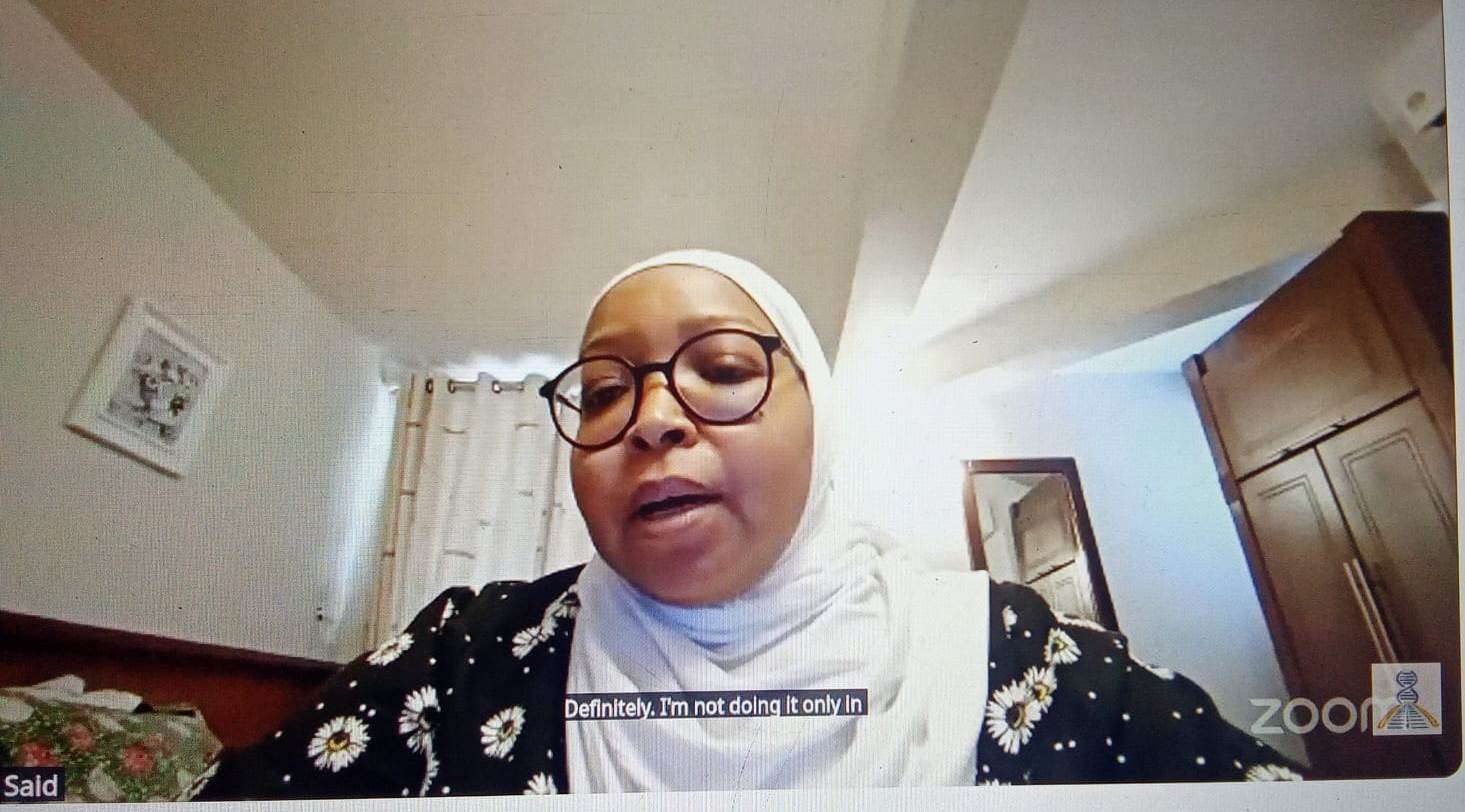
For almost all her entire life, Arafa Salim Said, a sickle cell warrior and founder of the Sickle Cell Disease Patients Community of Tanzania, has lived with a condition many around her did not understand.
“I was diagnosed with sickle cell disease at eight months after birth. While growing up, I was surrounded by misinformation and many misconceptions about the condition, says Said. “That experience pushed me to take a different path.”
That path began with a conviction she still lives by: “There is nothing for us without us.” “No one can truly understand my experience better than I do,” she says.
From speaking up as an individual, her advocacy grew into something bigger. She founded the Sickle Cell Disease Patients Community of Tanzania to raise awareness, support patients, and correct misinformation.
“It was driven by a lack of information and awareness,” she says, “and the need to ensure people living with the condition have a voice.”
Today, Said is one of Tanzania’s leading sickle cell advocates and serves as secretary in an African network of sickle cell organizations, working across borders to improve care and awareness.
“A sickle cell diagnosis can change our journey, but it does not define our future,” she says. “Having sickle cell is not the end of the world. Life continues.”
A disease often misunderstood
Sickle cell disease is a genetic disorder affecting haemoglobin, the protein in red blood cells that carries oxygen, explains Dr Siana Nkya, senior lecturer in biochemistry and molecular biology and sickle cell researcher.
Inside the body, red blood cells are normally round and flexible. In sickle cell disease, a genetic change causes haemoglobin to form abnormal structures that distort cells into a sickle or banana shape. These rigid cells block blood flow, leading to pain and organ damage.
“These blockages reduce oxygen delivery, that is what causes severe pain and complications,” adds Dr Nkya..
Globally, about 7.74 million people were living with sickle cell disease in 2021, with about 515,000 new births each year, mostly in sub-Saharan Africa, which carries nearly 80% of global cases (WHO). Sickle-cell disease
Further, sickle-cell disease causes substantial under-5 mortality: 81 100 deaths in 2021, making it the 12th leading cause of death in this age group when considering the total mortality burden.
Dr Mohamed Zahir, molecular geneticist at Muhimbili University of Health and Allied Sciences in Tanzania adds that when tissues do not receive enough oxygen, patients experience severe pain. In medical terms, this is known as a Vaso-occlusive crisis, and it is one of the most common reasons people with sickle cell disease are admitted to hospital.
Over time, repeated blockages caused by the sickling of red blood cells can also damage major organs such as the lungs, kidneys, brain, and heart. This is why it is so important to understand the condition clearly and manage it early.
Treatment options are expanding. Bone marrow transplants are already available in parts of Africa. Gene therapy has now entered clinical practice. “What once felt like a dream is now a reality,”.
How sickle cell is inherited
Understanding inheritance is key to breaking stigma. A child develops sickle cell disease only when they inherit the altered gene from both parents, who are often healthy carriers according to Dr Nkya.
Each pregnancy carries the same genetic probability:
• 25% chance of having a child with sickle cell disease
• 50% chance of a carrier child
• 25% chance of a child with no sickle gene
“It is important to understand that each pregnancy is independent,” says Dr Nkya. “You may have one affected child, none, or more than one. This randomness is often misunderstood, leading to blame and confusion.”
Living with the challenges and misconceptions
For many patients, blood transfusions are lifesaving. But they can also bring complications.
“As a warrior myself, blood is very important. It is something many of us depend on,” Said says. “Over time, repeated transfusions can cause iron overload or trigger antibodies that attack transfused blood.”
“Some patients develop iron overload, while in my case, my body developed antibodies that started attacking the blood I was receiving,” she explains. “My haemoglobin would drop instead of improving, so I had to stop transfusions and shift to another treatment.”
According to Said, while transfusions are life-saving, they also need very careful monitoring, especially for people living with sickle cell disease and health care providers should be very careful.
Further Said adds that people don’t understand how one gets sickle cell disease. “Many parents are shocked when they have a child with sickle cell because both of them appear healthy,” she explains. “They ask, ‘How can my child have sickle cell when neither of us is sick?’ People do not understand that the disease can be passed on genetically even when the parents do not have symptoms.”
People do not understand that the disease can be passed on genetically even when the parents do not have symptoms. Another common misconception is that people with sickle cell disease must look or behave differently from everyone else.
“Many people expect someone with sickle cell to have a certain appearance, and sometimes believe that one cannot be a normal person; they put a picture behind the person,” she says.
Another common misconception is that people with sickle cell disease must look or behave differently from everyone else. “That is not true. We are normal people living normal lives.”
Sainabou Laye Ndure, a genetics advocate, says misconceptions about genetic conditions are still widespread, with one of the most common being the belief that they are spiritual. “These are medical conditions, not spiritual,” she explains. “When people wrongly see a condition as spiritual, they often assume it has no cure and must simply be accepted, rather than actively managed.”
Such beliefs often fuel stigma and discrimination, particularly against mothers, who are frequently blamed when a child is born with a genetic disorder. “It is nobody’s fault,” she says. “Instead of blaming parents or patients, we need to focus on understanding the condition and supporting those affected.”
Many people discover they carry the sickle cell trait only after having a child with the disease, according to Ndure. “Knowing one’s genetic status can help prospective parents understand potential risks and prepare accordingly.”
“You cannot tell people who to marry,” Ndure says. “But you can give them information so they can make informed decisions.”
She also encourages communities to embrace genetics rather than fear it. “Genetics is not something to be afraid of,” she says. “The more we understand it, the better decisions we can make for ourselves, our families, and our communities.”
Importance of screening
Early screening is one of the most powerful tools in managing sickle cell disease. “Genes do not change, we are born with them,” says Dr Nkya. Screening can be done:
• Before birth (prenatal screening)
• At birth (newborn screening)
• In adulthood (genetic testing)
Prenatal screening can detect sickle cell disease early in pregnancy, helping families prepare medically and emotionally. Most health systems focus on newborn screening, often linked to immunization programmes, though Africa is still expanding coverage.
Testing methods include:
• HPLC (high-performance liquid chromatography)
• Isoelectric focusing
• Molecular sequencing
• Point-of-care rapid tests
“These newer tools are critical because they allow us to reach babies even in remote areas,” says Dr Nkya. Early detection can reduce illness and death by more than 50% when combined with timely care.”
Gene therapy works in two ways:
• Ex vivo: cells are removed, corrected, and returned
• In vivo: correction happens directly inside the body
But access remains limited. “These therapies can cost millions per patient and require highly specialized systems,” he notes.
He stresses that advanced treatments must not replace basic care such as newborn screening, vaccinations, hydroxyurea, and patient education. “Improving today’s care is just as important as developing tomorrow’s cure.”
Medicine is moving toward precision care, recognizing that patients respond differently to treatment. This makes African participation in research essential. “We need to sit at the table,” says Dr Nkya. “Not just receive therapies, but contribute data that shapes them.”
Experts also call for stronger clinical trials, infrastructure, and ethical systems to ensure Africa is not left behind in medical innovation.
Malaria and the evolutionary link
Sickle cell disease is closely linked to malaria.
In malaria-endemic regions, carrying one sickle gene offers partial protection against severe malaria. Scientists believe this is due to differences in red blood cells that make it harder for the malaria parasite to survive according to Dr Nkya.
Because carriers are healthy, the gene has been passed through generations. But when two carriers have children, some inherit two copies and develop sickle cell disease.
This explains why the condition is most common in Africa and other malaria-prone regions. Sickle cell disease is not caused by bad parenting and it is not contagious but a genetic condition according to Dr Zahir.
For Said, changing perception is as important as treatment. “People need to test early and understand,” she says. “Do not discriminate. Support and learn.”
As awareness grows across Africa, advocates are pushing for earlier diagnosis, better care, and stronger research systems. Science is advancing. Treatments are improving. But the biggest change, they say, is still social.