


By Edwin Austin
The 3rd IGAD Media Awards 2025 culminated in a powerful celebration of journalism’s transformative role in advancing climate action and regional stability. Held under the theme “Storytelling for Climate Action: For a Secure, Resilient, and Stable Region,” the event spotlighted how media narratives are vital in confronting the urgent realities of climate change while inspiring resilience and unity across the Horn of Africa.
By honoring storytellers who amplify voices from the frontlines, the awards which took place in Addis Ababa, Ethiopia from the 29th to 30th of November, highlighted the media’s capacity to shape public discourse, strengthen cooperation, and drive collective action toward a more secure and sustainable future.
Ethiopia, the host nation and African diplomatic capital, was lauded by its Minister of Foreign Affairs, Dr. Gedion Timotheos Hessebon, the event’s chief guest. He pointed to Ethiopia’s distinguished role in climate action, notably hosting the 2nd Africa Climate Summit, to which he said demonstrated we are not merely victims of climate change but proactive leaders implementing concrete mitigation measures. Looking ahead, Ethiopia’s preparation to host the 2027 UN Climate Change Conference was hailed as a powerful testament to ongoing commitment and leadership.
On his part, Dr. Workneh Gebeyehu, the Intergovernmental Authority on Development (IGAD) Executive Secretary, emphasized journalists’ vital role in reclaiming authentic regional narratives with courage and integrity. “Our journalists are frontline defenders against external distortions,” he noted, spotlighting local climate resilience efforts, from Ethiopia’s sweeping reforestation programs to innovative community-driven solutions in Kenya, Uganda, and beyond.
“These stories you cover are the heartbeat of a region refusing to be defined by crisis. You turn climate science into human clarity. You translate technical findings into public understanding and you remind leaders that evidence, not convenience, must guide policy,” he said. Dr. Workneh also linked environmental stewardship with peace and security, calling on media professionals to uphold truth amid the rising tide of artificial intelligence challenges as the region prepares to lead global climate discussions at COP32.
The importance of this mission was echoed by Mr. Guang Cong, UN Special Envoy for the Horn of Africa, who acknowledged the media as “critical stakeholders in raising awareness and setting the agenda for climate action and resilience at all levels, subnational, national, regional, and international.” He reaffirmed the United Nations’ commitment to support IGAD through a long-standing cooperation framework signed in 2015, stressing on unity over division and the necessity of enhanced collaboration to tackle shared challenges.
2025 IGAD Media Awards Winners
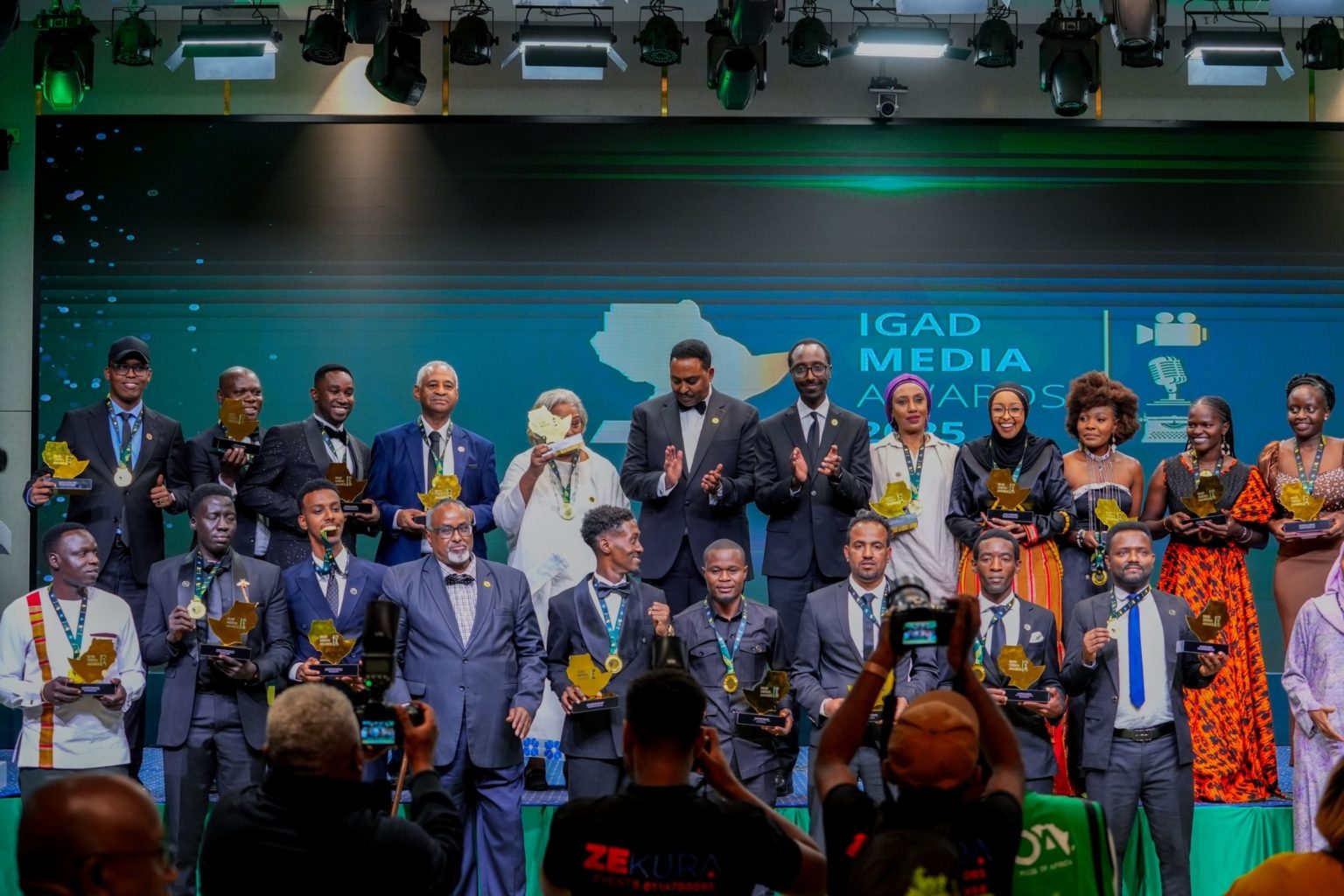
The 3rd IGAD Media Awards 2025 recognized a total of 20 outstanding journalists and media professionals from across the region. Kenya led with seven winners, followed by Uganda, Somalia, and Ethiopia, each with three awardees. Sudan had two winners, while South Sudan and Djibouti each had one representative.
These awards spanned multiple categories including television, radio, print, digital media, photography, gender-responsive reporting, indigenous language journalism, influencer recognition, upcoming media personalities, and lifetime achievement, highlighting diverse talents and contributions focused largely on climate resilience, peace, and development issues within the IGAD member states.
Among the celebrated storytellers, Kenya’s Ledama Masidza stood out for his televised documentary Echoes of the Earth, which artfully highlighted how Kenya’s communities are adapting and thriving amidst climate pressures. Steve Mokaya Ondieki’s radio feature on Maasai women using beekeeping as a drought resilience tool further illustrated grassroots innovation in the face of environmental hardship.
In Digital Media, Ethiopia’s Getnet Shenkute Menguesha was recognized for his impactful work on “Climate Intelligence for Survival,” showcasing IGAD’s push for accurate and actionable climate data, while South Sudan’s Gabriel Gatluak Wal Ket inspired audiences with his stories on climate resilience that fuel hope and drive change.
The Gender Responsive Media category honored Uganda’s Cinderella Ayebare for her compelling narrative on how Karamoja communities are transforming challenges into opportunities for girls’ education, alongside Kenya’s Jamila Mohamed Abdullahi, who documented the relief efforts stemming from the Mandera Green Revolution. Meanwhile, the Influencer of the Year awards went to Djibouti’s Amina Idan Paul and Somalia’s Ahmed Mohamed Absie.
The Indigenous Language Reporting category at the IGAD Media Awards 2025 honored journalists whose work in local languages broadened accessibility and inclusion across the region. Winners included Hipa Abdalazeem Muhammad Salih from Sudan, reporting in Arabic, and Shimeket Legese Wolde from Ethiopia, who covered stories in the Oromo language. The Lifetime Achievement Award at the IGAD Media Awards 2025 recognized Faisal Mohamed Salih of Sudan and Maeza Birru Gebrewold of Ethiopia for their decades of dedication to journalism.
Echoing the interconnectedness of climate, peace, and security within IGAD’s peace and development agenda, the awards ceremony was a vivid reminder of journalism’s power. It mobilizes public understanding, influences policy, and unites nations confronting shared threats. As nations prepare to lead climate discourse globally, the IGAD Media Awards 2025 reaffirmed that credible, courageous media remains indispensable, not only as a catalyst for awareness but as a guardian of truth in an era of complex information challenges.
The IGAD Media Awards 2025 concluded by setting sights on the next ceremony, which will be hosted in Uganda. Building on the success of this year’s event, the upcoming awards promise to continue honoring outstanding journalistic achievements across the region and further strengthen the vital role of media in shaping East Africa’s future.