



By PAULINE ONGAJI
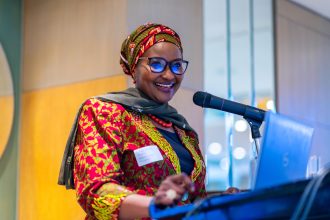
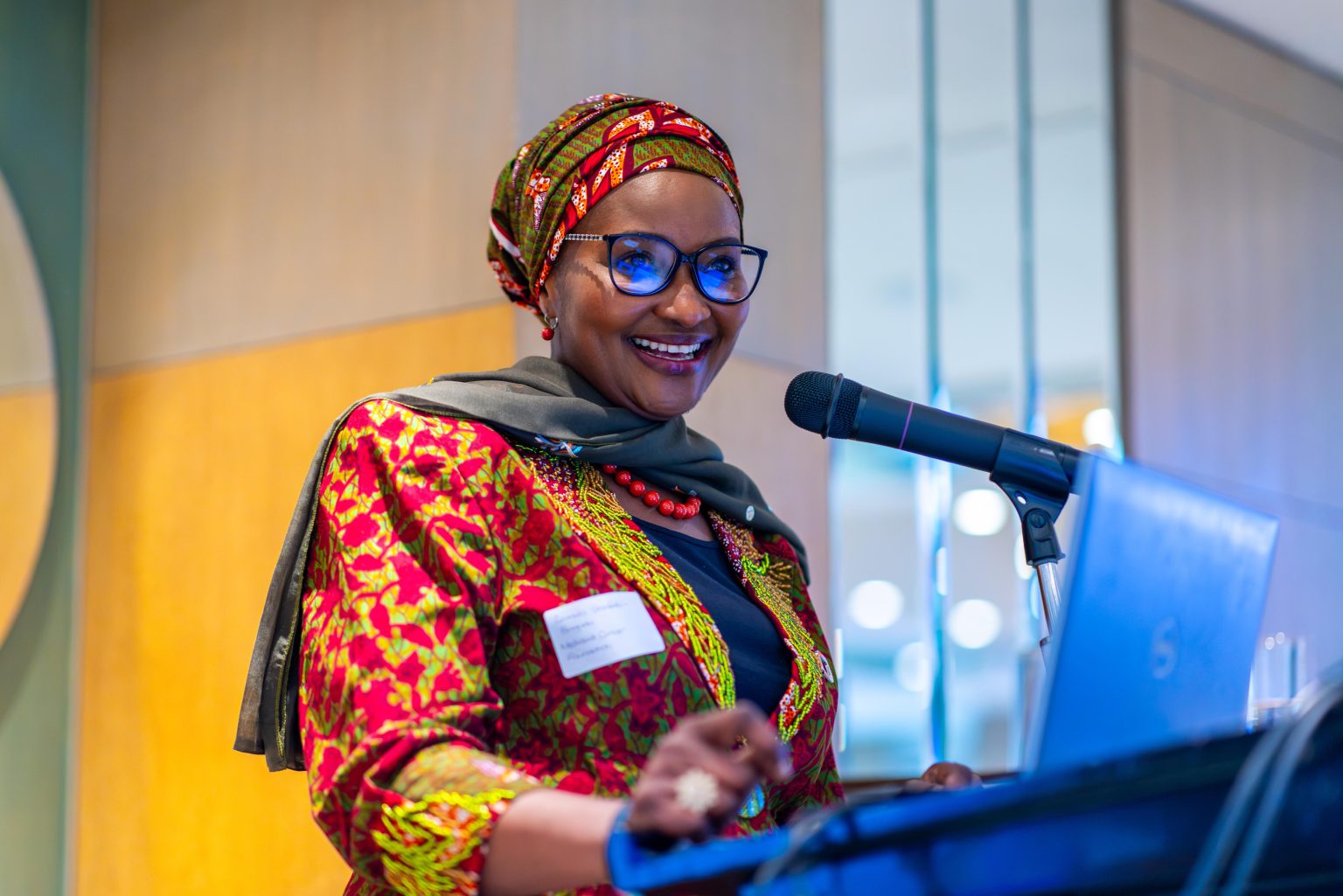
When Dr. Zainab Shinkafi-Bagudu takes the presidency of the Union for International Cancer Control (UICC) on October 20, she will make history.
The Nigerian paediatrician and cancer advocate will become the first African health specialist to lead the organisation since it was founded in 1933. Her presidency follows two years as UICC President-elect, serving alongside Sweden’s Ulrika Årehed Kågström. The transition comes after the World Cancer Congress held in Hong Kong from September 24 to 26.
But for Shinkafi-Bagudu, the significance of becoming the first African president is bigger than a milestone in global health leadership.
She sees it as a reflection of a problem that has taken decades to confront: the persistent inequity in cancer prevention, diagnosis, treatment, research and financing between richer countries and much of the Global South.
“It’s definitely an honour to be the first African,” she said in an interview in Hong Kong.
“But it’s a reflection … of the inadequacy of cancer care along the entire spectrum in Africa and other low- and middle-income countries.”
That inadequacy is becoming difficult to ignore. The latest estimates from the International Agency for Research on Cancer show that Africa recorded about 1.1 million new cancer cases in 2024. About 727,000 people died from cancer on the continent that year, based on GLOBOCAN 2024 estimates.
IARC projects that annual new cancer cases in Africa could reach about 2.5 million by 2050, an increase of approximately 127.5% from the 2024 estimate. Much of that increase is expected to be driven by population growth, although changes in risk factors also matter.
The challenge is not simply that more Africans will develop cancer, but the bigger problem is that many health systems are inadequate and struggling to provide timely diagnosis and treatment.
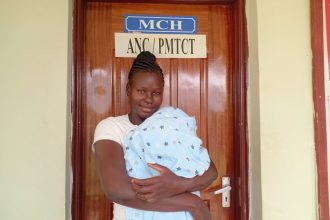
Cervical cancer illustrates the disparity. This specific type remains the leading cause of cancer deaths among women in sub-Saharan Africa. In 2022, Africa accounted for about 23% of cervical cancer deaths globally, despite representing a much smaller share of the world’s population. Of the 20 countries with the world’s highest cervical cancer burden, 18 are in the WHO African Region.
Breast and cervical cancers are among the continent’s leading cancers in women, while prostate cancer is a major burden among men. In sub-Saharan Africa, GLOBOCAN 2022 estimated more than 848,000 new cancer cases and about 559,000 cancer deaths. 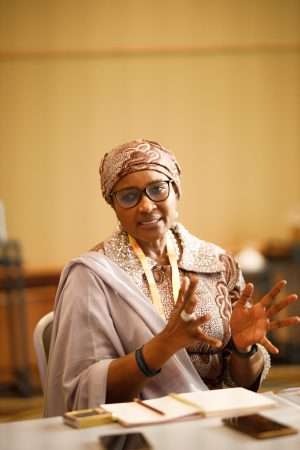
To Shinkafi-Bagudu, these numbers are the reason she wants to use her presidency to change the conversation about who gets access to the advances transforming cancer care.
A paediatrician and global health advocate, Shinkafi-Bagudu has spent years working across clinical care, cancer advocacy and health policy.
She founded the Medicaid Cancer Foundation, which works on cancer awareness, prevention and access to care. She also established Medicaid Radio-Diagnostics and Clinics in Abuja, which UICC describes as Nigeria’s first comprehensive diagnostic centre. The foundation has raised more than $2 million to address gaps in cancer care.
Her experience also extends into government and policy. As former First Lady of Kebbi State where her husband served as Governor, Shinkafi-Bagudu was involved in efforts to strengthen cancer control, including the development of a state cancer-control plan and expansion of HPV vaccination for girls. She has also served as an adviser on women’s health and cancer advocacy to Nigeria’s health leadership.
Her work has mostly focused on prevention. Nigeria introduced HPV vaccination nationally in 2023, an important intervention against cervical cancer, which is caused by persistent infection with high-risk HPV. Shinkafi-Bagudu has been among the advocates pushing for prevention and wider access to vaccination and screening.
But her ambitions now extend beyond any one cancer, country or intervention. Shinkafi-Bagudu says she sees herself as a bridge between the Global South and Global North.
“There is this opportunity to be able to bring forth a lot of the problems that the low- and middle-income countries are facing to the Global North,” she said.
That includes bringing African and other Global South perspectives into discussions about technologies that are advancing rapidly elsewhere, like new cancer drugs, improved diagnostics, artificial intelligence and new approaches to treatment and palliative care.
The question, however, is how those innovations can reach patients who may not have access to basic diagnostic services. A sophisticated cancer treatment can be life-changing. But it is of little use to a patient who cannot afford to reach a hospital, obtain a diagnosis or pay for treatment.
That is why Shinkafi-Bagudu repeatedly returns to one concept: financial toxicity.
“If we are trying to advocate with government for insurance to cover all of this, it’s the same thing,” she said. “I’m trying to reduce financial toxicity for the woman in the village.”
For African patients, that can mean the difference between seeking treatment and abandoning it.
While breast and cervical cancer have been central to her advocacy, Shinkafi-Bagudu says her UICC presidency will also focus attention on cancers and risk factors that receive less international attention.
One is liver cancer. She is particularly interested in the relationship between hepatitis and liver cancer, arguing that the disease presents an important opportunity for prevention because hepatitis B can be prevented through vaccination and infection can be detected and managed.
The World Health Organization estimates that liver cancer is among the leading causes of cancer death globally. In Africa, the burden is even more important because hepatitis infections remain a significant public-health challenge.
Childhood cancer is another priority. For Shinkafi-Bagudu, the issue is not simply whether children can receive treatment, but whether African health systems can build the workforce, infrastructure and financing required to provide it consistently.
That means training oncologists, nurses, radiographers, biomedical engineers and other health professionals, and finding ways to keep them in the health systems that invested in training them.
But then cancer control requires money, and this is where Shinkafi-Bagudu sees one of the biggest opportunities for her presidency.
Global health financing has come under pressure, while cancer has historically struggled to attract the kind of dedicated international financing mechanisms that have transformed the response to diseases such as HIV, tuberculosis and malaria.
“Cancer has never directly been a beneficiary of global funding for treatment or any end of the spectrum,” she said, arguing that much of the international financing associated with cancer has traditionally been concentrated around research.
She believes the cancer community needs to become more effective at making the economic and human case for investment.
That means talking to governments, legislators, development partners, donors and the private sector, not just about cancer as a disease, but about what happens when people are diagnosed too late, lose income, sell assets to pay for treatment or are forced to travel hundreds of kilometres for care.
Perhaps the most important aspect of Shinkafi-Bagudu’s presidency will be what she brings from her experience navigating Nigeria’s health system. She has worked at the community level, in medicine, advocacy, government and international organisations. She has seen the contrast between cutting-edge research presented at global conferences and patients struggling to access basic care.
UICC’s global network gives her a platform to connect with researchers, policymakers, governments, civil society organisations, industry and patients. The organisation has more than 1,200 member organisations across more than 170 countries and territories.
That convening power may be among the most important tools available to the incoming president.
There is another shift Shinkafi-Bagudu wants to see. She says Africa should not be viewed only as a recipient of cancer knowledge, technology and funding, but also a source of research, innovation and solutions.
She says African researchers need opportunities to conduct studies relevant to African populations, and African institutions need stronger research infrastructure, while young researchers need pathways to build careers without having to leave the continent.
That is already beginning to happen in pockets across the continent. Shinkafi-Bagudu points to emerging research institutions in countries including Nigeria, Rwanda and Kenya and to partnerships that bring training and technical expertise to African cancer professionals.
She also sees the decision to bring a future UICC convening event to Kenya as an opportunity to connect young and mid-career African researchers with the global cancer community.
The goal, she says, is to ensure that global conversations eventually reach the corridors where patients are being treated.
Her term comes at a moment when the geography of cancer is changing. Globally, cancer cases are projected to rise from about 20 million new cases in 2022 to roughly 35 million annually by 2050. IARC says this represents a 77% increase, driven by population growth, ageing and changes in exposure to risk factors.
Africa is expected to experience one of the steepest increases. The latest IARC projections put the continent’s annual number of new cases at nearly 2.5 million by 2050, compared with about 1.1 million in 2024.
That makes the questions coming from Africa even more relevant to the rest of the world. How should cancer care be financed when health systems are already stretched? How can new drugs and technologies reach people who cannot afford them? How can artificial intelligence improve diagnosis without widening existing inequalities? How can countries prevent cancers linked to infections such as HPV and hepatitis? How should palliative and end-of-life care be provided with dignity? And how can the world build cancer systems that do not leave behind people living in rural and low-income communities?
These are not exclusively African questions. But Africa is likely to feel their consequences acutely.
For Shinkafi-Bagudu, the answer lies in turning global commitments into practical action, and her presidency will provide an opportunity to test that proposition.
For the first time since UICC was founded in 1933, an African will sit at its helm, carrying with her the experience of a continent where cancer is rising rapidly, but where prevention, early detection, treatment and research capacity remain uneven.
What happens next will determine whether this historic presidency becomes a milestone in representation, or a moment when the centre of gravity in the global cancer conversation begins to shift.
For Shinkafi-Bagudu, the ambition is to make sure that the innovations being developed in the world’s best-equipped cancer centres do not remain there, and that the realities of patients in Africa and the wider Global South are heard wherever the future of cancer care is being decided.
paulineungaji@gmail.com